Cindy Sherman: An Essay on Her Most Iconic Works
by David Fox
What makes a single artist's body of work reshape the entire trajectory of contemporary photography and feminist discourse? The answer resides in Cindy Sherman most iconic works, a collection of self-portraiture that transcends mere photography and enters the realm of cultural critique. Sherman, one of the most consequential famous women artists in history, has spent decades dismantling the constructed nature of identity through the lens of her camera, using herself as both subject and object to expose the fictions embedded in visual culture.
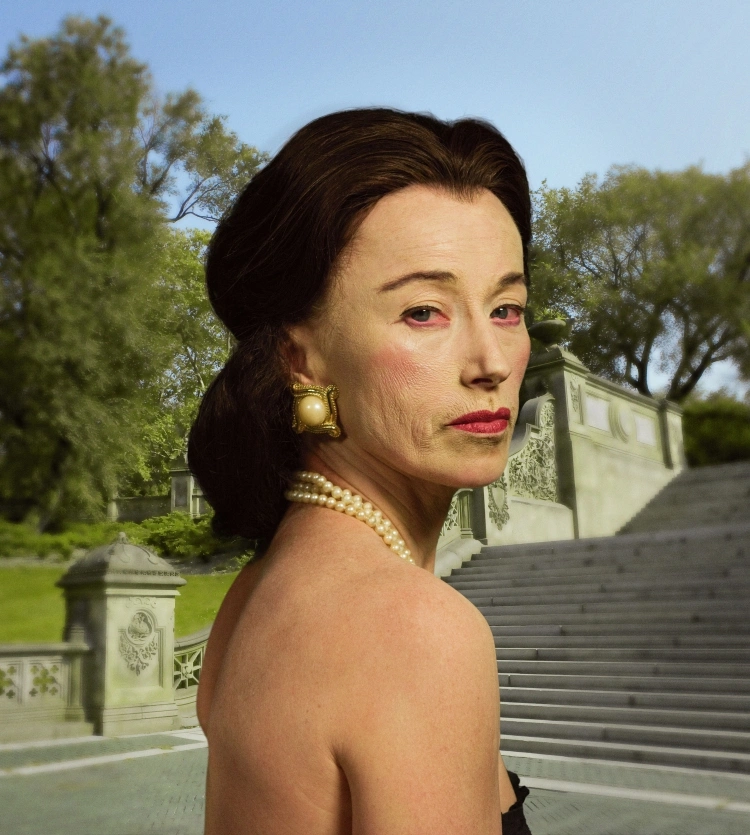
From the groundbreaking "Untitled Film Stills" of the late 1970s to her unsettling explorations of decay and grotesquerie in the 1990s, Sherman has consistently refused to settle into a single mode of expression. Each series operates as a distinct investigation into representation, gender, and the mechanics of looking, forcing audiences to confront how images manufacture meaning rather than merely record it.
This examination traces the arc of Sherman's most significant bodies of work, addresses persistent misconceptions about her practice, and offers guidance for those seeking to collect, study, or critically engage with her art on a sustained basis.
Contents
- Foundational Principles Behind Cindy Sherman Most Iconic Works
- Misconceptions About Sherman's Artistic Intent
- Critical Errors in Reading Sherman's Photography
- Preserving and Collecting Sherman's Photographic Prints
- Navigating Sherman's Most Challenging Later Series
- When Sherman's Work Resonates and When It Disturbs
- Sherman's Long-Term Influence on Contemporary Practice
- Frequently Asked Questions
Foundational Principles Behind Cindy Sherman Most Iconic Works
Understanding Sherman requires abandoning the assumption that her photographs are self-portraits in any traditional sense. Sherman does not photograph herself; she photographs the cultural archetypes projected onto women by cinema, advertising, fashion, and art history. The distinction is critical and shapes every meaningful reading of her output.
The Untitled Film Stills Series (1977–1980)
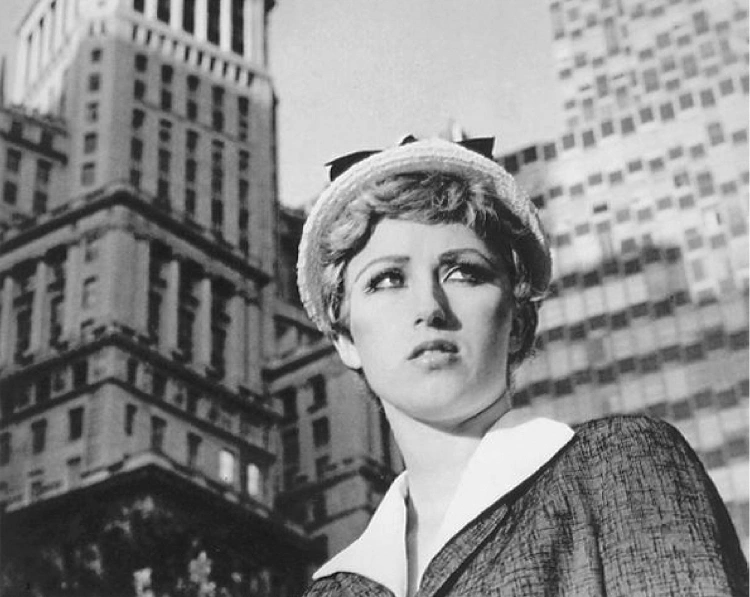
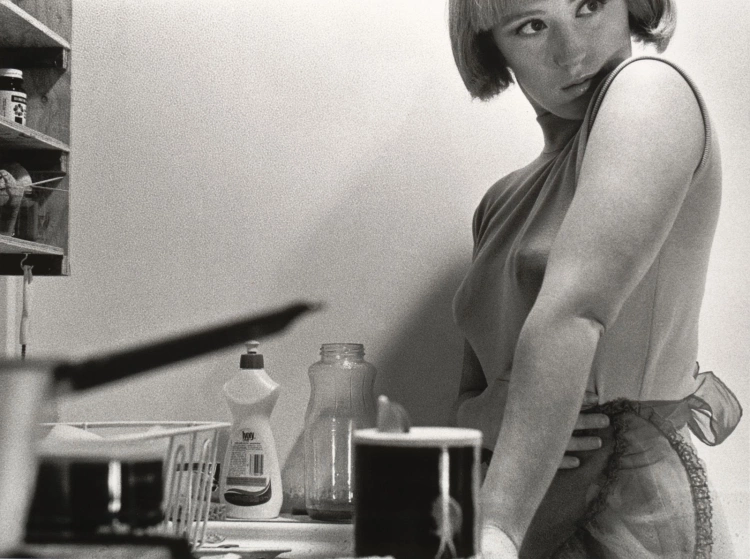
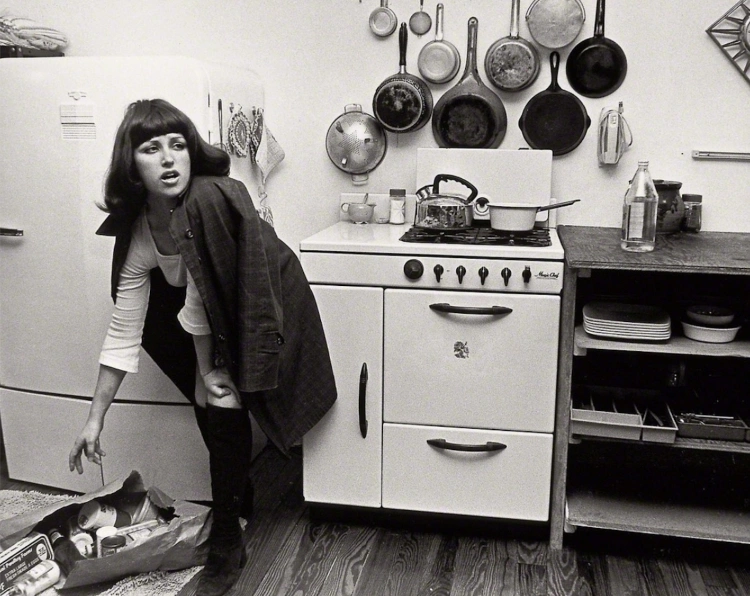
The "Untitled Film Stills" remain Sherman's most widely recognized body of work, consisting of 69 black-and-white photographs that simulate the look of mid-century Hollywood B-movie production stills. Each image presents Sherman costumed and posed as a different female character type, evoking narratives that feel familiar yet belong to no actual film. Key characteristics of the series include:
- Deliberate use of cinematic lighting, camera angles, and mise-en-scène conventions
- Characters drawn from recognizable archetypes: the ingénue, the femme fatale, the housewife, the runaway
- An intentional refusal to title or narrate, leaving audiences to project their own stories
- Print sizes kept small (approximately 8×10 inches), reinforcing the connection to actual film stills

The series drew immediate critical attention and was acquired in its entirety by the Museum of Modern Art, establishing Sherman as a central figure in the lineage of artists who interrogate the relationship between art and mass culture.
The Centerfolds and Rear Screen Projections
Commissioned by Artforum magazine in 1981, the "Centerfolds" (also called the "Horizontals") expanded Sherman's format to large-scale color photographs shot in horizontal orientation. These images depicted women in states of emotional vulnerability — anxiety, longing, exhaustion — presented at a scale that made the viewer's gaze uncomfortably voyeuristic. The "Rear Screen Projections" series used projected backdrops to situate characters in artificial environments, further highlighting the constructed nature of photographic reality.
Sherman's genius lies not in disguise but in exposure — each costume reveals more about cultural conditioning than any unmediated portrait ever could.
Misconceptions About Sherman's Artistic Intent
Several persistent myths distort public understanding of Sherman's practice. Correcting them is essential for any serious engagement with the work.
- "Sherman is a photographer." Sherman identifies primarily as an artist who uses photography as a medium, not as a photographer in the documentary or fine-art photography tradition. The distinction matters because her concerns are conceptual, not technical.
- "The images are autobiographical." None of the characters represent Sherman herself. She has stated repeatedly that the work explores cultural stereotypes, not personal identity.
- "The Film Stills reference specific movies." No image corresponds to an actual film. The familiarity audiences feel is a product of genre conventions, not direct citation.
- "Her later work is a departure." The grotesque and abstract series of the 1990s maintain the same foundational inquiry into representation — only the surface aesthetic shifts.
These misreadings persist partly because Sherman rarely provides explanatory context, a deliberate strategy that keeps interpretation open and the work perpetually generative, much like the layered readings invited by Andreas Gursky's large-format photographic constructions.
Critical Errors in Reading Sherman's Photography
Scholars, collectors, and casual viewers alike fall into predictable traps when engaging with Cindy Sherman most iconic works. Avoiding these errors leads to a richer and more accurate understanding of the practice.
- Treating individual images in isolation — Sherman's power accumulates across series; a single image from the Film Stills lacks the cumulative force of the full 69-image set.
- Conflating technical execution with artistic value — the deliberately amateur quality of certain images is intentional, not a limitation.
- Ignoring the role of the viewer — Sherman's work is fundamentally about the act of looking, and any analysis that omits the viewer's complicity remains incomplete.
- Dismissing the later grotesque works as shock tactics — the Disgust Pictures and Sex Pictures deploy repulsion as a critical tool, not as provocation for its own sake.
- Assuming feminist art must be didactic — Sherman's refusal to prescribe meaning is itself a feminist stance against the authority of singular interpretation.
Preserving and Collecting Sherman's Photographic Prints
Sherman's works command significant prices at auction and in the secondary market, making proper care and informed acquisition essential for collectors. The following table outlines key series, their typical formats, and approximate market ranges.
| Series | Period | Format | Edition Size | Auction Range (USD) |
|---|---|---|---|---|
| Untitled Film Stills | 1977–1980 | Gelatin silver print, ~8×10 in | 10 | $500K–$6M+ |
| Centerfolds | 1981 | Chromogenic print, ~24×48 in | 10 | $200K–$4M |
| History Portraits | 1988–1990 | Chromogenic print, various | 6 | $300K–$3.5M |
| Sex Pictures | 1992 | Chromogenic print, ~50×75 in | 6 | $100K–$800K |
| Society Portraits | 2008 | Chromogenic print, ~65×55 in | 6 | $200K–$1.5M |
| Clowns | 2003–2004 | Chromogenic print, ~60×48 in | 6 | $150K–$900K |
Preservation guidelines for chromogenic and gelatin silver prints include:
- Storage at 35–40% relative humidity and below 70°F (21°C)
- UV-filtering glazing on all framed works, with museum-grade materials for mounts and mats
- Avoidance of direct sunlight, fluorescent lighting, and temperature fluctuations
- Professional condition reports before any acquisition, particularly for early Film Stills prints
Those interested in acquiring photographic art at more accessible price points may find that investing in proper equipment — such as a high-quality printer for art prints — allows for building a personal study collection alongside original acquisitions.
Navigating Sherman's Most Challenging Later Series
The Disgust Pictures and Sex Pictures
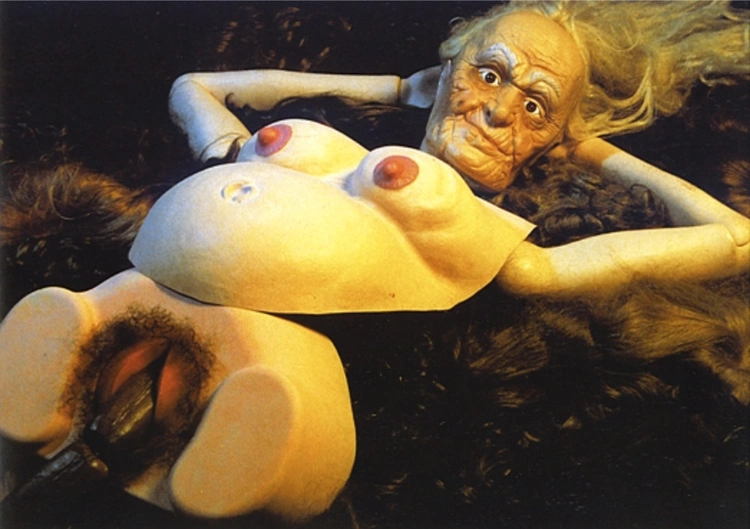
Beginning in the late 1980s and accelerating through the 1990s, Sherman moved dramatically away from recognizable human subjects. The "Disaster" and "Fairy Tale" series introduced rotting food, prosthetic body parts, and visceral decay into compositions that retained the formal precision of her earlier work. The "Sex Pictures" of 1992 used medical mannequins and prosthetics arranged in explicit configurations, removing the human body entirely while retaining its uncomfortable presence.
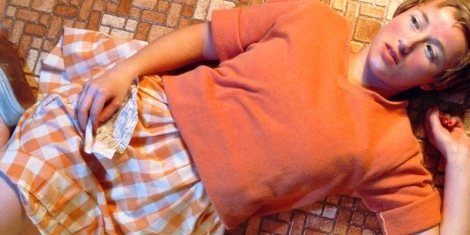
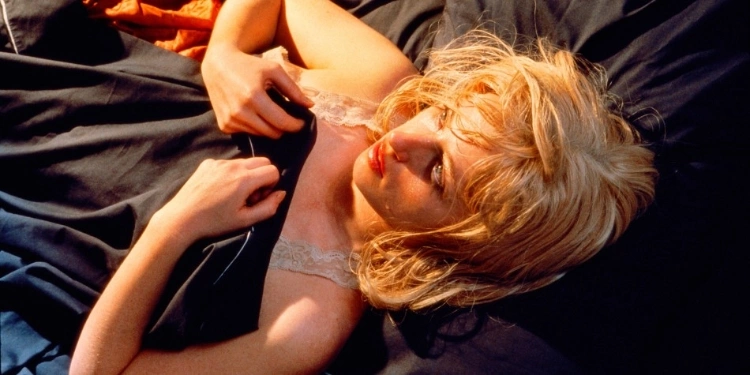
These works demand patience and contextual knowledge. Reading them requires familiarity with Julia Kristeva's theory of abjection and the broader feminist discourse on the body as a site of cultural inscription.
The Society Portraits and Clowns
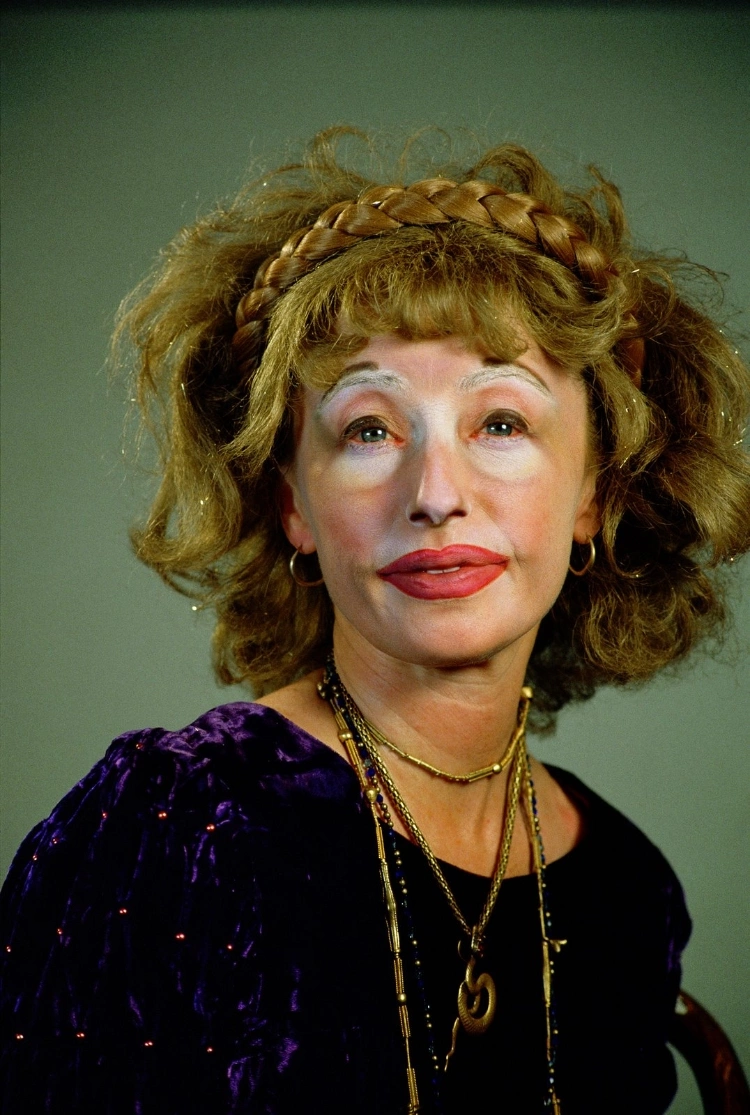
Sherman's "Society Portraits" series presents aging socialites and women of wealth, their faces layered with visible makeup and digital manipulation that exposes rather than conceals the labor of self-presentation. The "Clowns" series uses garish color saturation and theatrical costumes to probe the performance of emotion and identity in digital culture.
Collectors and scholars should resist the impulse to rank Sherman's series hierarchically — each body of work answers questions that the previous series deliberately left open.
When Sherman's Work Resonates and When It Disturbs
Sherman's art operates differently depending on the context of encounter. Understanding these conditions allows for more intentional engagement.
- Gallery exhibitions — optimal for experiencing the cumulative effect of a full series, particularly the Film Stills and History Portraits
- Academic settings — the conceptual density rewards seminar-style discussion, especially when paired with feminist and postmodern theory
- Auction previews — individual works lose contextual richness but gain market narrative; collectors benefit from understanding series relationships
- Digital reproduction — scale and material presence are lost, making online study insufficient as a sole method of engagement
- Personal collections — intimate viewing of original prints reveals surface details (grain, color shifts, print edges) invisible in reproduction
Sherman's work is less effective when encountered casually or without awareness of the conceptual framework that generates it. A viewer who approaches the Film Stills as mere costume photography, for instance, misses the entire critical apparatus that gives the series its significance — a dynamic similar to how Annie Leibovitz's most celebrated portraits reward viewers who understand the collaborative process behind each image.
Sherman's Long-Term Influence on Contemporary Practice
The reach of Cindy Sherman most iconic works extends far beyond the boundaries of photography or even visual art. Her methodologies have shaped practices across multiple disciplines and continue to generate new scholarship, exhibitions, and creative responses decades after their initial production.

- Contemporary self-portraiture on social media owes an unacknowledged debt to Sherman's investigations of performed identity
- Artists working with AI-generated imagery confront the same questions about authenticity and authorship that Sherman raised with analog methods
- Fashion photography has absorbed Sherman's visual vocabulary — Marc Jacobs, Balenciaga, and others have commissioned her directly
- Feminist art pedagogy uses the Film Stills as foundational teaching material in university programs worldwide
- The intersection of installation art and cultural tradition continues to explore the tensions between representation and reality that Sherman first articulated through photography
Sherman's enduring relevance lies in her refusal to resolve the contradictions her work exposes. The questions she raises about identity, representation, and the politics of the image remain as urgent in the age of deepfakes and algorithmic curation as they were in the era of Hollywood B-movies and glossy magazine spreads.
Frequently Asked Questions
Is Cindy Sherman considered a photographer or a conceptual artist?
Sherman is best understood as a conceptual artist who uses photography as her primary medium. Her concern lies with the cultural construction of identity and representation rather than with photographic technique, composition, or the traditions of documentary or fine-art photography as distinct disciplines.
Why does Sherman never title her works beyond "Untitled" and a number?
The deliberate absence of descriptive titles prevents any single interpretation from claiming authority over the image. By withholding narrative context, Sherman ensures that the viewer's projections and assumptions become visible as part of the work's meaning, reinforcing her broader critique of how images generate and manipulate cultural narratives.
What is the most valuable Cindy Sherman photograph ever sold?
Sherman's "Untitled #96" (1981), from the Centerfolds series, sold for $3.89 million at Christie's in 2011, making it one of the most expensive photographs ever auctioned at that time. The Film Stills series as a complete set has been valued significantly higher, reflecting the cumulative power of the body of work over any single image.
Sherman's greatest achievement is proving that the most revealing portrait of a culture is one in which no real person appears at all.


About David Fox
David Fox is an artist and writer whose work spans painting, photography, and art criticism. He created davidcharlesfox.com as a platform for exploring the history, theory, and practice of visual art — covering everything from Renaissance masters and modernist movements to contemporary works and the cultural context that shapes how art is made and received. At the site, he covers art history, architecture, anime art and culture, collecting guidance, and profiles of influential artists across centuries and movements.
Now get FREE Gifts. Or latest Free phones here.
Disable Ad block to reveal all the secrets. Once done, hit a button below