Niki de Saint Phalle: Art, Anger, and Her Journey as a Woman in the 1960s
by David Fox
In 1961, a young French-American artist fired a .22 caliber rifle at bags of paint embedded in plaster, and the resulting "Tirs" (Shooting Paintings) became one of the most radical statements in postwar art. Niki de Saint Phalle feminist art emerged from genuine rage — against patriarchal institutions, childhood trauma, and the art establishment that dismissed women as decorative afterthoughts. Her work would go on to inhabit major public spaces across three continents, yet her journey from fashion model to internationally celebrated sculptor remains one of the most underexamined stories among famous women artists in history. Understanding how Saint Phalle channeled anger into monumental beauty offers a masterclass in artistic resilience.
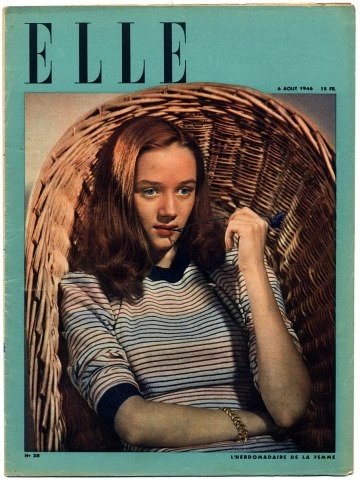
Born Catherine-Marie-Agnès Fal de Saint Phalle in 1930 in Neuilly-sur-Seine, France, she grew up between Paris and New York in an aristocratic family that concealed deep dysfunction. After a nervous breakdown in her early twenties, Saint Phalle discovered art as therapy — a tool for processing experiences that polite society refused to acknowledge. Within a decade, she had joined the Nouveaux Réalistes, exhibited alongside Yves Klein and Jean Tinguely, and begun constructing the voluptuous "Nana" figures that would define her legacy.
Her trajectory from outsider to icon was neither smooth nor inevitable. It required sustained defiance of gender norms, a willingness to work at architectural scale, and a refusal to separate personal pain from public art. The following sections trace that path — from the Shooting Paintings to the Tarot Garden — and examine how collectors, curators, and art historians can engage with her work today.
Contents
- The Lasting Influence of Niki de Saint Phalle Feminist Art
- How to Approach and Study Saint Phalle's Major Works
- Preserving and Caring for Saint Phalle's Sculptural Legacy
- Common Myths About Niki de Saint Phalle — Corrected
- Essential Resources for Studying Saint Phalle
- Frequently Asked Questions
- Key Takeaways
The Lasting Influence of Niki de Saint Phalle Feminist Art
Niki de Saint Phalle feminist art did not emerge in a vacuum. The early 1960s saw a handful of women — Frida Kahlo having blazed the trail decades earlier, Yayoi Kusama working simultaneously in New York — pushing against an art world that treated female creativity as a curiosity rather than a force. Saint Phalle's contribution was distinct: she weaponized femininity itself, turning soft curves and bright colors into statements of power rather than submission.
Her Role in Nouveau Réalisme
When critic Pierre Restany founded Nouveau Réalisme in 1960, Saint Phalle was the only woman invited into the group. The movement rejected abstract expressionism's introspection in favor of direct engagement with real-world objects. While her male colleagues — Arman, César, Tinguely — crushed cars and accumulated consumer goods, Saint Phalle took a more visceral approach:
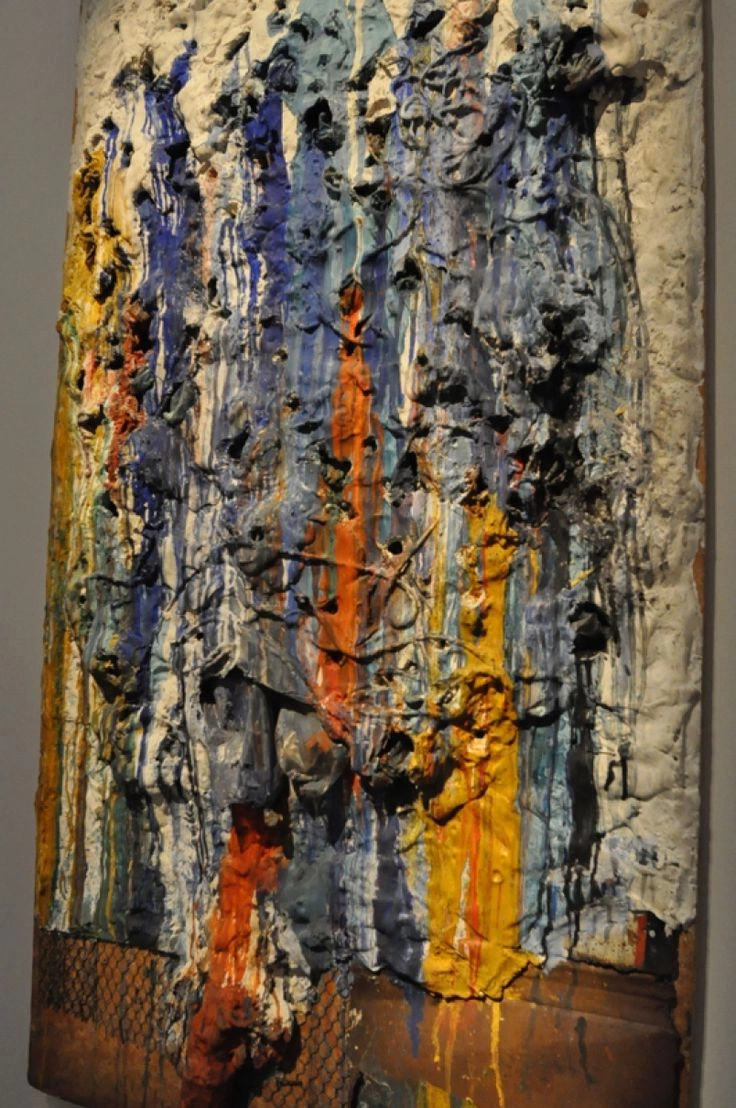
- The Tirs (Shooting Paintings) involved embedding bags of paint beneath white plaster reliefs, then shooting them with a rifle so color bled across the surface
- Each performance was simultaneously destructive and creative — the bullet wound became the brushstroke
- The act reframed the female artist as aggressor rather than muse, a radical inversion of art-historical convention
- Major Tirs events drew international press coverage, establishing Saint Phalle as a media-savvy provocateur years before Marina Abramović pioneered endurance-based performance art
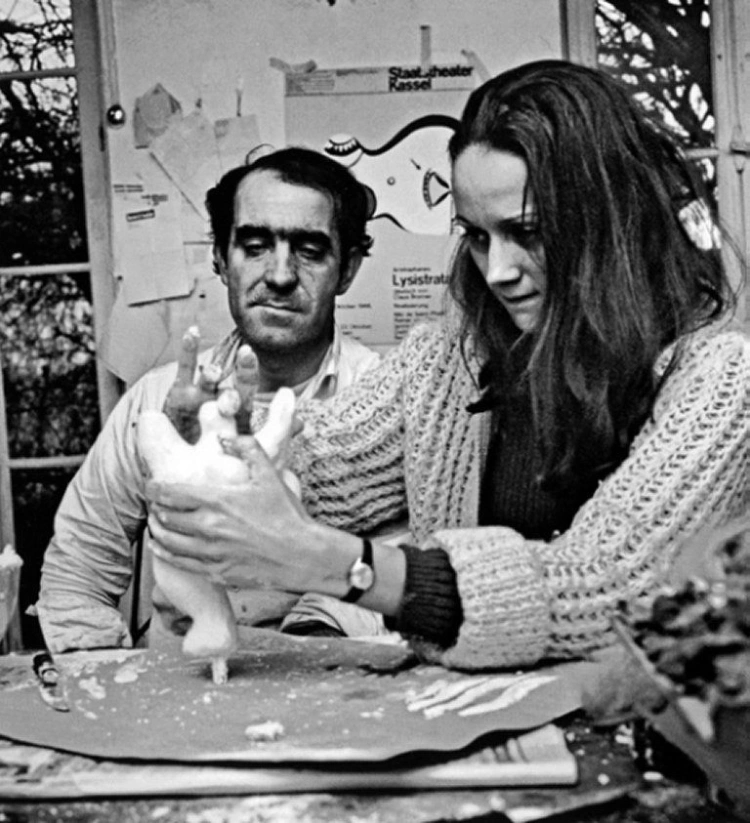
The Shooting Paintings attracted controversy — some critics dismissed them as spectacle — but they established a template that linked Niki de Saint Phalle feminist art to direct physical action. The artist was not merely representing anger; she was performing it.
Global Installations and Public Commissions
By the late 1960s, Saint Phalle had shifted from destruction to construction. Her public commissions span an extraordinary range of scales and contexts:
| Work | Location | Year(s) | Medium | Scale |
|---|---|---|---|---|
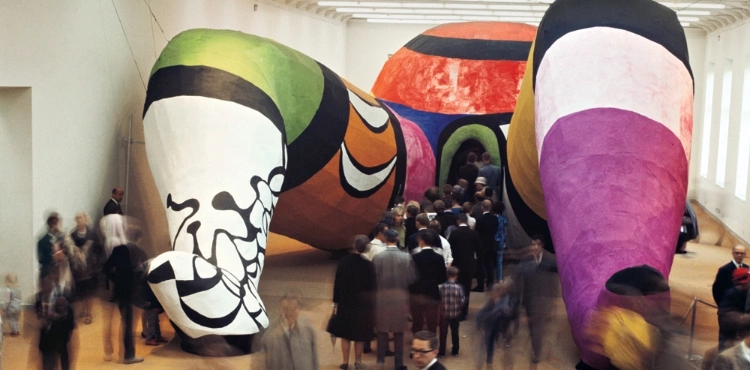
| Hon — en katedral | Moderna Museet, Stockholm | 1966 | Painted steel, fabric | 28 m long, walk-in sculpture |
| Stravinsky Fountain | Centre Pompidou, Paris | 1983 | Polyester, steel, water | 16 kinetic sculptures |
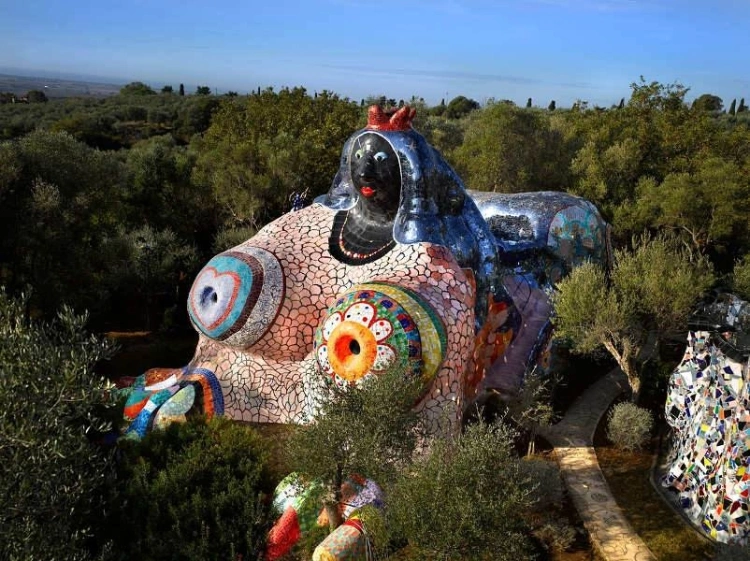
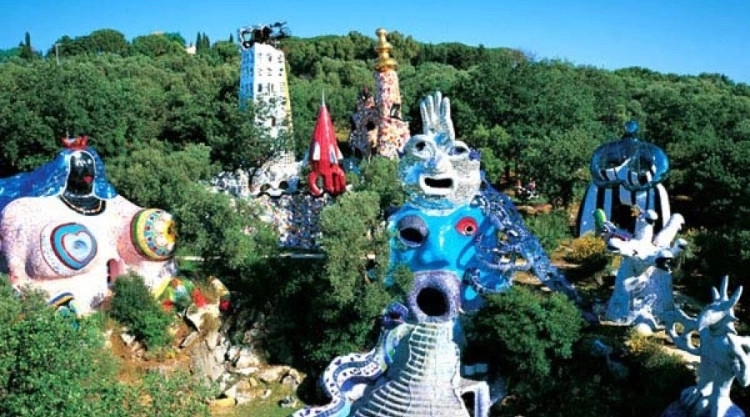
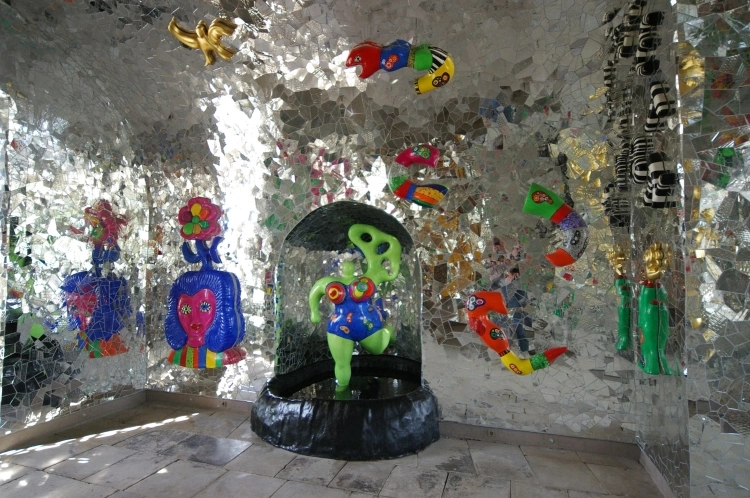
| Tarot Garden | Garavicchio, Tuscany | 1979–1998 | Concrete, ceramic, glass mosaic | 22 monumental figures over 14 acres |
| Queen Califia's Magical Circle | Escondido, California | 1999–2003 | Stone, glass, ceramic | 400 ft circular garden |
| Nana Power series | Hanover, Germany | 1974 | Painted polyester | Three 6-meter figures along the Leine River |
The Tarot Garden alone consumed nearly two decades of Saint Phalle's life. She lived inside the Empress sculpture during construction, sleeping in the mosaic-covered figure while overseeing the project. This total commitment — art as habitation, not just exhibition — distinguishes her practice from nearly every contemporary.
How to Approach and Study Saint Phalle's Major Works
For art historians, collectors, and students encountering Saint Phalle's oeuvre for the first time, the sheer variety of media and scale can be disorienting. A systematic approach helps.
The Shooting Paintings (1961–1963)
- Start with context. Before analyzing individual Tirs, study the Nouveau Réalisme manifesto and the broader postmodern art movement that was emerging across Europe. Saint Phalle's violence was not random — it answered a specific cultural moment.
- Examine the assemblage layer. Beneath the paint explosions, each Tirs piece contains embedded objects — toys, kitchen tools, religious icons. These are deliberate choices reflecting domestic confinement and Catholic guilt.
- Watch the film documentation. Several Tirs events were filmed. The footage reveals that these were choreographed performances with invited audiences, not private studio acts.
- Compare with contemporaries. Placing a Tirs piece alongside work by Jean-Michel Basquiat or the street art tradition reveals shared impulses toward raw, unmediated expression — though the methods differ dramatically.
The Nanas and Monumental Sculpture
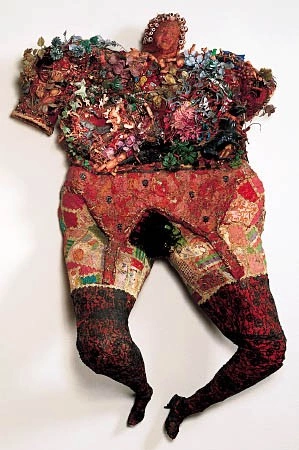
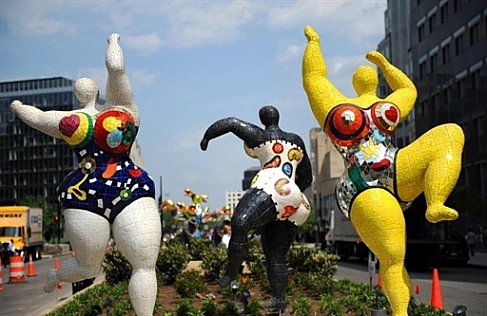
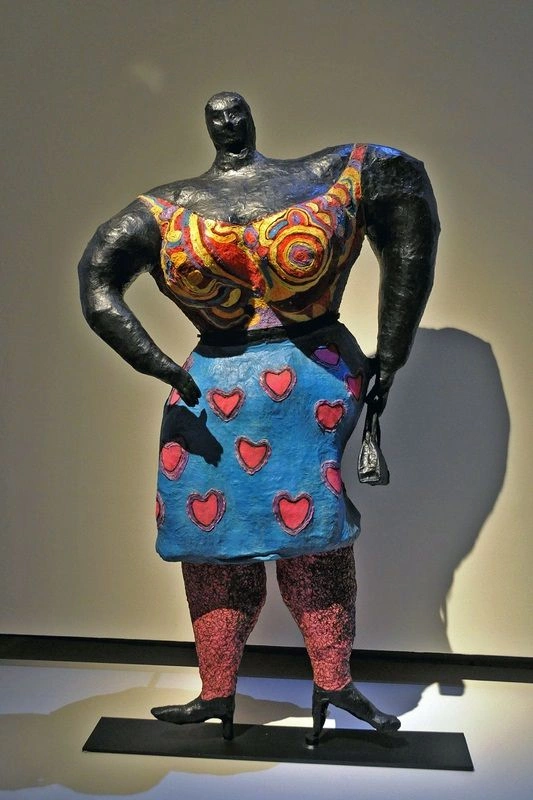
The Nanas — exuberant, round-bodied female figures in vivid colors — represent Saint Phalle's most recognized contribution. They first appeared around 1965 and evolved from small papier-mâché forms into monumental polyester sculptures.
- The Nanas celebrate female bodies at a time when fashion demanded thinness — each figure dances, leaps, or strikes a power pose
- Their bright patterns draw from folk art, African textiles, and fairground aesthetics
- The largest Nana installation, "Hon — en katedral" (She — a Cathedral), invited visitors to enter the reclining figure through a door between the legs — a provocative literalization of birth and feminine interiority
- Hanover's three riverside Nanas initially drew public outrage before becoming beloved city landmarks
Saint Phalle's Nanas prove that monumental public art need not be somber or masculine — joy and defiance coexist at architectural scale.
Preserving and Caring for Saint Phalle's Sculptural Legacy
Saint Phalle's choice of materials — polyester resin, fiberglass, ceramic mosaic, mirror fragments — presents unique conservation challenges. Unlike bronze monuments that patinate gracefully, her works require active intervention to survive.
Material Challenges of Polyester and Mosaic
- UV degradation causes polyester resin to yellow and become brittle within decades without protective coatings
- Outdoor mosaic works suffer freeze-thaw cycles that crack grout and dislodge tiles
- The Stravinsky Fountain's kinetic elements require mechanical maintenance alongside surface conservation
- Original paint colors fade unevenly — restorers must match Saint Phalle's specific pigment choices, which she documented inconsistently
Institutional Conservation Efforts
The Niki Charitable Art Foundation, established by the artist before her death in 2002, oversees authentication and conservation standards. The Sprengel Museum in Hanover holds the largest institutional collection, with over 400 works requiring ongoing care. The Tarot Garden maintains a dedicated on-site conservation team funded by admission revenue — a self-sustaining model that Saint Phalle designed intentionally.
Private collectors holding smaller works — lithographs, maquettes, jewelry editions — face fewer preservation demands but should maintain stable humidity (45–55% RH) and avoid direct sunlight exposure on painted surfaces.
Common Myths About Niki de Saint Phalle — Corrected
Despite extensive scholarship, several persistent misconceptions cloud public understanding of Saint Phalle's work and intentions.
The "Outsider Artist" Misconception
Saint Phalle is sometimes categorized as a self-taught outsider, which distorts her actual position. While she lacked formal academic training, she was embedded in the Parisian avant-garde from the early 1960s. She exhibited at Galerie Rive Droite, collaborated with Tinguely (whom she later married), and participated in group shows alongside established figures. Her lack of art school credentials was a deliberate rejection of institutional gatekeeping, not evidence of marginality.

The "Decorative Art" Dismissal
The bright colors and playful forms of the Nanas have led some critics to dismiss Saint Phalle's work as merely decorative. This reading ignores several key facts:
- The Shooting Paintings are explicitly violent — categorizing them as decorative requires ignoring an entire body of work
- The Nanas emerged directly from Saint Phalle's exploration of female power and bodily autonomy — the joy is political, not ornamental
- "Hon" was a feminist provocation that generated genuine scandal in 1966 Stockholm
- Saint Phalle's autobiographical film Daddy (1973) addressed childhood sexual abuse — hardly the output of a decorative artist
- The Tarot Garden's architecture draws from Gaudí's Park Güell, positioning Saint Phalle within a lineage of visionary architectural thinkers, not craft hobbyists
The decorative dismissal also carries a gendered dimension. Male artists working with bright color and playful form — Alexander Calder, Jeff Koons — rarely face the same reduction. Niki de Saint Phalle feminist art challenges precisely this double standard.
Essential Resources for Studying Saint Phalle
Engaging seriously with Saint Phalle's legacy requires access to the right collections, texts, and archives. The resources below represent the most authoritative starting points.
Key Museum Collections and Archives
- Sprengel Museum, Hanover — 400+ works donated by the artist, the definitive institutional collection
- Musée d'Art Moderne de la Ville de Paris — key Tirs pieces and early assemblages
- Moderna Museet, Stockholm — documentation of "Hon" and Nouveau Réalisme context
- Museum Tinguely, Basel — collaborative works with Jean Tinguely, essential for understanding their creative partnership
- The Tarot Garden, Tuscany — open seasonally, the immersive experience is irreplaceable for understanding Saint Phalle's spatial ambitions
Critical Texts and Catalogues
Several essential publications anchor Saint Phalle scholarship:
- Niki de Saint Phalle: Catalogue Raisonné (two volumes, Acatos) — the comprehensive reference for authentication and provenance
- Traces: An Autobiography Remembering 1930–1949 by Niki de Saint Phalle — her own account of the formative years, unflinching in its disclosures
- Bloum Cardenas (granddaughter and foundation president) has published extensively on conservation priorities and legacy management
- Catherine Francblin's monograph remains the standard critical biography in French
For researchers tracing connections between Saint Phalle and the broader history of modern sculpture, examining how Rodin redefined sculptural practice provides valuable historical depth. Both artists broke with prevailing conventions to forge intensely personal visual languages — though separated by nearly a century.
Frequently Asked Questions
What makes Niki de Saint Phalle a feminist artist?
Saint Phalle's work directly confronted gender inequality through both subject matter and process. The Shooting Paintings reclaimed violence as a female creative tool, the Nanas celebrated unrestricted female bodies, and "Hon" literalized the female form as a space of entry and experience. Her entire practice challenged the assumption that women could only be art's subjects, never its most powerful creators.
Where can visitors see Niki de Saint Phalle's work in person?
The largest permanent collection is at the Sprengel Museum in Hanover, Germany, with over 400 works. The Tarot Garden in Tuscany is open seasonally and offers an immersive sculptural environment. The Stravinsky Fountain beside the Centre Pompidou in Paris is freely accessible year-round. Queen Califia's Magical Circle in Escondido, California operates on a limited schedule.
How did the Shooting Paintings work technically?
Saint Phalle created white plaster assemblages embedded with bags, cans, or bottles of paint. She then shot these with a .22 caliber rifle, rupturing the containers and causing paint to bleed across the white surface. The resulting works combined chance (where exactly the paint spread) with deliberate composition (the placement of paint containers and embedded objects beneath the plaster).
Was Niki de Saint Phalle formally trained as an artist?
No. Saint Phalle had no formal art education. She began painting during recovery from a nervous breakdown in her early twenties and was largely self-directed in developing her techniques. However, she was deeply embedded in the Parisian avant-garde and collaborated with established artists, making the "outsider" label misleading.
What is the Tarot Garden and why is it significant?
The Tarot Garden (Giardino dei Tarocchi) is a sculpture park in Garavicchio, Tuscany, featuring 22 monumental figures based on the Major Arcana of the tarot. Saint Phalle worked on it from 1979 to 1998, funding much of the construction through her own art sales and jewelry lines. It represents her most ambitious synthesis of sculpture, architecture, and mosaic work.
How much do Niki de Saint Phalle artworks sell for at auction?
Prices vary enormously by medium and period. Small lithographs and multiples can sell for a few thousand dollars, while major Nana sculptures have reached over $4 million at auction. The Catalogue Raisonné is the essential reference for authentication, and the Niki Charitable Art Foundation provides certificates of authenticity for works in its records.
What health problems did Saint Phalle face from her art practice?
Years of working with polyester resin, fiberglass, and industrial adhesives without adequate respiratory protection caused chronic lung damage. Saint Phalle developed severe respiratory illness that limited her ability to work in later decades. She relocated to California partly for the drier climate and died in 2002 from respiratory failure, a consequence directly linked to the toxic materials central to her sculptural practice.
Key Takeaways
- Niki de Saint Phalle feminist art transformed personal trauma and political anger into monumental public works that redefined what female artists could achieve at architectural scale.
- Her practice spanned destruction (Shooting Paintings) and joyful construction (Nanas, Tarot Garden), proving that feminist art need not occupy a single emotional register.
- Conservation of her polyester and mosaic works requires specialized institutional commitment — collectors and curators must account for material fragility that bronze-age sculpture does not share.
- Dismissing Saint Phalle's vibrant, playful aesthetic as "decorative" reflects gendered bias rather than critical rigor — her work is political at every level.


About David Fox
David Fox is an artist and writer whose work spans painting, photography, and art criticism. He created davidcharlesfox.com as a platform for exploring the history, theory, and practice of visual art — covering everything from Renaissance masters and modernist movements to contemporary works and the cultural context that shapes how art is made and received. At the site, he covers art history, architecture, anime art and culture, collecting guidance, and profiles of influential artists across centuries and movements.
Now get FREE Gifts. Or latest Free phones here.
Disable Ad block to reveal all the secrets. Once done, hit a button below