Salvador Dali and the Argument Against Art Elitism
by David Fox
Understanding Salvador Dali's art meaning doesn't require a degree in art history or a membership to some exclusive club — it just requires looking. Dali made art that was weird, bold, and impossible to ignore, and that's exactly why the art history establishment never quite knew what to do with him. He broke every rule the gatekeepers held sacred, and in doing so, he made a powerful case that art belongs to everyone. Our team considers Dali one of the most important figures in dismantling the idea that only "serious" people get to have opinions about art.

The melting clocks, the elephants on stilts, the burning giraffes — these images have seeped into mainstream culture so deeply that most people recognize them without ever stepping foot in a museum. That's not an accident. Dali wanted his work to reach as many eyes as possible, and he wasn't shy about using television, advertising, and pure spectacle to make it happen. The art world called him a sellout. We call him ahead of his time.
What makes Dali's legacy so relevant now is the ongoing tension between accessibility and exclusivity in art. There's still a persistent belief that "real" art requires expert interpretation — that if something is too popular or too fun, it can't be meaningful. Dali's entire career stands as a rebuttal to that idea, and the broader surrealist tradition he helped define continues to challenge those assumptions.
Contents
Dali's Surrealist Roots and Why They Matter
Surrealism wasn't born in a vacuum. It grew directly out of Dadaism's radical rejection of artistic conventions, and understanding that lineage is essential to grasping what Dali was actually doing. The Surrealists inherited Dada's contempt for the establishment but channeled it differently — instead of destroying art, they wanted to rebuild it from the unconscious mind up.
From Catalonia to the World Stage
Salvador Dali was born in Figueres, Catalonia, in 1904. His early training was classical — he could paint with technical precision that rivaled the Old Masters. This matters because Dali's weirdness was a deliberate choice, not a limitation. He knew exactly how to paint "properly" and chose not to.
- Studied at the Royal Academy of Fine Arts of San Fernando in Madrid
- Was expelled before graduating for declaring the faculty unqualified to examine him
- Befriended Federico García Lorca and Luis Buñuel during his student years
- Joined the Surrealist movement in Paris in 1929 after collaborating with Buñuel on Un Chien Andalou
His technical skill gave him credibility that other Surrealists sometimes lacked. When Dali painted a melting clock, people couldn't dismiss it as incompetence. He forced them to engage with the idea behind the image.
The Freud Connection and Dream Logic
Dali was obsessed with Sigmund Freud's work on the unconscious. He devoured The Interpretation of Dreams and used it as a creative toolkit. Our team finds this fascinating because it reveals something important about understanding Salvador Dali's art meaning: there's always a system underneath the chaos.
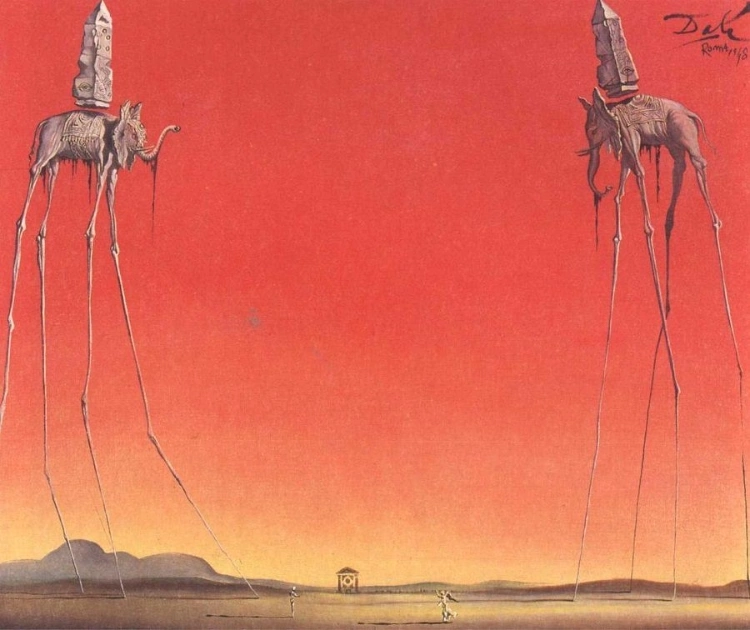
Dream logic doesn't follow rules that the waking mind recognizes, but it follows rules nonetheless. Dali's paintings map emotional states, fears, desires, and obsessions onto canvas using a vocabulary of recurring symbols. The images aren't random — they're deeply personal and psychologically consistent.
Dali's work only looks chaotic on the surface. Spending even ten minutes with a single painting reveals patterns and intentions that no amount of "expert" commentary can replace.
Myths About Dali That Keep Art Feeling Exclusive
Art elitism thrives on myths — stories that make ordinary people feel like they need permission to have an opinion. Dali attracts more than his fair share of these, and most of them serve the same purpose: keeping art behind a velvet rope.
The "He Was Just Crazy" Dismissal
This is the most common and the most damaging myth. Calling Dali crazy is a way of saying his art doesn't need to be taken seriously. It's a shortcut that avoids engagement. Our team has encountered this attitude countless times, and it always says more about the person making the claim than about Dali himself.
Was Dali eccentric? Absolutely. He kept an ocelot as a pet, designed a lobster telephone, and once gave a lecture wearing a deep-sea diving suit. But eccentric behavior and mental illness are not the same thing, and conflating the two is a form of gatekeeping — it suggests only "normal" people can be legitimate artists.
The "Style Over Substance" Argument
André Breton, the founder of Surrealism, eventually expelled Dali from the movement. Breton's crowd accused Dali of caring more about money and fame than artistic purity. This accusation has echoed through art criticism ever since.
But consider what Dali actually produced:
- Over 1,500 paintings across a career spanning six decades
- Significant contributions to film, sculpture, photography, and theater design
- Writings on art theory, nuclear mysticism, and optical illusion
- An entire museum (the Dalí Theatre-Museum in Figueres) designed as a total work of art
Dismissing that body of work as shallow because Dali also appeared on game shows is, frankly, absurd. The real issue was always that mainstream art movements couldn't tolerate someone who refused to choose between serious art and popular appeal.
Dali's Techniques and Methods Explained Simply
One of the biggest barriers to understanding Salvador Dali's art meaning is the jargon that surrounds his techniques. Art criticism loves its specialized vocabulary, and that vocabulary keeps casual admirers at arm's length. Here's what Dali was actually doing, in plain language.
The Paranoiac-Critical Method
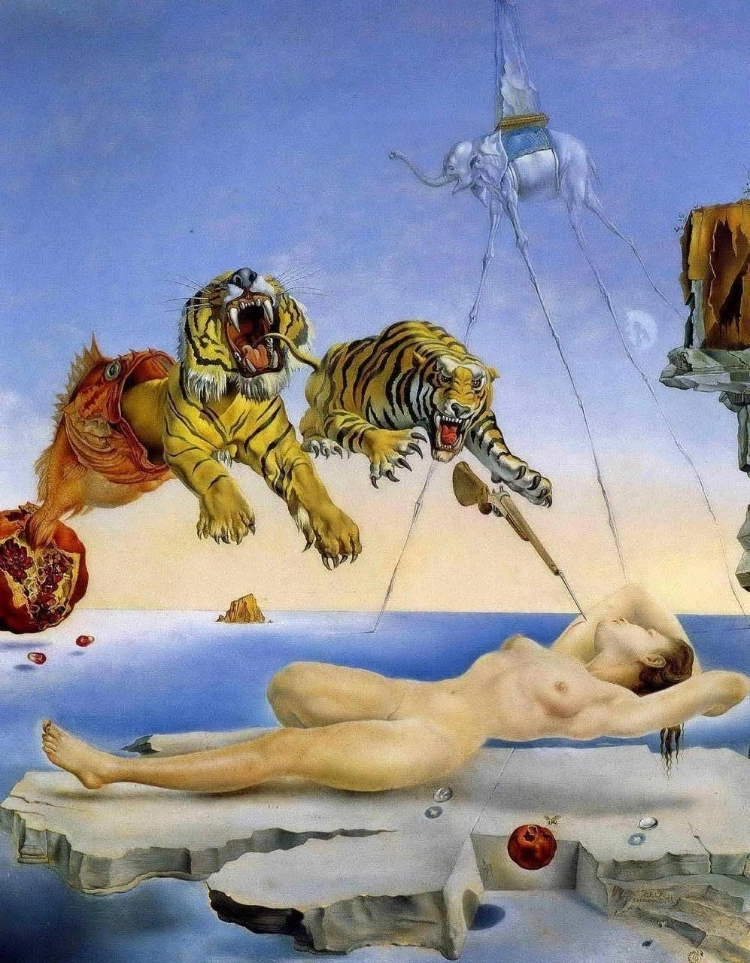
This sounds intimidating but the concept is straightforward. Dali developed a way of inducing a semi-hallucinatory state — not through drugs, but through intense concentration and self-induced paranoia. He would stare at objects until they transformed in his perception, then paint what he "saw."
Think of it like staring at clouds until faces appear. Dali just took that natural human tendency and turned it into a rigorous creative process. He called it "paranoiac-critical" because:
- Paranoiac = the ability to see connections and patterns where others don't (like mild, controlled paranoia)
- Critical = the conscious, rational analysis applied to those visions afterward
It was a two-step process. First, let the mind run wild. Then, apply craft and discipline to capture what emerged. According to his documented biography, Dali refined this method throughout the 1930s and considered it his greatest contribution to Surrealism.
Double Images and Hidden Forms
Many of Dali's paintings contain hidden images — a face that's also a landscape, a body that's also a piece of furniture. These aren't optical illusions for their own sake. They reflect the Surrealist belief that reality itself has multiple layers, and that the conscious mind only sees the most obvious one.
| Technique | What It Means | Famous Example |
|---|---|---|
| Double Image | Two subjects occupy the same space — the viewer's brain toggles between them | Slave Market with Disappearing Bust of Voltaire |
| Soft Forms | Rigid objects rendered as melting or drooping — suggests time, decay, or anxiety | The Persistence of Memory |
| Hyper-realistic Detail | Surreal subjects painted with photographic precision to make the impossible feel real | The Elephants |
| Anamorphic Distortion | Stretched or warped forms that resolve when viewed from a specific angle | Gala Contemplating the Mediterranean Sea |
| Nuclear Mysticism | Post-1945 work combining atomic physics imagery with religious themes | Corpus Hypercubus |
The beauty of these techniques is that none of them require expert knowledge to appreciate. Most people see the melting clocks and feel something — unease, wonder, fascination. That emotional response is valid. It's art doing its job.
Casual Appreciation vs. Deep Analysis of Dali
Here's where the argument against art elitism gets really practical. There's a widespread assumption that casual appreciation of art is somehow lesser — that unless someone can name the specific Freudian symbolism in The Great Masturbator, that person's experience doesn't count. Our team rejects that idea completely.
What Anyone Can See at First Glance
Dali's work is visually striking in a way that requires zero context to appreciate. The craftsmanship alone is staggering. Even someone who has never heard the word "Surrealism" can stand in front of The Persistence of Memory and be moved by it.
Surface-level reactions to Dali are perfectly legitimate:
- "That's beautiful" — valid
- "That makes me uncomfortable" — valid
- "I don't get it but I can't stop looking" — especially valid
- "It reminds me of a dream I had" — Dali would have loved that response
Art that can't communicate without a wall label has failed at being art. Dali understood this instinctively, which is why his most famous works don't need subtitles.
Layers That Reward Closer Study
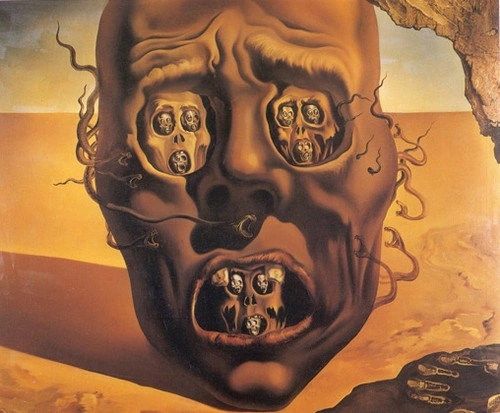
None of this means deep analysis is worthless. Understanding Salvador Dali's art meaning absolutely deepens with study. But the key distinction is that deeper knowledge enhances the experience — it doesn't unlock it. The door was never locked in the first place.
For anyone who wants to go deeper, a few starting points that our team recommends:
- Read Dali's own writings — his autobiography The Secret Life of Salvador Dalí is entertaining and revealing
- Study the recurring symbols: ants (decay/anxiety), eggs (hope/rebirth), crutches (fragility/support), elephants (strength burdened by desire)
- Look at his work chronologically to see how his style evolved from early Impressionism through Surrealism to Nuclear Mysticism
- Compare his work with other Surrealists like Magritte, Ernst, and Tanguy to see what's uniquely Dali
The difference between a casual viewer and a trained critic looking at a Dali painting is not that one "gets it" and the other doesn't — it's that they get different things, and both are real.
Common Mistakes When Approaching Dali's Work
After years of writing about and discussing Dali, our team has noticed patterns in how people trip themselves up. These mistakes aren't about intelligence — they're about habits of thinking that art elitism has trained into the culture.
Overthinking the Symbolism
This is the number one trap. Someone reads that ants in Dali's paintings represent decay, and suddenly every element must have a specific, decodable meaning. But Dali himself said that many of his images came from pure intuition — he painted what he saw in his mind and sometimes didn't know what it meant until later.
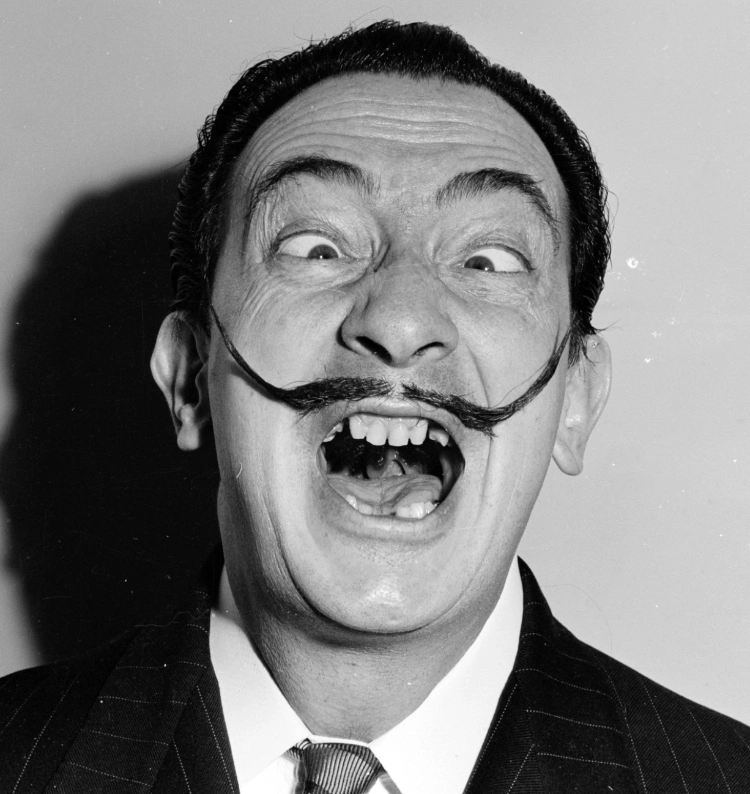
Not everything is a puzzle to solve. Some of it is just a feeling to feel. Most people would enjoy Dali far more if they stopped treating his paintings like cryptograms and started treating them like poems — meant to evoke, not to decode.
- Don't force every element into a Freudian box
- Allow ambiguity — Dali himself embraced it
- Trust the emotional response before reaching for the art history textbook
- Remember that Dali was often playful, even in his most "serious" works
Ignoring the Humor
Art elitism has a humor problem. Serious art isn't supposed to be funny, the thinking goes, so if something makes people laugh, it must not be serious. Dali demolished that false choice. He was genuinely hilarious — intentionally, consistently, and brilliantly.
The lobster telephone isn't just a Surrealist object. It's also a joke. The lip sofa based on Mae West's mouth is both a comment on desire and consumer culture and also just... funny. Dali's humor was a weapon against pretension, and ignoring it means missing half of what makes his work so alive.
Our team's advice is simple: if a Dali piece makes anyone laugh, that's not a failure of sophistication. That's the art working exactly as intended. Dali wanted to provoke every response — awe, confusion, disgust, delight, and laughter. The only response he would have hated is indifference.
Frequently Asked Questions
What is the best way to start understanding Salvador Dali's art meaning?
Start by looking. Spend time with one painting before reading about it. Notice what draws the eye, what feels unsettling, and what seems beautiful. That personal response is the foundation — everything else is bonus context that builds on it.
Was Salvador Dali actually kicked out of the Surrealist movement?
Yes. André Breton expelled him in 1934, largely over political disagreements and Dali's refusal to condemn fascism publicly. Dali famously responded that he himself was Surrealism, and continued making Surrealist work for the rest of his life regardless of official membership.
Why are the clocks melting in The Persistence of Memory?
Dali described them as inspired by the sight of Camembert cheese melting in the sun. They represent the fluidity and subjectivity of time — the idea that time as experienced in dreams and memory is nothing like the rigid clock time of waking life. The image resonates because everyone has felt time stretch or compress.
Did Dali use drugs to create his paintings?
Dali consistently claimed he did not use drugs, famously saying "I don't do drugs — I am drugs." His paranoiac-critical method relied on self-induced mental states achieved through concentration, sleep deprivation, and intense focus rather than chemical substances.
Is it okay to enjoy Dali's art without understanding all the symbolism?
Absolutely. Dali designed his work to hit people on a gut level first. The symbolism adds richness for those who want it, but the emotional and visual impact stands entirely on its own. No interpretation guide is required.
What makes Dali different from other Surrealist artists?
Three things set him apart: his extraordinary technical skill as a classical painter, his willingness to engage with popular culture and mass media, and his deeply personal symbolic vocabulary drawn from his childhood in Catalonia. While other Surrealists leaned toward abstraction, Dali painted the impossible with photographic clarity.
Why do some art critics still dismiss Dali as a showman rather than a serious artist?
This criticism stems from the art world's discomfort with popularity. Dali's celebrity, commercial work, and media appearances violated unwritten rules about how "real" artists should behave. But this says more about the narrowness of those rules than about Dali's artistic legitimacy. His technical mastery and conceptual depth are well-documented.
The greatest trick art elitism ever pulled was convincing people they needed permission to be moved by a painting. Dali spent his entire life proving they don't.


About David Fox
David Fox is an artist and writer whose work spans painting, photography, and art criticism. He created davidcharlesfox.com as a platform for exploring the history, theory, and practice of visual art — covering everything from Renaissance masters and modernist movements to contemporary works and the cultural context that shapes how art is made and received. At the site, he covers art history, architecture, anime art and culture, collecting guidance, and profiles of influential artists across centuries and movements.
Now get FREE Gifts. Or latest Free phones here.
Disable Ad block to reveal all the secrets. Once done, hit a button below