Climate Change-Themed Installation Art Explained
by David Fox
What happens when artists transform entire galleries into melting glaciers, submerged cities, and forests of recycled debris? The answer lies at the intersection of environmental activism and contemporary art, where installation art history explained through the lens of climate change reveals one of the most powerful creative movements of the modern era. Climate change-themed installations have evolved from niche curiosity into a dominant force within the art history canon, challenging audiences to confront ecological realities through immersive, often unsettling spatial experiences that linger long after the gallery lights dim.
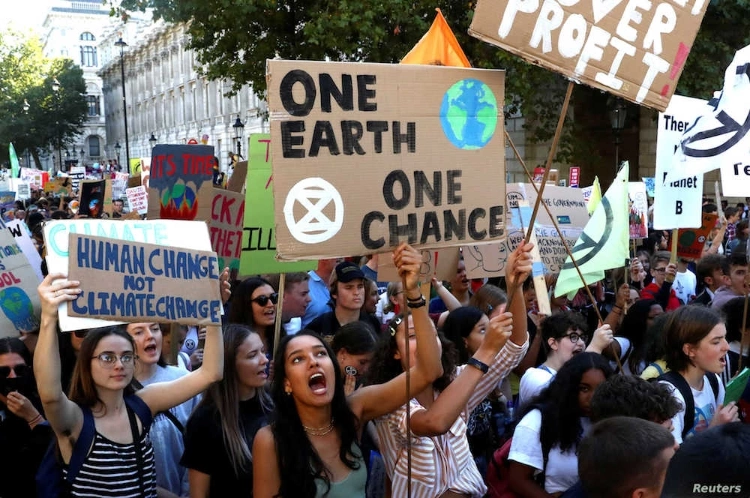
The genre traces its roots to the land art and environmental art movements of the late twentieth century, when artists first began using natural materials and outdoor sites to comment on humanity's relationship with the earth. Today, climate-themed installations occupy major biennials, public squares, and museum rotundas worldwide, employing everything from harvested ice blocks to AI-driven data visualizations. Their power derives from a simple principle: statistics about rising sea levels remain abstract until a viewer stands inside a room where water slowly climbs the walls.
This comprehensive guide unpacks the origins, misconceptions, strategies, and practical realities behind climate change installation art, offering a thorough look at how installation art history explained in environmental terms reshapes both artistic practice and public consciousness.
Contents
- Common Myths About Climate Installation Art
- Building a Long-Term Environmental Art Practice
- Comparing Approaches: Materials, Scale, and Impact
- Emerging Artists Versus Established Practitioners
- Best Practices for Climate-Themed Installations
- Funding and Budget Realities
- Practical Insights for Curators and Collectors
- Frequently Asked Questions
Common Myths About Climate Installation Art
Beyond Propaganda: Art as Inquiry
A persistent misconception holds that climate-themed installations function primarily as political propaganda dressed in aesthetic clothing. The reality is considerably more nuanced, as the strongest works in this genre raise questions rather than deliver slogans. Olafur Eliasson's renowned ice installations, for example, present harvested glacial fragments without explicit messaging, allowing the slow melt to speak for itself. The audience draws conclusions through direct sensory experience rather than didactic instruction, which distinguishes genuine installation art from activist signage.
The Permanence Question
Another widespread myth suggests that because installations are temporary, their cultural impact is inherently fleeting and therefore less significant than traditional art forms. This assumption ignores the extensive documentation practices that accompany major installations, as well as the profound psychological impressions these works leave on viewers. Much like the Arte Povera movement's emphasis on humble materials carrying profound messages, climate installations derive power precisely from their impermanence, mirroring the fragility of the ecosystems they reference.
The most effective climate installations never tell audiences what to think — they construct environments where ignoring the evidence becomes physically impossible.
Building a Long-Term Environmental Art Practice
Sustained Audience Engagement
Installation art history explained through an environmental lens reveals that the most impactful practitioners commit to sustained thematic exploration rather than one-off spectacles. Artists like Maya Lin have dedicated decades to environmental work, building a body of installations that collectively map ecological change across time and geography. This longitudinal approach creates a cumulative narrative that single works cannot achieve, and it establishes the artist as a credible voice within both art and environmental science communities.
Institutional Partnerships and Residencies
Long-term viability in this field increasingly depends on partnerships with scientific institutions, environmental organizations, and municipal governments. The environmental art movement has gained significant institutional support as museums recognize the audience-drawing power of immersive climate narratives. Residency programs at organizations like the Arctic Circle or Cape Farewell embed artists within active research expeditions, producing work grounded in firsthand observation rather than secondhand data, and these partnerships often provide material and logistical support that individual artists could never secure alone.
Comparing Approaches: Materials, Scale, and Impact
Material Strategies at a Glance
The range of materials and methods employed in climate installation art spans an enormous spectrum, from raw natural elements to sophisticated digital systems. Understanding these approaches helps contextualize how different artists balance environmental messaging with practical exhibition constraints, and the following comparison illustrates the primary strategies currently in active use across major international venues.
| Approach | Typical Materials | Scale | Audience Impact | Carbon Footprint |
|---|---|---|---|---|
| Natural Element | Ice, soil, water, living plants | Large venue | High sensory immersion | Moderate to high (transport) |
| Recycled / Found Object | Plastic waste, industrial debris | Flexible | Strong visual shock | Low |
| Data Visualization | Projections, LED arrays, sensors | Variable | Intellectual engagement | Moderate (energy use) |
| Participatory / Social | Community-sourced materials | Site-specific | Deep personal connection | Low |
| Hybrid Digital-Physical | AR overlays, responsive environments | Medium to large | Layered, repeat visits | Moderate |
Each approach carries distinct trade-offs between visceral impact and environmental responsibility, and the most critically acclaimed installations often combine two or more strategies to create layered experiences that operate on multiple registers simultaneously.
Emerging Artists Versus Established Practitioners
Entry Points for New Practitioners
Emerging artists entering the climate installation space face a fundamentally different landscape than the pioneers who established the genre decades ago. Access to fabrication tools, open-source environmental data sets, and social media distribution channels has lowered certain barriers dramatically, enabling smaller-scale works to reach global audiences without traditional gallery representation. Community art spaces, pop-up exhibitions, and festival circuits provide crucial first platforms where new voices can test ideas and build portfolios without the overhead of major museum productions.
How Veterans Scale Their Vision
Established practitioners like Eliasson, Lin, and Tomás Saraceno operate with dedicated studios, engineering teams, and multi-year production timelines that allow for extraordinary technical ambition. Their installations frequently involve custom-engineered structures, proprietary materials, and collaborations with climate scientists that would be impossible for solo emerging artists to replicate. The gap between emerging and established work is less about talent than about infrastructure, funding, and the institutional relationships that develop over a sustained career spanning multiple decades of exhibited work.
Best Practices for Climate-Themed Installations
Ethical Material Sourcing
The inherent contradiction of creating environmentally themed art that generates its own carbon footprint demands careful attention to material sourcing and lifecycle planning. Leading practitioners now conduct lifecycle assessments for major installations, tracking the environmental cost from material extraction through exhibition to decommissioning, and publishing these assessments alongside the artistic documentation. Reclaimed and locally sourced materials reduce transport emissions while often adding conceptual resonance, as the material's history becomes part of the narrative the installation communicates to its audience.
Designing for Audience Impact
Research into visitor behavior at immersive installations consistently shows that physical engagement drives retention far more effectively than passive observation. Installations that invite touch, movement through space, or real-time interaction with environmental data produce measurably stronger emotional responses and longer dwell times than static displays. The parallel with how Japanese art installations blend immersive experience with cultural tradition is instructive, as both approaches rely on spatial awareness and bodily presence to generate meaning that transcends verbal explanation.
Funding and Budget Realities
Typical Cost Breakdown
Financial transparency remains rare in the installation art world, yet understanding typical budget structures proves essential for artists planning ambitious climate-themed works. Production costs vary enormously based on scale, materials, and venue requirements, but general proportions remain surprisingly consistent across projects of different sizes. Most climate installations allocate the largest share to fabrication and materials, followed by transport and technical installation, with artist fees often representing a relatively modest portion of the total budget.
- Fabrication and materials — typically consume 35 to 45 percent of total budget, rising sharply for works involving engineered structures or living biological components
- Transport, installation, and deinstallation — account for 20 to 30 percent, with international touring multiplying these costs substantially
- Technology and AV systems — range from negligible for material-based works to 25 percent or more for data-driven installations requiring custom software and hardware
- Artist fees, studio overhead, and documentation — collectively represent 15 to 25 percent, though emerging artists frequently absorb studio costs personally
Grant funding from environmental foundations, cultural councils, and corporate sustainability programs has expanded considerably in recent years, and many mid-career artists now assemble hybrid funding packages that blend institutional commissions with philanthropic support and occasional corporate sponsorship from organizations seeking visible environmental commitments.
Practical Insights for Curators and Collectors
Documentation and Afterlife
Because climate installations are inherently temporal, documentation practices determine whether a work endures in the cultural record or vanishes after deinstallation. Professional-grade video, photography, environmental sensor data, and written artist statements form the minimum documentation package for significant works. Forward-thinking artists now incorporate documentation into the creative process from the earliest planning stages, treating the archive not as a byproduct but as an integral component of the work's complete lifecycle and future scholarly significance.
Collecting the Ephemeral
The collector market for installation art has matured significantly, with acquisition models now including purchase of installation instructions and material specifications, edition-limited documentation sets, and rights to future reinstallation under defined conditions. Museums acquiring climate-themed installations must consider long-term conservation challenges unique to works involving organic, degradable, or technologically dependent materials, and many institutions now employ dedicated time-based media conservators specifically to address these concerns. The growing intersection of environmental urgency and institutional collecting ensures that the genre's most significant works will persist far beyond their original exhibition dates.
Frequently Asked Questions
What distinguishes climate installation art from environmental sculpture?
Environmental sculpture typically exists as a discrete object placed within a landscape, while climate installation art transforms an entire space into an immersive environment that envelops the viewer. Installations frequently incorporate temporal elements like melting, growth, decay, or real-time data feeds that evolve throughout the exhibition period, creating experiences that change with each visit.
How do artists address the carbon footprint of producing large-scale climate installations?
Leading practitioners conduct lifecycle assessments, prioritize locally sourced and reclaimed materials, offset transport emissions through verified programs, and increasingly design works for disassembly and material reuse. Some artists publish their installation's environmental impact data as part of the exhibition itself, turning the contradiction into a transparent conversation with the audience.
Can emerging artists create meaningful climate installations without major institutional funding?
Smaller-scale works using found objects, community-sourced materials, or digital projections can achieve significant impact without large budgets. Festival circuits, community art spaces, and open-call exhibitions provide accessible platforms, and social media documentation extends the reach of even modest installations far beyond their physical audience.
How are museums preserving climate-themed installations for future generations?
Institutions acquire detailed installation instructions, material specifications, and comprehensive multimedia documentation rather than fixed physical objects. Time-based media conservators manage technological components, while reinstallation rights agreements allow works to be rebuilt under conditions specified by the original artist, preserving both the physical experience and the conceptual intent.
Climate installation art endures not because it offers comfortable answers, but because it places audiences inside the question itself — and that spatial truth outlasts any statistic.


About David Fox
David Fox is an artist and writer whose work spans painting, photography, and art criticism. He created davidcharlesfox.com as a platform for exploring the history, theory, and practice of visual art — covering everything from Renaissance masters and modernist movements to contemporary works and the cultural context that shapes how art is made and received. At the site, he covers art history, architecture, anime art and culture, collecting guidance, and profiles of influential artists across centuries and movements.
Now get FREE Gifts. Or latest Free phones here.
Disable Ad block to reveal all the secrets. Once done, hit a button below