Jin Yong: The Legendary Wuxia Novelist and His Most Memorable Characters
by David Fox
Over 300 million copies of Jin Yong's novels have been sold worldwide, a figure that places him among the best-selling fiction authors in human history — yet his name remains surprisingly unfamiliar in many Western literary circles. For anyone exploring the intersection of storytelling, visual culture, and Eastern artistic traditions, Jin Yong memorable characters represent one of the most significant contributions to narrative art in the modern era. Our team at Art Commentary considers his work essential reading for understanding how character archetypes function across cultural boundaries, much like how Western readers study Tolkien or Homer.
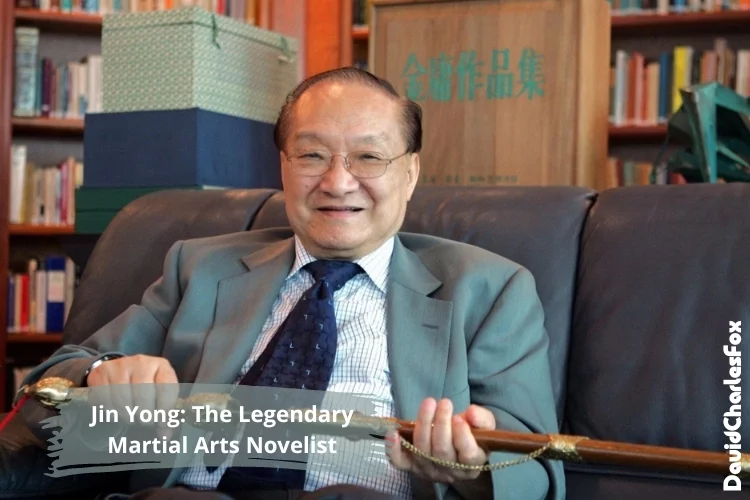
Born Louis Cha Leung-yung in Haining, Zhejiang Province, Jin Yong wrote fifteen novels between 1955 and 1972 that effectively defined the wuxia genre for contemporary audiences. These are not simple martial arts adventure stories. They are sprawling, deeply philosophical works that weave together Chinese history, Confucian ethics, Buddhist philosophy, and Taoist mysticism into narratives of breathtaking complexity. The characters he created — flawed heroes, cunning villains, and fiercely independent heroines — have been adapted into over a hundred television series, films, video games, and comic books across Asia.
What makes Jin Yong memorable characters so enduring is their psychological depth. Unlike the flat archetypes that populate much genre fiction, figures such as Guo Jing, Yang Guo, and Linghu Chong wrestle with genuine moral dilemmas, personal failures, and evolving philosophies. Our exploration below examines these characters in detail, offering guidance for newcomers and seasoned readers alike on how to appreciate the full scope of Jin Yong's literary achievement. The same attention to layered symbolism that we find in the history of manga applies here, though Jin Yong's roots run deeper into classical Chinese literary traditions.
Contents
- Understanding Jin Yong's Literary Universe
- The Most Iconic Heroes and Heroines at a Glance
- Navigating the Wuxia Canon: Where to Begin
- Why These Characters Endure Across Generations
- When to Read Jin Yong — And When to Watch Instead
- Common Misconceptions About Jin Yong's Work
- Decoding the Symbolism Behind Jin Yong's Characters
- Frequently Asked Questions
- Key Takeaways
Understanding Jin Yong's Literary Universe
Jin Yong's fifteen novels form an interconnected tapestry of Chinese history spanning from the Song Dynasty through the Qing Dynasty. While each novel stands alone, several share characters, locations, and thematic threads that reward careful reading. The wuxia genre itself — literally "martial heroes" — predates Jin Yong by centuries, but his contribution elevated it from pulp entertainment to serious literary art.
The Condor Trilogy
The trilogy comprising The Legend of the Condor Heroes, The Return of the Condor Heroes, and The Heaven Sword and Dragon Saber represents the core of Jin Yong's achievement. These three novels, set across multiple generations, contain arguably the most Jin Yong memorable characters in the entire canon:
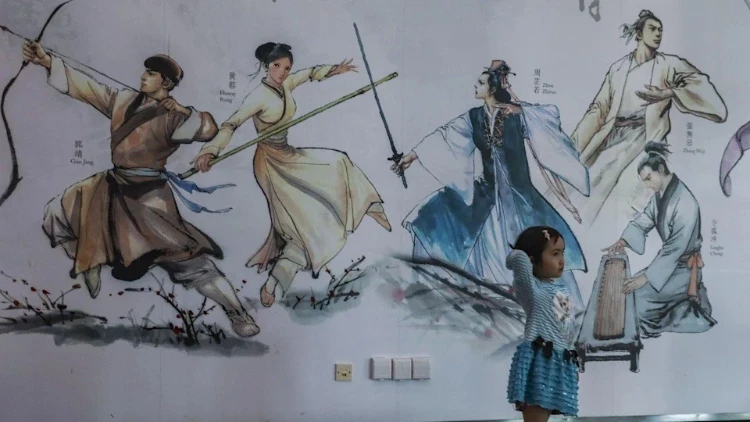
- Guo Jing — the slow-witted but morally incorruptible hero who embodies Confucian loyalty
- Huang Rong — one of literature's great female intellects, whose cunning surpasses every martial artist around her
- Yang Guo — the rebellious orphan whose forbidden love story challenges every social convention
- Xiaolongnü — the ethereal maiden raised in isolation, whose emotional awakening drives the second novel
- Zhang Wuji — the reluctant leader torn between duty, love, and self-knowledge
The Standalone Masterworks
The Smiling, Proud Wanderer and The Deer and the Cauldron represent Jin Yong's later, more mature phase. Linghu Chong from the former is widely regarded as the most psychologically complex protagonist in wuxia fiction. Wei Xiaobao from the latter — a cowardly, street-smart trickster with no martial arts ability — is Jin Yong's most daring creation, an anti-hero who subverts every expectation the genre establishes.
Pro insight: Wei Xiaobao in The Deer and the Cauldron was Jin Yong's deliberate deconstruction of his own genre — reading it first often confuses newcomers who expect a traditional hero's journey.
The Most Iconic Heroes and Heroines at a Glance
Our team has compiled a reference table of the most significant Jin Yong memorable characters, organized by novel and archetype. This comparison serves as a quick orientation for anyone entering the wuxia literary world.
Male Protagonists
| Character | Novel | Archetype | Defining Trait | Moral Alignment |
|---|---|---|---|---|
| Guo Jing | Legend of the Condor Heroes | Steadfast Hero | Unwavering loyalty | Lawful Good |
| Yang Guo | Return of the Condor Heroes | Romantic Rebel | Forbidden love | Chaotic Good |
| Zhang Wuji | Heaven Sword and Dragon Saber | Reluctant Leader | Indecisiveness | Neutral Good |
| Linghu Chong | The Smiling, Proud Wanderer | Free Spirit | Non-conformity | Chaotic Good |
| Wei Xiaobao | The Deer and the Cauldron | Trickster Anti-Hero | Street cunning | Chaotic Neutral |
| Qiao Feng | Demi-Gods and Semi-Devils | Tragic Hero | Identity crisis | Lawful Good |
| Chen Jialuo | The Book and the Sword | Scholarly Leader | Idealism | Lawful Good |
Female Characters Who Define the Genre
Jin Yong's heroines deserve particular attention. In an era when most Chinese popular fiction relegated women to decorative roles, he created female characters of extraordinary agency and complexity. Huang Rong remains the most celebrated — her intelligence consistently outmaneuvers opponents who underestimate her. Ren Yingying from The Smiling, Proud Wanderer wields political power with a sophistication that most male characters in the novels cannot match.
- Huang Rong — strategist, cook, leader; arguably the true protagonist of Condor Heroes
- Ren Yingying — the daughter of a cult leader who navigates loyalty and love with remarkable pragmatism
- Zhao Min — a Mongol princess whose wit and determination make her Zhang Wuji's most compelling foil
- A'Zhu — whose tragic fate in Demi-Gods and Semi-Devils remains the most emotionally devastating moment in all of Jin Yong's work
Navigating the Wuxia Canon: Where to Begin
The sheer volume of Jin Yong's output — fifteen novels totaling millions of words — can feel overwhelming. Our team has guided numerous readers through the canon, and the approach matters significantly. A poor starting point leads to abandonment; the right one creates lifelong devotees.
Recommended Entry Points
For most people, The Legend of the Condor Heroes remains the ideal first novel. Its relatively straightforward narrative, its deeply likable protagonists, and its rich historical backdrop make it accessible without sacrificing depth. Anna Holmwood's acclaimed English translation has made this more achievable than ever for Western readers.
Those with a taste for darker, more complex narratives — the kind of audience drawn to otaku subculture and its layered storytelling traditions — often prefer beginning with Demi-Gods and Semi-Devils, which features three intertwined protagonists and a more morally ambiguous universe.
Key tip: Most people benefit from reading at least one Condor Trilogy novel before attempting The Deer and the Cauldron, as the latter deliberately subverts conventions that the earlier works establish.
Reading Order Considerations
Two viable approaches exist. The publication order respects Jin Yong's artistic evolution but front-loads some of his less polished early work. The chronological (in-universe) order provides historical continuity but scatters his best writing across the sequence. Our recommendation is a hybrid approach: begin with the Condor Trilogy, then read Demi-Gods and Semi-Devils, followed by the standalone novels in any order.
Why These Characters Endure Across Generations
The persistence of Jin Yong memorable characters across decades of adaptations and reinterpretations demands explanation. These are not merely popular — they have become embedded in Chinese cultural consciousness at a level comparable to Sherlock Holmes or King Arthur in the West.
Universal Archetypes in Chinese Dress
Jin Yong understood something fundamental about storytelling: the most powerful characters embody universal human tensions wrapped in culturally specific detail. Guo Jing is not simply a Chinese hero — he is the archetype of the ordinary person who achieves greatness through persistence rather than talent. Yang Guo is every young person who has ever felt the world's rules were unjust. Qiao Feng is the outsider who discovers his identity was built on lies.
These tensions resonate across cultures. The same principle drives the enduring appeal of characters in Western literary traditions, from Odysseus to Jay Gatsby. What distinguishes Jin Yong is the philosophical framework he employs — drawing simultaneously from Confucianism, Buddhism, and Taoism to create moral universes of remarkable nuance.
Influence on Visual and Performing Arts
Jin Yong's impact extends far beyond literature. His characters have shaped:
- Hong Kong cinema's golden age of martial arts films
- Television drama across China, Taiwan, and Southeast Asia
- Video game design and character archetypes in RPGs
- Contemporary Chinese illustration and comic art
- Operatic and theatrical adaptations throughout the Chinese-speaking world
The visual interpretations of his characters — particularly in the lavish television adaptations — have created iconic imagery that functions much like the great paintings function in Western art history. Each generation reimagines these figures, much as Western artists have continuously reinterpreted mythological subjects.
When to Read Jin Yong — And When to Watch Instead
Not every path into Jin Yong's world requires reading millions of words of Chinese literature in translation. Adaptations offer a legitimate alternative entry point, though they come with significant trade-offs.
The Case for Novels First
The novels contain layers of philosophical commentary, historical context, and character interiority that no adaptation has successfully captured. Jin Yong's prose — even in translation — carries a weight and precision that rewards close reading. For anyone serious about understanding the artistic achievement, the novels are irreplaceable.
- Full access to characters' internal monologues and moral reasoning
- Historical and philosophical digressions that deepen every plot point
- Appreciation for Jin Yong's narrative structure, which operates on an architectural scale
- The original authorial voice, unfiltered by adaptation choices
The Case for Adaptations First
Television adaptations — particularly the acclaimed TVB versions from Hong Kong and the more recent Mainland Chinese productions — offer the advantage of visual storytelling. The elaborate martial arts choreography, costume design, and landscape cinematography create an immediate emotional connection that can motivate deeper exploration.
Important note: Adaptation quality varies enormously — our team strongly advises researching which version of each novel is most respected before committing to a multi-episode series.
Common Misconceptions About Jin Yong's Work
Several persistent misunderstandings prevent Western audiences from engaging with Jin Yong's work on its merits. Correcting these misconceptions is essential for genuine appreciation.
The Genre Fiction Dismissal
The most damaging misconception is that wuxia fiction is merely genre entertainment — the Chinese equivalent of pulp Westerns. This fundamentally misreads both the tradition and Jin Yong's specific contribution. His novels engage with Chinese history, philosophy, and ethics at a level of sophistication that rivals any literary fiction. Scholars at universities across Asia study his work alongside the classical Chinese canon. The genre label obscures rather than illuminates.
The parallel in Western art history is instructive. We have seen similar dismissals of naive art and its practitioners, where surface simplicity masked genuine artistic achievement. The tendency to judge by category rather than quality is a persistent critical failure.
The Violence Misunderstanding
While martial arts combat is central to wuxia fiction, reducing Jin Yong's novels to action sequences is like reducing Shakespeare to sword fights. The combat in Jin Yong's work functions as philosophical metaphor. Different martial arts styles represent different philosophical approaches to life. A character's fighting technique reveals their moral and psychological state. The famous "Nine Yin Manual" is not simply a powerful technique — it represents the dangerous allure of power without wisdom.
Decoding the Symbolism Behind Jin Yong's Characters
For readers accustomed to Western literary symbolism, Jin Yong's character construction offers a fascinating parallel system rooted in Chinese cultural traditions.
What the Names Reveal
Chinese literary naming conventions carry far more semantic weight than most Western readers realize. Every character name in Jin Yong's novels is deliberate:
- Guo Jing (郭靖) — "Jing" references the Jingkang Incident, tying his identity to national humiliation and the duty to restore honor
- Yang Guo (杨过) — "Guo" means "to surpass" or "to transgress," foreshadowing his entire character arc of breaking social norms
- Linghu Chong (令狐冲) — "Chong" suggests rushing forward impetuously, perfectly capturing his personality
- Huang Rong (黄蓉) — "Rong" is the lotus flower, symbolizing purity emerging from murky waters
Martial Arts as Philosophical Metaphor
The martial arts systems in Jin Yong's novels map directly onto competing Chinese philosophical traditions. The Shaolin school represents orthodox Buddhist discipline. The Wudang school embodies Taoist flexibility and naturalness. The various heterodox sects — the Ming Cult, the Sun Moon Holy Cult — represent challenges to established orthodoxy. A character's martial arts journey is always, simultaneously, a philosophical and moral journey.
This layered approach to character construction is what elevates Jin Yong memorable characters beyond genre conventions. Each protagonist does not simply learn to fight better — they learn to understand themselves and the world more deeply. The martial arts are the vehicle; the destination is wisdom.
Frequently Asked Questions
What is the best Jin Yong novel to read first?
The Legend of the Condor Heroes is widely regarded as the ideal starting point. Its accessible narrative structure, compelling protagonists, and rich historical setting make it welcoming for newcomers while showcasing Jin Yong's strengths. Anna Holmwood's English translation has made this entry point especially viable for Western readers.
How many novels did Jin Yong write in total?
Jin Yong wrote fifteen novels and one short story collection between 1955 and 1972. He subsequently revised the entire body of work twice — once in the 1970s and again in the early 2000s — creating three distinct editions that scholars continue to compare and debate.
Are Jin Yong's novels available in English?
Several novels now have English translations. MacLehose Press has published the complete Legends of the Condor Heroes tetralogy translated by Anna Holmwood and Gigi Chang. Additional translations are in progress, though the majority of the canon remains available only in Chinese.
Who is considered the greatest Jin Yong character?
Opinions vary, but Guo Jing, Qiao Feng, and Linghu Chong consistently rank highest in reader polls across Chinese-speaking communities. Guo Jing's moral steadfastness, Qiao Feng's tragic nobility, and Linghu Chong's free-spirited authenticity each represent different ideals that resonate with different readers.
What distinguishes wuxia fiction from other martial arts genres?
Wuxia specifically refers to fiction centered on martial artists operating within a code of chivalry (the "xia" or knight-errant tradition). It differs from xianxia (which incorporates supernatural cultivation and immortality) and from pure martial arts action fiction by its emphasis on moral philosophy, historical grounding, and the tension between individual justice and social order.
Why are there so many television adaptations of Jin Yong's novels?
The combination of compelling characters, elaborate plot structures, and built-in audience recognition makes Jin Yong's novels ideal adaptation material. Each generation of actors and directors brings fresh interpretation to the source material, and production technology improvements allow increasingly spectacular realizations of the martial arts sequences.
How did Jin Yong influence modern Chinese popular culture?
Jin Yong's influence is pervasive and foundational. His character archetypes, plot structures, and philosophical frameworks inform Chinese television drama, film, gaming, and literature. Phrases and references from his novels have entered everyday Chinese speech. His impact on Chinese popular culture is often compared to the combined influence of Tolkien and Shakespeare on English-language culture.
Key Takeaways
- Jin Yong memorable characters endure because they embody universal human tensions — loyalty versus freedom, duty versus love, orthodoxy versus rebellion — within a richly layered Chinese philosophical framework.
- The Condor Trilogy serves as the ideal entry point for newcomers, with The Legend of the Condor Heroes offering the most accessible combination of compelling protagonists and historical depth.
- Jin Yong's heroines — particularly Huang Rong, Ren Yingying, and Zhao Min — deserve recognition as some of the most complex and empowered female characters in global popular fiction.
- The martial arts in Jin Yong's novels function as philosophical metaphor rather than mere action, making his work as rewarding for literary analysis as it is for entertainment.


About David Fox
David Fox is an artist and writer whose work spans painting, photography, and art criticism. He created davidcharlesfox.com as a platform for exploring the history, theory, and practice of visual art — covering everything from Renaissance masters and modernist movements to contemporary works and the cultural context that shapes how art is made and received. At the site, he covers art history, architecture, anime art and culture, collecting guidance, and profiles of influential artists across centuries and movements.
Now get FREE Gifts. Or latest Free phones here.
Disable Ad block to reveal all the secrets. Once done, hit a button below