Naive Art: What It Is, Its History, and Key Characteristics
by David Fox
Naive art is artwork created by self-taught artists who operate outside formal academic training, producing pieces marked by bold colors, flattened perspective, and childlike directness. The study of naive art history and characteristics reveals a movement that challenged the gatekeeping of the professional art world and opened doors for untrained creators across every continent. Far from being "lesser" art, naive work carries a raw emotional honesty that trained artists often spend decades trying to recapture. For those exploring broader artistic movements and criticism, the art commentary section offers additional context on how movements like this reshape cultural conversations.

The term "naive" itself is somewhat misleading. It suggests simplicity or ignorance, but the artists behind these works possessed sharp observational skills and deep creative instincts. They simply arrived at their vision through a different path — one unburdened by the rules of proportion, chiaroscuro, and classical composition that dominate art academies.
Understanding naive art means understanding a parallel tradition that runs alongside the formal art canon, occasionally intersecting with it but never fully absorbed into it. This guide breaks down the origins, defining traits, major figures, and lasting impact of the movement.
Contents
- Naive Art History and Characteristics: A Complete Overview
- Spotting Naive Art: Key Visual Markers
- Notable Naive Artists and Their Masterworks
- When Naive Art Flourishes — And When It Doesn't
- Strengths and Criticisms of the Naive Art Movement
- Caring for and Collecting Naive Art
- The Enduring Influence of Naive Art on Contemporary Culture
- Frequently Asked Questions
- Final Thoughts
Naive Art History and Characteristics: A Complete Overview
Origins in 19th-Century France
Naive art as a recognized category emerged in the late 1800s, though untrained artists had been creating work for centuries before anyone thought to label it. The movement gained visibility when Henri Rousseau, a French toll collector with no formal art education, began exhibiting at the Salon des Indépendants in 1886. Critics mocked his work. Fellow artists — including Picasso, who famously hosted a banquet in Rousseau's honor — recognized something genuine and powerful in it.

The Salon des Indépendants itself was crucial. Unlike the official Paris Salon, it had no jury and no gatekeepers. Anyone could exhibit. This created a space where self-taught artists could show alongside trained professionals, and the public could judge the work on its own merits rather than the artist's credentials.
Global Spread in the 20th Century
By the mid-20th century, naive art had surfaced independently across multiple continents:
- Haiti — Hector Hyppolite and Philomé Obin led a vibrant school rooted in Vodou imagery
- Croatia — The Hlebine school, led by Ivan Generalić, produced internationally recognized naive painters
- United States — Grandma Moses became a household name painting rural American life
- Georgia (country) — Niko Pirosmani painted tavern signs that became national treasures
- Brazil — Artists from favelas and rural areas contributed distinct perspectives
Each regional tradition brought its own visual vocabulary while sharing the core trait of operating outside academic conventions. This global emergence showed that naive art was not a European curiosity but a universal human impulse.
Spotting Naive Art: Key Visual Markers
Color and Form
Recognizing naive art does not require expertise — the visual cues are distinctive and consistent across artists and regions. The most immediately noticeable trait is color usage. Naive artists tend toward saturated, unmodulated hues. Shadows are minimal or absent. Colors are chosen for emotional impact rather than optical accuracy.
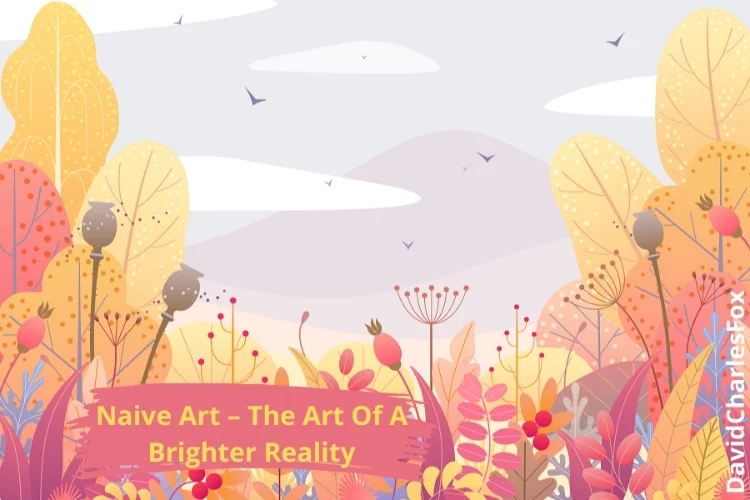
Forms are simplified but not abstract. A house looks like a house, a tree looks like a tree — but they are rendered with a directness that strips away photographic detail in favor of essential shapes. This connects naive art to folk traditions and children's illustration while remaining entirely its own category.
Perspective and Scale
Linear perspective — the system of vanishing points that creates depth on a flat surface — is largely absent in naive art. Instead, objects are arranged using intuitive spatial logic:
- Important subjects appear larger regardless of their position
- Background and foreground objects share similar levels of detail
- Multiple viewpoints coexist in a single scene
- Figures appear stiff or frontal, similar to medieval painting
Pro insight: The absence of formal perspective in naive art is not a deficiency — it is a defining feature that gives the work its distinctive spatial energy and emotional directness.
This flattened space is precisely what gives naive art its visual punch. It creates compositions that feel more like memory or dream than observation — which is exactly how many self-taught artists work, painting from imagination rather than life models.
Notable Naive Artists and Their Masterworks
Henri Rousseau — The Godfather of Naive Art
Rousseau remains the most recognized naive artist in history. His jungle scenes — painted despite his never leaving France — pulse with dense vegetation, hidden animals, and an eerie stillness. The Dream (1910) and The Sleeping Gypsy (1897) are among the most reproduced artworks of the modern era.

What made Rousseau remarkable was his absolute confidence. He genuinely believed he was among the greatest painters alive. That self-assurance translated directly into bold compositions that more cautious artists would never attempt. His influence extended to Surrealists, who saw in his work a bridge to the unconscious mind — not unlike the way abstract expressionist painters later sought to bypass rational thought in favor of raw emotion.
Other Masters of the Movement
| Artist | Country | Active Period | Known For |
|---|---|---|---|
| Grandma Moses | United States | 1939–1961 | Rural American landscapes and seasonal scenes |
| Niko Pirosmani | Georgia | 1890s–1918 | Tavern signboard paintings, animal portraits |
| Ivan Generalić | Croatia | 1930s–1992 | Reverse glass painting, village life |
| Séraphine Louis | France | 1905–1934 | Visionary botanical compositions |
| Hector Hyppolite | Haiti | 1945–1948 | Vodou-inspired spiritual imagery |
| Alfred Wallis | England | 1928–1942 | Ships and harbor scenes on found cardboard |
| Horace Pippin | United States | 1930–1946 | War scenes, domestic life, racial justice |

Many of these artists came to painting late in life. Grandma Moses started at 78. Alfred Wallis began at 70 after his wife died. This late-blooming pattern reinforces the idea that naive art springs from an innate creative drive rather than professional ambition. The impulse to create simply needs the right conditions — time, solitude, and freedom from self-consciousness.
When Naive Art Flourishes — And When It Doesn't
Ideal Contexts
Naive art thrives in specific conditions. It gains traction when the formal art world becomes overly intellectualized or exclusive — when audiences crave sincerity over sophistication. Several contexts consistently produce strong naive work:
- Cultural isolation — Artists working outside urban art centers develop highly personal styles
- Post-conflict societies — Communities rebuilding cultural identity often embrace self-taught expression
- Folk art traditions — Regions with strong craft heritage provide a foundation for naive painting
- Outsider-friendly exhibition spaces — Open salons and community galleries lower barriers to entry
The movement shares this anti-establishment DNA with later movements like Fluxus, which similarly challenged institutional definitions of what counted as art. Both reject the premise that formal credentials are prerequisites for genuine creative expression.
Where It Struggles
Naive art encounters resistance in heavily academic environments. Art schools built around technical mastery often dismiss it. Commercial galleries focused on blue-chip contemporary art rarely feature it. The label itself can become a cage — once an artist is categorized as "naive," critics tend to evaluate the work through that lens exclusively, ignoring artistic growth or intentional choices.
There is also the problem of imitation. Deliberately mimicking naive style while possessing formal training produces a different kind of work — sometimes called "faux-naive" or "pseudo-naive" — that lacks the authentic directness of genuine self-taught art.
Strengths and Criticisms of the Naive Art Movement
The naive art movement carries both genuine strengths and legitimate criticisms that collectors and scholars continue to debate:
Strengths:
- Emotional directness — no academic filter between vision and canvas
- Cultural authenticity — reflects lived experience rather than art-historical trends
- Accessibility — audiences without art education connect with naive work immediately
- Diversity — draws creators from every background, age, and geography
- Influence on modernism — directly impacted Picasso, the Surrealists, and the German Expressionists like Franz Marc
Criticisms:
- The "naive" label is patronizing — it defines artists by what they lack rather than what they bring
- Market undervaluation — naive work consistently sells below comparable trained art
- Romanticization of ignorance — some critics argue the celebration of untrained art discourages skill development
- Classification problems — the line between naive, outsider, folk, and visionary art remains blurry

Collector's note: When evaluating naive art for purchase, focus on consistency of vision across multiple works rather than technical execution of any single piece — that consistency signals authentic artistic voice.
The tension between celebration and condescension has followed naive art since Rousseau's day. Even well-meaning appreciation can slip into a kind of aesthetic paternalism, treating these artists as charming curiosities rather than serious creators. The best approach treats naive art on its own terms — evaluating it by the standards it sets for itself, not by the standards of a tradition it never claimed to follow.
Caring for and Collecting Naive Art
Building a Collection
Naive art remains one of the more accessible entry points for new collectors. Prices for quality work by lesser-known artists sit well below the contemporary art market average. Regional auction houses, estate sales, and folk art festivals are productive hunting grounds.
Key considerations when building a naive art collection:
- Research provenance carefully — self-taught artists rarely kept detailed records
- Prioritize artists with a documented body of work over one-off pieces
- Look for regional exhibitions and cultural heritage organizations as sources
- Consider the material — many naive artists used unconventional surfaces (cardboard, scrap wood, found objects)
- Connect the collection to broader art history — pieces that pair well with works by artists like Vincent van Gogh, who shared the naive movement's intensity and outsider sensibility, create compelling dialogues
The Wikipedia entry on naive art provides a useful starting bibliography for deeper research into regional schools and individual artists.
Preservation Basics
Because naive artists frequently used non-archival materials, preservation presents unique challenges. Works on cardboard degrade faster than canvas. House paint fades differently than artist-grade pigment. Understanding the history of oil paint pigments helps collectors assess the longevity of materials used in older naive works.
Standard preservation practices apply but with added vigilance:
- Store away from direct sunlight — non-archival pigments fade rapidly
- Control humidity strictly — unconventional substrates warp and deteriorate
- Consult conservators experienced with folk and outsider art specifically
- Never attempt DIY restoration on naive work — the materials behave unpredictably
The Enduring Influence of Naive Art on Contemporary Culture
Modern Echoes
Naive art's DNA runs through contemporary visual culture in ways most people never notice. The flat color fields, bold outlines, and simplified forms that define digital illustration, children's book art, and indie animation all trace lineage back to the naive tradition. The movement proved that emotional resonance does not require technical virtuosity — a lesson that digital-age creators have embraced fully.
Street art and mural programs worldwide draw on naive aesthetics. Community art projects deliberately adopt the accessible, non-intimidating visual language that naive art pioneered. Even the democratizing ethos of movements like yarn bombing and installation art echo naive art's foundational principle: creative expression belongs to everyone, not just the credentialed few.
Connections to Other Art Genres

Naive art intersects with several adjacent categories, and the boundaries between them remain actively debated:
- Folk art — shares the self-taught origin but is tied to specific cultural traditions and functional objects
- Outsider art (Art Brut) — coined by Jean Dubuffet, emphasizes creators operating entirely outside the art world, often including the institutionalized
- Primitivism — a problematic term describing trained artists borrowing from non-Western or pre-modern aesthetics
- Visionary art — self-taught work driven by spiritual or mystical experience
The relationship between naive art and illustrators like Norman Rockwell is also worth examining. While Rockwell was formally trained, his commitment to accessible, emotionally direct imagery shares philosophical ground with the naive tradition. Both prioritize communication over abstraction, storytelling over formal experimentation.
Frequently Asked Questions
What is the difference between naive art and outsider art?
Naive art refers specifically to work by self-taught artists who engage with mainstream culture and often exhibit publicly. Outsider art (Art Brut) encompasses creators who exist entirely outside the art world, including those in psychiatric institutions. All naive art is outsider in origin, but not all outsider art fits the naive category.
Is naive art considered "real" art by the professional art world?
Major museums worldwide — including MoMA, the Musée d'Orsay, and the Museum of Everything — collect and exhibit naive art. Henri Rousseau's works sell for millions at auction. The professional art world has accepted naive art as a legitimate tradition, though pockets of academic snobbery persist.
Can a trained artist create naive art?
Technically no. Once formal training shapes an artist's approach, any "naive-looking" work becomes deliberate stylistic choice rather than authentic naive expression. This is sometimes called faux-naive or pseudo-naive art. It can be excellent work, but it belongs to a different category.
Why is Henri Rousseau considered the father of naive art?
Rousseau was the first self-taught artist to gain significant attention in the Parisian art world. His persistence in exhibiting at the Salon des Indépendants, combined with championing by artists like Picasso and Apollinaire, established naive art as a recognized movement rather than a dismissible anomaly.
What materials do naive artists typically use?
Naive artists historically used whatever was available — house paint instead of artist pigments, cardboard instead of canvas, scrap wood instead of prepared panels. Contemporary naive artists have wider access to art supplies, but the tradition of unconventional materials continues.
How much does naive art sell for at auction?
Prices range enormously. Top-tier works by Rousseau, Grandma Moses, or Séraphine Louis can reach six or seven figures. Work by lesser-known but quality naive artists typically sells in the hundreds to low thousands, making it one of the more affordable collecting categories.
What are the main characteristics that define naive art?
The core characteristics include flat perspective without vanishing points, bold unmodulated color, simplified but recognizable forms, subjects drawn from everyday life or imagination, and an absence of academic compositional rules. The overall effect is one of directness and emotional clarity.
Is naive art the same as children's art?
No. While both share visual simplicity, naive art is created by adults making deliberate (if untrained) artistic choices. Children's art reflects developmental stages of visual processing. Naive art demonstrates consistent personal vision sustained across a body of work — something children's art does not typically exhibit.
Final Thoughts
Naive art history and characteristics offer a powerful reminder that formal training is just one path to meaningful creative work. Whether starting a collection, researching a specific artist, or simply learning to spot naive art in galleries and markets, the next step is direct engagement — visit a folk art museum, attend a regional art fair, or spend time with the works of Rousseau, Grandma Moses, and Pirosmani online. The more time spent looking at genuine naive art, the sharper the eye becomes for the qualities that make this tradition one of the most enduring and universal in art history.


About David Fox
David Fox is an artist and writer whose work spans painting, photography, and art criticism. He created davidcharlesfox.com as a platform for exploring the history, theory, and practice of visual art — covering everything from Renaissance masters and modernist movements to contemporary works and the cultural context that shapes how art is made and received. At the site, he covers art history, architecture, anime art and culture, collecting guidance, and profiles of influential artists across centuries and movements.
Now get FREE Gifts. Or latest Free phones here.
Disable Ad block to reveal all the secrets. Once done, hit a button below