Steve McCurry: American Photographer and Photojournalist
by David Fox
You stand in a gallery, and a pair of green eyes stares back at you from a magazine cover — piercing, unforgettable, belonging to a girl whose name you do not yet know. That single frame, captured in a refugee camp, altered the trajectory of photojournalism forever. Steve McCurry photographer India connections run deep through decades of work, but his lens has swept across continents, conflict zones, and cultures with a consistency few practitioners have matched. If you appreciate art history and the intersection of visual storytelling with human dignity, McCurry's body of work demands your attention.
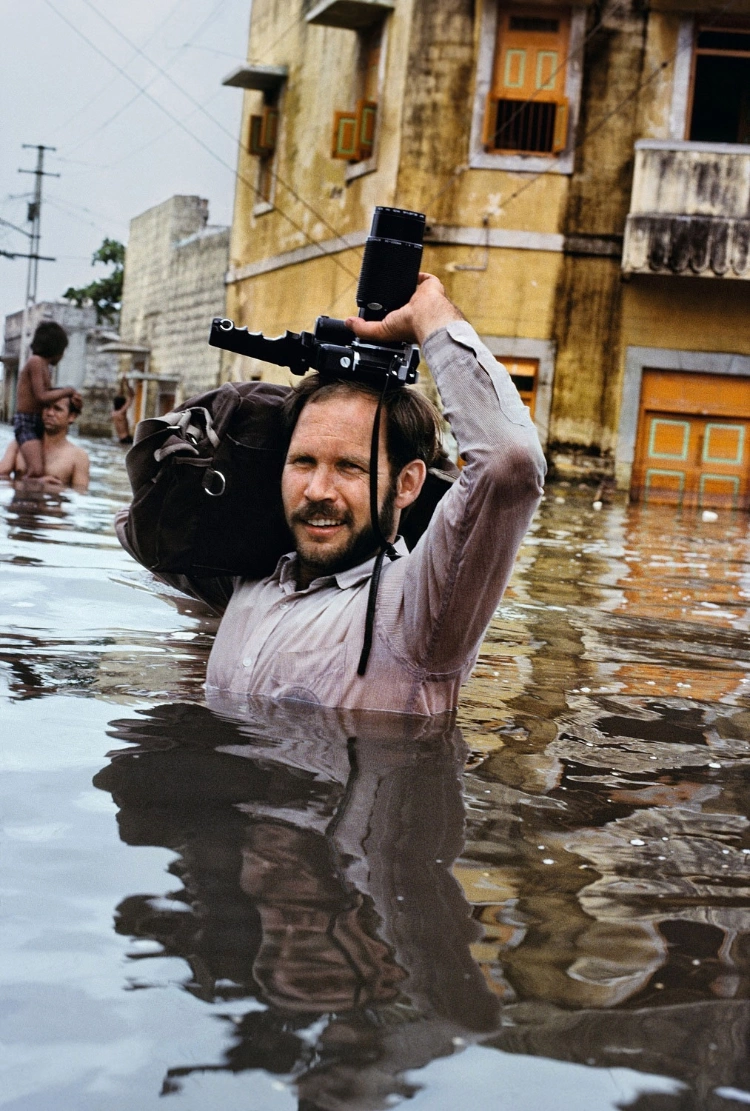
Born in Philadelphia in 1950, McCurry studied cinematography and history at Penn State before pivoting to freelance photojournalism. His early career took shape not in a studio but on the roads of India and Pakistan, where he crossed into Afghanistan disguised in local garb just before the Soviet invasion. The rolls of film he smuggled out — sewn into his clothing — produced some of the first images the Western world saw of that conflict.
McCurry's work sits at the crossroads of Henri Cartier-Bresson's decisive-moment philosophy and a deeply empathetic, colour-saturated visual language all his own. Over a career spanning more than four decades, he has produced a portfolio that functions as both journalism and fine art — a rare duality in any era.
Contents
- Preserving a Photographic Archive: Why McCurry's Process Matters
- The McCurry Approach: Lessons in Documentary Photography
- How McCurry Builds a Photograph: From Encounter to Icon
- Reading McCurry's Work: Surface Beauty vs. Deeper Narrative
- Separating Fact from Fiction: Common McCurry Misconceptions
- Frequently Asked Questions
- Key Takeaways
Preserving a Photographic Archive: Why McCurry's Process Matters
McCurry's archive contains over one million images. Maintaining that body of work — spanning analogue film, early digital files, and modern high-resolution captures — presents challenges that mirror broader concerns in the evolution of modern art preservation. You cannot separate the artist's legacy from the physical and digital media on which it exists.
The Kodachrome Factor
McCurry shot extensively on Kodachrome 64, the legendary Kodak transparency film prized for its archival stability and colour richness. When Kodak discontinued Kodachrome in 2009, McCurry was given the final roll ever produced — roll number 765004936. He shot it across locations in New York, India, and Parsons, Kansas, where the last processing lab stood. Those final 36 frames became a cultural event in themselves.
The significance for you as a viewer: Kodachrome transparencies, stored properly, retain colour fidelity for over a century. McCurry's early work exists in a medium that will outlast most digital storage formats currently available.
Transition to Digital
McCurry adopted digital capture in the mid-2000s, a transition that brought speed and flexibility but also introduced questions about post-processing ethics that would later surface publicly. His archive now spans two fundamentally different preservation paradigms — chemical and electronic — requiring distinct conservation strategies for each.
Pro Insight: If you study photojournalism archives, always note the original medium. A Kodachrome slide and a JPEG from the same photographer carry different evidentiary weight and different preservation needs.
The McCurry Approach: Lessons in Documentary Photography
Patience Over Speed
McCurry does not work like a news photographer chasing breaking events. He embeds himself in locations for weeks, sometimes months. His coverage of the monsoon season across South Asia involved repeated visits over multiple years, building relationships with subjects who appear across different bodies of work. You see the results in the intimacy of his portraits — subjects look into his lens with trust, not wariness.
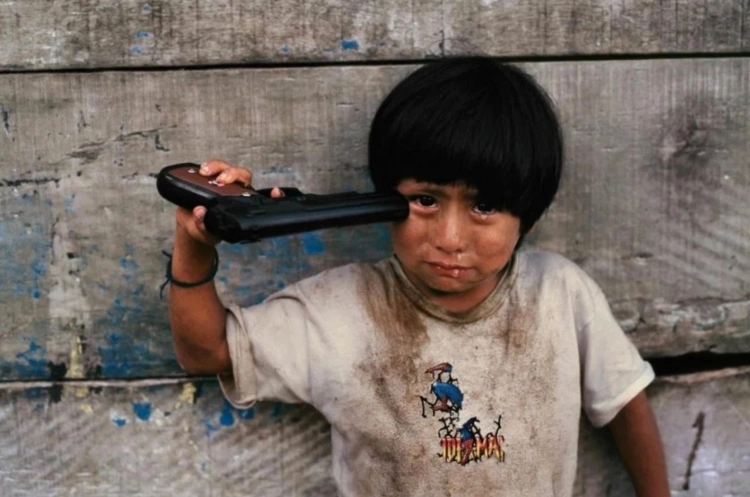
This method contrasts sharply with the wire-service model where photographers parachute into crisis zones and leave within days. McCurry's extended presence in Afghanistan, Burma, and India produced work that transcends the news cycle entirely.
Colour as Language
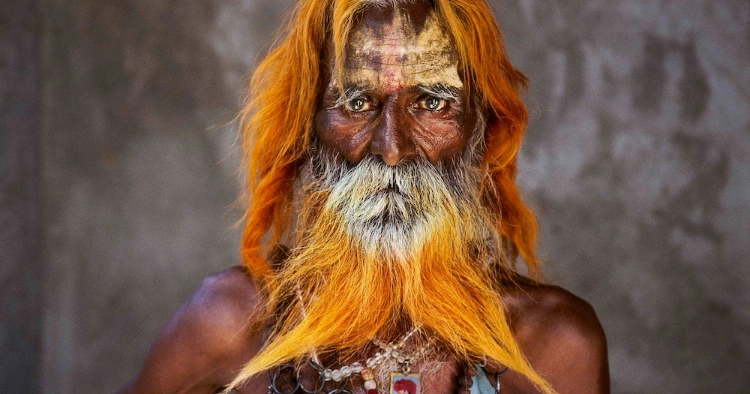
Where many documentary photographers of his generation worked in black and white — associating monochrome with seriousness — McCurry committed fully to colour. His palette choices communicate specific emotional registers. The saffrons and magentas of his India work convey sensory overload. The dusty ochres of his Afghanistan images suggest isolation. You read the emotional tone before you process the subject matter, much as you might respond to the colour fields in street photography traditions.
How McCurry Builds a Photograph: From Encounter to Icon
The Field Method
McCurry has described his process in interviews as beginning with wandering — moving through a location without a predetermined shot list. He watches light, observes routines, and waits for what he calls "the unguarded moment." The sequence works consistently across his career:
| Stage | Action | Time Investment |
|---|---|---|
| Arrival | Observe without photographing; build familiarity with surroundings | Hours to days |
| Connection | Engage subjects through gesture, tea, shared presence — rarely through translators initially | Hours |
| Scouting | Identify backgrounds, light angles, and compositional frames | Ongoing |
| Shooting | Work in concentrated bursts when light, subject, and moment converge | Minutes to hours |
| Review | Edit ruthlessly — McCurry selects roughly 1 in 1,000 frames for portfolio inclusion | Weeks |
Steve McCurry Photographer India: A Lifelong Bond
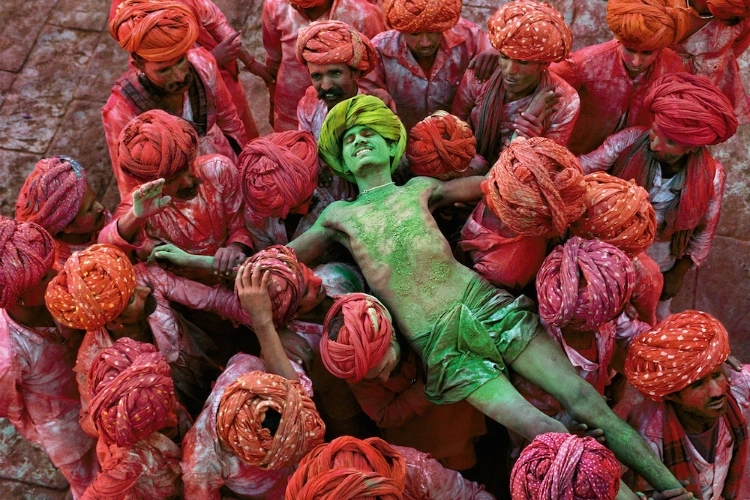
No single country defines McCurry's career more than India. He first traveled there in 1978, and his visits have continued without interruption for decades. His Indian work encompasses the Holi festival in Rajasthan, monsoon flooding in Varanasi, train journeys across the subcontinent, and intimate portraits of artisans, monks, and labourers.
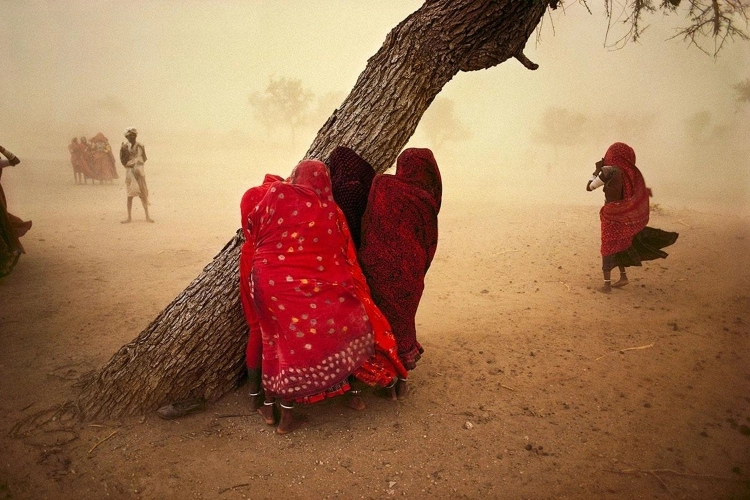
India gave McCurry something essential: a visual density unmatched by almost any other location on earth. The layered textures of daily life — colour, chaos, stillness, and spiritual practice coexisting in a single frame — provided the raw material for his most recognized non-Afghan work. His book India remains one of the best-selling photography monographs ever published, according to his Wikipedia entry.
Key Consideration: When you study McCurry's India photographs, pay attention to the background figures. His compositions frequently place secondary subjects in perfect geometric balance — a technique that separates deliberate composition from snapshots.
Reading McCurry's Work: Surface Beauty vs. Deeper Narrative
What You See First
McCurry's images are immediately beautiful. Rich colour, clean composition, striking faces. This accessibility is simultaneously his greatest strength and the source of most criticism leveled against him. Detractors argue the beauty aestheticises suffering — that a perfectly composed portrait of a war-affected child prioritises visual pleasure over journalistic truth.
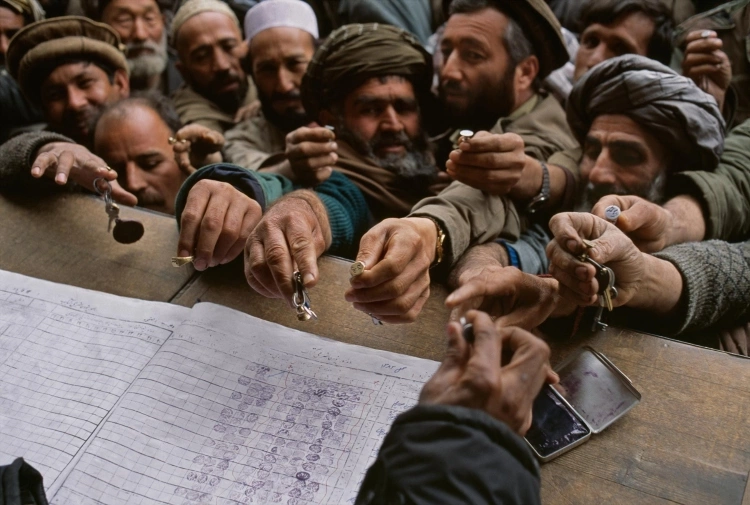
You should engage with that criticism honestly. The same tension exists across visual art forms — from Marina Abramovic's confrontational performances to Renaissance depictions of martyrdom. Beauty and documentation are not mutually exclusive, but the relationship demands scrutiny.
What You Find on Second Look
Spend time with McCurry's images beyond the initial impact and patterns emerge. His Afghan work across three decades documents the physical transformation of a society under continuous conflict. Faces age. Buildings disappear. Landscapes scar. The cumulative archive tells a story no single iconic frame can contain.
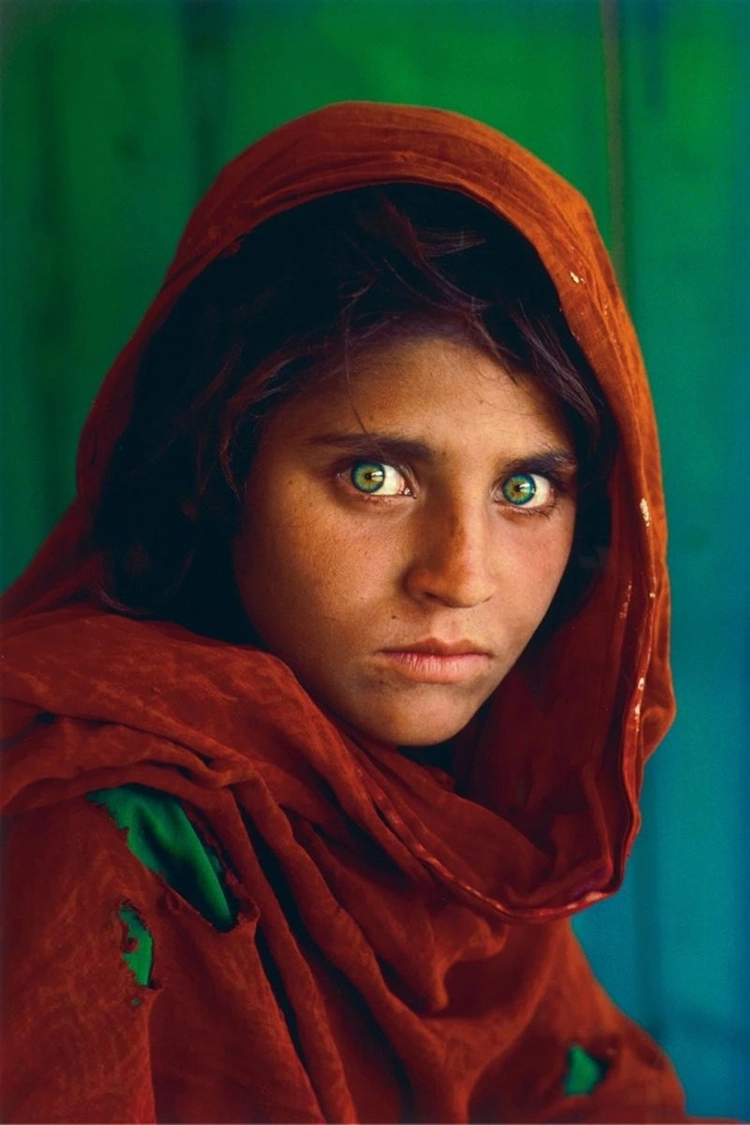
The Afghan Girl photograph — Sharbat Gula, captured in the Nasir Bagh refugee camp in 1984 — functions differently when you see it alongside McCurry's return visit seventeen years later. The second portrait, taken after her identity was confirmed through iris recognition, shows a woman weathered by displacement and hardship. Together, the two images form a diptych that documents not a moment but a life shaped by geopolitics.
Separating Fact from Fiction: Common McCurry Misconceptions
The Staging Controversy
In 2016, Italian photographer Paolo Viglione identified cloning artifacts in a McCurry print exhibited in Italy — a road sign digitally removed from a scene. The discovery triggered broader scrutiny and several other instances of post-processing manipulation surfaced. McCurry's studio acknowledged the alterations, attributing them to an overzealous retoucher.
You need to understand the context. McCurry had by that point been exhibiting and selling work as fine art, not filing for wire services. The ethical framework for art photography differs from hard news. However, the incident damaged his credibility with photojournalism purists and prompted National Geographic — which had published his most famous work — to re-examine their relationship with his submissions.
More Than the Afghan Girl
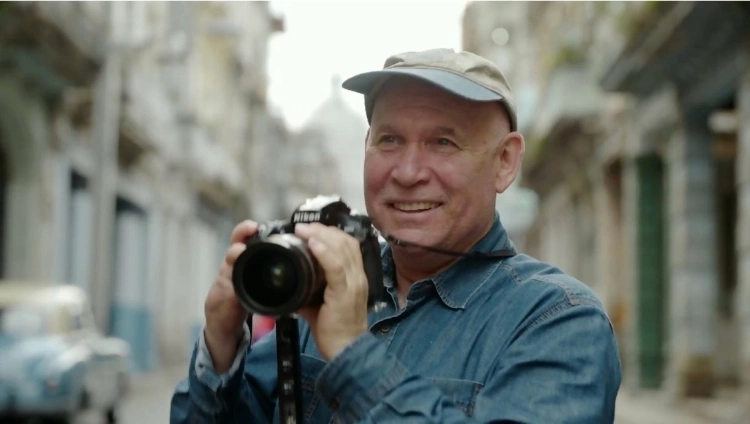
The misconception that McCurry is a one-image photographer does not survive even casual examination of his output. His coverage of the first Gulf War, the fall of the Taliban, monsoon culture in South Asia, and Buddhist monastic life across Southeast Asia each constitute standalone career achievements. He holds membership in Magnum Photos, the cooperative agency founded by Cartier-Bresson and Robert Capa, and has received the Robert Capa Gold Medal — the highest honour in war photography — for his Afghanistan work.
Steve McCurry photographer India work alone fills multiple monographs. His broader output spans over forty countries and addresses themes from child labour to environmental degradation to the persistence of traditional craftsmanship in industrialising economies.
Frequently Asked Questions
What camera does Steve McCurry use?
McCurry shot primarily with Nikon film cameras (F3, FM2) during his analogue years and transitioned to Nikon digital bodies, including the D810 and D850. He has also used medium-format Hasselblad systems for exhibition-quality prints.
Is the Afghan Girl photograph staged?
No. McCurry photographed Sharbat Gula during a visit to the Nasir Bagh refugee camp in Peshawar, Pakistan, in 1984. The session was brief and unplanned — he entered a classroom tent and photographed her with available light. Her identity was unknown until National Geographic conducted a search in 2002.
How many times has McCurry visited India?
McCurry has made dozens of extended trips to India since 1978. He has described the country as his most important creative wellspring, and his India portfolio spans virtually every region and season of the subcontinent.
What awards has Steve McCurry received?
His major honours include the Robert Capa Gold Medal, four first-place World Press Photo awards, the National Press Photographers Association Magazine Photographer of the Year, and the Royal Photographic Society's Centenary Medal.
Where can you see McCurry's work exhibited?
McCurry exhibitions rotate through major venues worldwide, including regular showings in Europe and Asia. His permanent archive is managed through his New York studio, and many images are viewable through the Magnum Photos and National Geographic online collections.
Key Takeaways
- Steve McCurry photographer India work represents the deepest and most sustained creative relationship in his career, spanning decades and producing some of documentary photography's most recognizable colour images.
- His field method — extended immersion, patient observation, and ruthless editing — produces an average selection rate of roughly one portfolio image per thousand frames shot.
- The 2016 post-processing controversy highlighted the shifting boundary between photojournalism and fine-art photography, a distinction you must understand when evaluating his later exhibition work.
- McCurry's full archive, encompassing conflict zones across four continents and cultural documentation from over forty countries, positions him as one of the most significant visual chroniclers of the late twentieth and early twenty-first centuries.


About David Fox
David Fox is an artist and writer whose work spans painting, photography, and art criticism. He created davidcharlesfox.com as a platform for exploring the history, theory, and practice of visual art — covering everything from Renaissance masters and modernist movements to contemporary works and the cultural context that shapes how art is made and received. At the site, he covers art history, architecture, anime art and culture, collecting guidance, and profiles of influential artists across centuries and movements.
Now get FREE Gifts. Or latest Free phones here.
Disable Ad block to reveal all the secrets. Once done, hit a button below