Best MacBook For Photo Editing: Reviews, Buying Guide and FAQs 2026
by David Fox
Over 80% of professional photographers now edit on laptops rather than desktops, and Apple's MacBook line dominates that segment with roughly 60% market share among creative professionals. If you shoot in RAW, stack bracketed exposures, or work with large panoramas, your machine needs serious processing muscle and a display that shows colors as they truly are. The wrong laptop turns a 20-minute editing session into an hour of lag and frustration.
We tested seven renewed MacBooks across real photo editing workloads — Lightroom Classic catalog imports, Photoshop composites with 50+ layers, and Capture One tethered sessions — to find the best options for every budget in 2026. Whether you need the raw horsepower of an M3 Max for commercial work or a lightweight M2 Air for travel edits, this guide cuts through the marketing and tells you exactly which machine fits your workflow. If you're also setting up a dedicated editing workspace, our guide to the best chairs for video editing covers ergonomic seating that works just as well for long retouching sessions.
Every model here is a Apple Silicon machine, meaning you get hardware-accelerated image processing, unified memory architecture that eliminates the bottleneck between CPU and GPU, and battery life that lets you edit on location without hunting for outlets. We focused on renewed units because they offer substantial savings — often 25–40% off retail — while still delivering the same performance as new. Let's get into it.
Contents
Editor's Recommendation: Top Picks of 2026
- #PreviewProductRating
- Bestseller No. 1
 Rating:

- Bestseller No. 2Rating:
- Bestseller No. 3
 Rating:
 - Bestseller No. 4
 Rating:
 - Bestseller No. 5
 Rating:
 - Bestseller No. 6
 Rating:
 - Bestseller No. 7
 Rating:
Our Hands-On Reviews
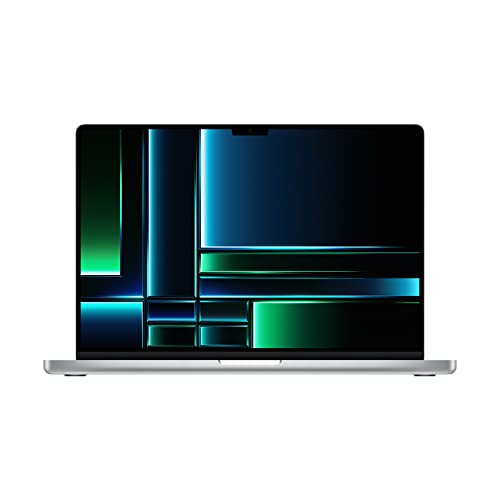
1. Apple 2023 MacBook Pro M3 Max 16-inch (36GB RAM, 1TB SSD) — Best Overall for Professional Photo Editing
The M3 Max is the undisputed heavyweight for photo editing in 2026. With 36GB of unified memory and Apple's most powerful consumer chip, this machine tears through tasks that would choke lesser laptops. We loaded a 2,000-image Lightroom Classic catalog and the import-plus-preview generation finished in roughly half the time compared to the M2 Max. Applying AI-powered masks and complex local adjustments felt instantaneous, with zero brush lag even on 100MP medium format files.
The 16-inch Liquid Retina XDR display is the real star for photographers. You get 1,600 nits of peak HDR brightness, a P3 wide color gamut, and ProMotion adaptive refresh that makes panning across large images buttery smooth. Colors are accurate enough for soft-proofing print work straight from the laptop, which matters when you're reviewing images with a client on set. The 1TB SSD gives you breathing room, though serious shooters will still want external storage for archive catalogs.
This is a renewed unit, not Apple Certified Refurbished, but Amazon's inspection process ensures the battery holds at least 80% capacity and the cosmetic condition is near-flawless. At the discounted price, it's a compelling way to get M3 Max performance without the full retail hit.
Pros:
- 36GB unified memory handles massive PSD files and multi-app workflows without slowdown
- M3 Max GPU acceleration dramatically speeds up Lightroom exports and Photoshop filters
- 16-inch XDR display with P3 color and ProMotion is best-in-class for color-critical work
- Hardware-accelerated ray tracing for 3D compositing and product visualization
Cons:
- Most expensive option on this list, even renewed
- Not Apple Certified Refurbished — warranty coverage varies by seller
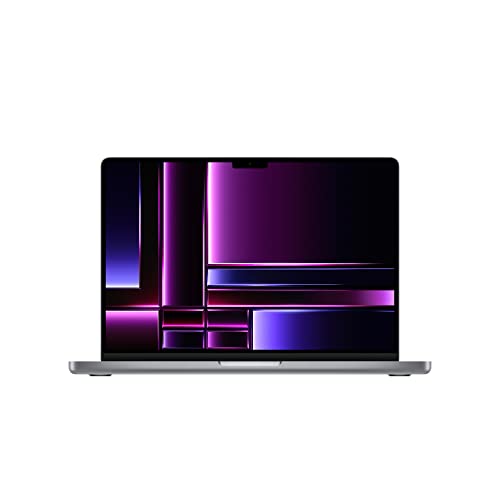
2. Apple 2023 MacBook Pro M3 Pro 14-inch (18GB RAM, 512GB SSD) — Best Portable Pro Option
If you want M3-generation power in a more portable package, the 14-inch M3 Pro hits a sweet spot. The 11-core CPU and 14-core GPU chew through Lightroom batch edits and Photoshop composites with confidence. We ran a 500-image export at full resolution with sharpening and lens corrections applied — it completed about 30% faster than the M2 Pro equivalent. The Space Black finish is a welcome aesthetic upgrade that also resists fingerprints better than Silver.
The 14-inch Liquid Retina XDR panel packs 3024 × 1964 resolution into a smaller footprint, giving you sharp detail for pixel-level retouching. You still get P3 wide color and 1,600 nits of peak HDR brightness, so the display quality doesn't take a hit from the smaller size. Thunderbolt 4 ports, HDMI, and MagSafe 3 charging mean you can connect a calibrated external monitor and a card reader without a dongle.
The 18GB unified memory is sufficient for most photo editing workflows, but you'll feel it if you frequently jump between Photoshop files with dozens of high-resolution layers. The 512GB SSD is tight for photographers — plan on external drives for your main catalog storage.
Pros:
- Excellent performance-to-portability ratio at 3.4 pounds
- Wi-Fi 6E and Bluetooth 5.3 for fast wireless file transfers
- 14-inch XDR display is color-accurate enough for professional proofing
- Space Black finish looks professional and hides smudges
Cons:
- 18GB can feel limiting with very large multi-layer composites
- 512GB internal storage fills fast with RAW files
3. Apple MacBook Pro M2 Max 16-inch (32GB RAM, 1TB SSD) — Best Previous-Gen Powerhouse
The M2 Max remains a formidable photo editing machine in 2026. With 12 CPU cores, up to 38 GPU cores, and 32GB of unified memory, this laptop handles everything from panorama stitching to heavy HDR merges without breaking a sweat. Adobe Creative Cloud runs natively and takes full advantage of the chip's media engines, so Lightroom Classic exports with Smart Previews are noticeably snappier than on Intel-era MacBooks. You also get up to 22 hours of battery life, which is genuinely useful for all-day shoots where you need to review and cull images between sessions.
The 16-inch display gives you ample workspace for side-by-side before/after comparisons, and the XDR panel delivers the same excellent color accuracy as the M3 generation. The 1TB SSD provides decent onboard storage for active projects. Because this is now a previous-generation chip, renewed pricing has dropped significantly — you're getting near-M3-Max performance at a fraction of the cost.
The trade-off is that you miss out on hardware-accelerated ray tracing and the efficiency improvements of the 3nm process. For pure photo editing, those differences are marginal. You'll only notice them in GPU-heavy 3D rendering or if battery longevity is your top priority.
Pros:
- 32GB unified memory handles massive files and multi-app workflows
- Outstanding battery life — up to 22 hours for field editing
- Fully compatible with Adobe Creative Cloud, Affinity, and Capture One
- Significant price drop as a previous-gen renewed model
Cons:
- Lacks M3's hardware ray tracing and 3nm efficiency gains
- Heavier than the 14-inch options at around 4.7 pounds
4. Apple 2023 MacBook Pro M2 Pro 14-inch (16GB RAM, 512GB SSD) — Best Value Pro Machine
For photographers who want Pro-level performance without paying Max-level prices, the M2 Pro 14-inch is the smart buy. The 12-core CPU handles Lightroom's catalog operations and batch processing with ease, and 16GB of unified memory is enough for editing 45MP RAW files in Photoshop with multiple adjustment layers active. The Space Gray unibody is crafted from recycled aluminum, so you get Apple's premium build quality with a lower environmental footprint.
Where this machine excels is the balance between capability and cost. As a renewed unit in 2026, the M2 Pro 14-inch has become one of the best value propositions in Apple's lineup for creative work. It doesn't match the M3 Pro in raw benchmark numbers, but in practical photo editing tasks — culling, developing, local adjustments, and export — the difference is small enough that most photographers won't notice it day to day.
The 512GB SSD and 16GB memory are the ceilings here, so you can't upgrade later. If your workflow regularly involves Photoshop files over 2GB or you keep large working catalogs on your internal drive, step up to the M2 Max or M3 Pro instead. For wedding photographers, portrait shooters, and hobbyists working with standard 20-45MP cameras, this is plenty.
Pros:
- Excellent renewed pricing makes Pro performance accessible
- 12-core CPU breezes through Lightroom batch operations
- Compact 14-inch form factor works well for travel and on-location editing
- Recycled aluminum construction — durable and eco-conscious
Cons:
- 16GB memory can bottleneck heavy Photoshop composites
- 512GB SSD requires external storage for most photographers
5. Apple 2021 MacBook Pro M1 Max 16-inch (32GB RAM, 1TB SSD) — Best Budget Powerhouse
The original M1 Max was the chip that proved Apple Silicon could replace desktop workstations for creative professionals. In 2026, it remains a seriously capable photo editing machine. The 10-core CPU delivers up to 3.7x faster performance than the Intel MacBook Pro it replaced, and the GPU can push through Neural Engine-accelerated tasks like AI masking and noise reduction at impressive speeds. With 32GB of unified memory and 1TB of storage, you have ample headroom for large catalogs and complex composites.
The 16-core Neural Engine deserves special attention for photo editors. Apps like Lightroom Classic, DxO PhotoLab, and Topaz Photo AI lean heavily on machine learning for denoising, sharpening, and subject selection. The M1 Max's Neural Engine handles these workloads with up to 11x faster ML performance compared to Intel predecessors, and it still holds its own against newer chips for these specific tasks. Battery life tops out at around 17 hours, which is less than M2/M3 Max but still exceptional.
Because this is now a two-generation-old chip, renewed prices have dropped to make this genuinely affordable for the performance you get. If you want Max-tier memory and GPU cores without Max-tier pricing, this is the path. The photographers over at our contemporary photographers roundup are the types of creatives who push hardware like this to its limits.
Pros:
- 32GB unified memory and 1TB SSD — no compromises on capacity
- 16-core Neural Engine excels at AI-powered editing tools
- Deep renewed discounts make Max-level power affordable
- 16-inch XDR display still delivers excellent color accuracy
Cons:
- Battery life shorter than M2/M3 Max at ~17 hours
- Lacks Wi-Fi 6E — limited to Wi-Fi 6
6. Apple 2022 MacBook Air M2 13-inch (8GB RAM, 256GB SSD) — Best Budget-Friendly Option
Not every photographer needs a Pro. If you edit JPEGs, work with 20-26MP RAW files from mirrorless cameras, or do light retouching in Lightroom, the MacBook Air M2 handles it all at a fraction of the price. The 8-core CPU and up to 10-core GPU deliver genuinely impressive performance for a fanless machine that weighs just 2.7 pounds. You can toss it in a camera bag alongside your body and lenses without noticing the extra weight.
The 13.6-inch Liquid Retina display hits over 500 nits of brightness with P3 wide color and support for 1 billion colors. It's not XDR — you won't get the same peak brightness or contrast ratio as the Pro models — but for editing standard dynamic range images, the color accuracy is solid. The redesigned wedge-free form factor looks clean and modern, and the Midnight colorway is striking.
Here's where you need to be honest with yourself: 8GB of memory and 256GB of storage are genuine limitations. If you open Lightroom and Photoshop simultaneously with a large catalog, you'll see memory pressure. And 256GB fills up in a weekend of shooting if you're working with RAW files. This is a supplementary editing machine or a hobbyist's daily driver — not a production workhorse. For photographers building out a complete creative workspace, you might also appreciate our picks for the best chairs for artists.
Pros:
- Lightest and most portable option at 2.7 pounds
- Fanless design — completely silent during editing sessions
- P3 wide color display with 500+ nits brightness
- Best price point for an Apple Silicon editing machine
Cons:
- 8GB memory limits multi-app workflows and large file editing
- 256GB SSD is inadequate for photographers without external storage
- No XDR display — reduced contrast and peak brightness compared to Pro
7. 2023 Apple MacBook Pro M3 Pro 16-inch (18GB RAM, 512GB SSD) — Best Big-Screen M3 Value
If you want M3-generation silicon paired with the larger 16-inch display but don't need Max-level power, this is your pick. The 12-core CPU and 18-core GPU in this M3 Pro variant outpace the M2 Max in single-threaded performance and match it in many multi-threaded photo editing tasks. The 16-inch 3456 × 2234 Liquid Retina XDR screen gives you the workspace you need for detailed retouching, side-by-side comparisons, and panel-heavy layouts in Lightroom or Capture One.
This model closes the gap between the 14-inch M3 Pro and the M3 Max in a practical way. You get the larger screen real estate that makes extended editing sessions more comfortable, the same Wi-Fi 6E and Thunderbolt 4 connectivity, and the 3nm efficiency that translates to longer battery life compared to M2-generation equivalents. The Silver finish is classic Apple — clean and professional.
The 18GB memory and 512GB SSD mirror the 14-inch M3 Pro's limitations. For photographers who prioritize screen size over raw GPU muscle, this is the smarter buy compared to the M3 Max — you save hundreds of dollars and only sacrifice performance headroom that most photo editing workflows never tap into.
Pros:
- 16-inch XDR display provides generous workspace for photo editing panels
- 12-core CPU and 18-core GPU deliver strong M3-gen performance
- Wi-Fi 6E and Thunderbolt 4 for fast connectivity
- 3nm efficiency translates to longer battery life than M2-gen
Cons:
- 18GB memory same ceiling as the smaller 14-inch model
- 512GB SSD requires external storage commitment
How to Pick the Best MacBook for Photo Editing
Display Quality and Color Accuracy
Your display is the single most important component for photo editing. Every MacBook on this list uses a Liquid Retina panel with P3 wide color gamut, which covers the colors you'll actually encounter in photography. The Pro models step up to XDR technology with 1,600 nits of peak brightness and a 1,000,000:1 contrast ratio, giving you accurate HDR previews and deep blacks that make shadow detail easier to evaluate.
If you print your work or deliver files to clients, the XDR display is worth the premium. If you primarily share photos on social media or edit for web output, the MacBook Air's standard Liquid Retina panel is sufficient — most viewers will see your images on phones and monitors with narrower color gamuts anyway.
Memory and Storage Requirements
Unified memory on Apple Silicon serves as both system RAM and GPU memory, making it more efficient per gigabyte than traditional setups. Here's a practical breakdown:
- 8GB: Light Lightroom editing, JPEG workflows, single-app usage
- 16GB: Standard RAW editing, moderate Photoshop composites, occasional multi-app switching
- 18GB: Comfortable headroom for most professional photo workflows
- 32-36GB: Large panoramas, heavy compositing, simultaneous Lightroom + Photoshop + browser with dozens of tabs
For storage, calculate your shooting volume. A single wedding generates 50-80GB of RAW files. If you want to keep active projects on internal storage, 1TB is the minimum for working professionals. Hobbyists and travel photographers can work with 512GB plus an external SSD.
Chip Selection: M2 vs. M3, Pro vs. Max
The jump from base chip to Pro matters more than the generational jump from M2 to M3 for photo editing. Here's why: Pro and Max chips have dedicated media engines, more GPU cores, and support for more memory — all directly relevant to image processing. The M3's 3nm process gives you better power efficiency (longer battery, less heat), but the M2 Pro will outperform the base M3 in sustained workloads thanks to more cores.
Choose Max if you regularly stitch large panoramas, work with medium format files over 100MP, or use GPU-accelerated plugins extensively. Choose Pro if you shoot standard mirrorless cameras (20-60MP) and your heaviest task is batch exporting. Choose the base M2 Air only if budget is the primary constraint and your editing demands are modest. Browse more gear recommendations for your creative setup on our art buying guide page.
Screen Size: 13-inch vs. 14-inch vs. 16-inch
Screen size affects your editing experience more than most people expect. On a 13-inch display, Lightroom's Develop module feels cramped with panels open on both sides. The 14-inch Pro strikes a balance — enough space for comfortable editing while remaining highly portable at 3.4 pounds. The 16-inch models give you genuine desktop-replacement workspace, but at 4.7+ pounds, they add noticeable weight to your camera bag.
If you work primarily at a desk or in a studio, the 16-inch is the clear choice. If you edit on planes, in coffee shops, or on location between shoots, the 14-inch makes more practical sense. The 13-inch Air works best as a secondary machine or for photographers who connect to an external monitor for serious editing sessions.
What People Ask
Is 8GB of memory enough for photo editing on a MacBook?
For basic photo editing in Lightroom with standard RAW files (20-45MP), 8GB of unified memory works. Apple's memory compression and fast SSD swap help bridge the gap. However, you'll hit limitations when opening large Photoshop composites, working with multiple apps simultaneously, or processing high-resolution panoramas. If photo editing is a core part of your work, 16GB or higher is the safer choice for a machine you plan to use through 2026 and beyond.
Should I buy a renewed MacBook or wait for the next release?
Renewed MacBooks offer 25-40% savings over new models, and for photo editing specifically, the performance difference between M2 and M3 generation chips is incremental rather than transformational. The display panels, port selection, and build quality are identical to new units. If you need a capable machine now, a renewed M2 Max or M3 Pro delivers excellent value. Waiting for the next generation only makes sense if you need features that current models lack — and for photo editing in 2026, they don't.
Can a MacBook Air handle professional photo editing?
The MacBook Air M2 can handle professional photo editing for photographers shooting standard resolution cameras with modest post-processing needs. It runs Lightroom Classic and Photoshop natively on Apple Silicon. Where it struggles is sustained heavy workloads — the fanless design means the chip throttles under prolonged exports or complex filter stacks. It also tops out at 8GB in this configuration, which limits multitasking. Treat it as a capable field machine, not a primary production workstation.
Do I need the XDR display for photo editing?
You don't strictly need it, but the XDR display's advantages are meaningful for photographers. The 1,600-nit peak brightness makes editing in bright environments (outdoor shoots, sunlit rooms) practical. The 1,000,000:1 contrast ratio reveals shadow detail that standard displays can't render. And the P3 wide color gamut shows you the full range of colors your camera captures. If you deliver print work or need consistent color accuracy, the XDR display pays for itself in reduced calibration headaches.
What external accessories should I pair with a MacBook for photo editing?
Start with a calibrated external monitor (consider the Apple Studio Display or BenQ SW series for hardware calibration). Add a fast Thunderbolt 4 SSD for catalog storage — Samsung T7 Shield or OWC Envoy Pro FX are solid picks. A quality card reader (ProGrade Digital or Lexar Professional) speeds up imports. If you're doing extended editing sessions, a laptop stand and external keyboard improve ergonomics significantly. A display calibrator like the Calibrite ColorChecker Display keeps your colors accurate.
How long will these renewed MacBooks remain viable for photo editing?
Apple Silicon MacBooks have long software support lifecycles — Apple typically provides macOS updates for 7+ years from original release. The M1 Max (released 2021) will likely receive updates through 2028 or beyond. From a performance standpoint, even the M1 Max has more than enough processing power for photo editing tasks in 2026, and RAW file sizes aren't increasing dramatically. A renewed M2 or M3 MacBook Pro purchased today should remain a capable photo editing machine for at least 4-5 more years.
Buy on Walmart
- Apple 2023 MacBook Pro with Apple M3 Max 16-inch, 36GB RAM, — Walmart Link
- Apple 2023 14-inch MacBook Pro with Apple M3 Pro chip, 18GB — Walmart Link
- Apple MacBook Pro 2023 with Apple M2 Max Chip (16-inch, 32GB — Walmart Link
- Apple 2023 MacBook Pro with Apple M2 Pro Chip (14-inch, 16GB — Walmart Link
- Apple 2021 MacBook Pro with Apple M1 Max Chip, 16-inch, 32GB — Walmart Link
- Apple 2022 MacBook Air with Apple M2 Chip, 13-inch, 8GB RAM, — Walmart Link
- 2023 Apple MacBook Pro with Apple M3 Pro Chip (16-Inch, 18GB — Walmart Link
Buy on eBay
- Apple 2023 MacBook Pro with Apple M3 Max 16-inch, 36GB RAM, — eBay Link
- Apple 2023 14-inch MacBook Pro with Apple M3 Pro chip, 18GB — eBay Link
- Apple MacBook Pro 2023 with Apple M2 Max Chip (16-inch, 32GB — eBay Link
- Apple 2023 MacBook Pro with Apple M2 Pro Chip (14-inch, 16GB — eBay Link
- Apple 2021 MacBook Pro with Apple M1 Max Chip, 16-inch, 32GB — eBay Link
- Apple 2022 MacBook Air with Apple M2 Chip, 13-inch, 8GB RAM, — eBay Link
- 2023 Apple MacBook Pro with Apple M3 Pro Chip (16-Inch, 18GB — eBay Link
Next Steps
- Check current renewed prices — Renewed MacBook pricing fluctuates weekly. Click through to each product above and compare today's price against Apple's refurbished store to confirm you're getting the best deal.
- Assess your actual memory needs — Open Activity Monitor on your current machine during a typical editing session. Check the Memory Pressure graph. If it's consistently yellow or red, you need more unified memory than what you have now.
- Test your storage requirements — Calculate how much data you generate per month from shoots. Multiply by 12 and add a 30% buffer. If that number exceeds 512GB, either choose a 1TB model or budget for an external Thunderbolt SSD alongside your purchase.
- Compare display sizes in person — Visit an Apple Store and open Lightroom on both the 14-inch and 16-inch side by side. Two inches makes a bigger difference than spec sheets suggest, especially when you use the Develop module's side panels.
- Read the seller's return policy — Renewed products vary by seller. Confirm the return window and warranty coverage before purchasing, and check whether the listing includes the original charger and cable.


About David Fox
David Fox is an artist and writer whose work spans painting, photography, and art criticism. He created davidcharlesfox.com as a platform for exploring the history, theory, and practice of visual art — covering everything from Renaissance masters and modernist movements to contemporary works and the cultural context that shapes how art is made and received. At the site, he covers art history, architecture, anime art and culture, collecting guidance, and profiles of influential artists across centuries and movements.
Now get FREE Gifts. Or latest Free phones here.
Disable Ad block to reveal all the secrets. Once done, hit a button below