Lee Jeffries – Portraits of the Homeless
by David Fox
Lee Jeffries homeless portraits rank among the most emotionally powerful bodies of work in contemporary photography. A self-taught British photographer with no formal art training, Jeffries has spent over a decade creating intensely intimate close-up portraits of people living on the streets — images that strip away anonymity and force viewers to confront the humanity behind homelessness. His work sits at the intersection of art commentary and social advocacy, and it has reshaped how the photography world thinks about ethical documentary portraiture.
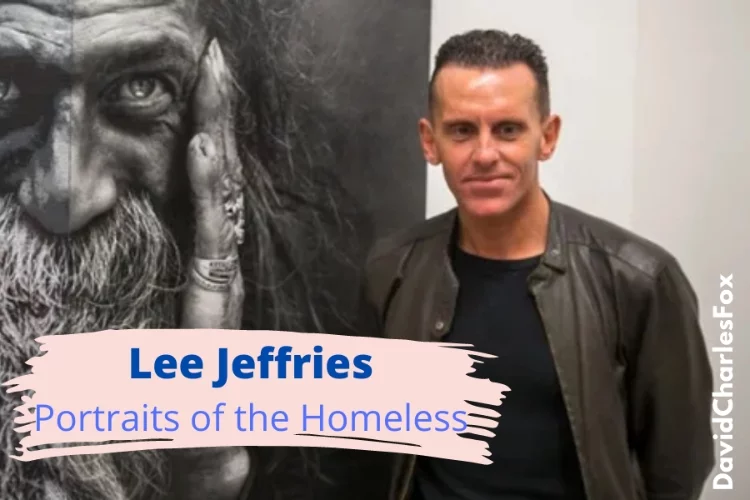
What makes Jeffries' approach distinctive is not just his technical mastery of light and shadow but his insistence on building a genuine human connection before ever pressing the shutter. Each portrait is the product of an extended conversation — sometimes hours long — where Jeffries listens to his subjects' stories, shares meals, and earns their trust. The resulting images carry an emotional weight that studio portraiture rarely achieves.
Before picking up a camera, Jeffries ran a successful cycling business in Manchester, England. A chance encounter with a young homeless woman in London changed the trajectory of his life. She was hiding beneath a sleeping bag, and when he tried to photograph her covertly, she confronted him. That moment of accountability became the foundation of his entire artistic philosophy: never photograph someone without their knowledge and consent.
Contents
- The Stories Behind Jeffries' Most Iconic Shots
- Strengths and Criticisms of Photographing Vulnerability
- Technical Challenges in Extreme Close-Up Portraiture
- Jeffries' Lasting Impact on Documentary Photography
- Lee Jeffries Homeless Portraits vs. Other Documentary Photographers
- Appreciating Portrait Photography: Casual Viewer to Serious Collector
- Frequently Asked Questions
- Final Thoughts
The Stories Behind Jeffries' Most Iconic Shots
Every Lee Jeffries homeless portrait carries a backstory that transforms the image from a photograph into a narrative artifact. Jeffries has spoken extensively about how each session begins with conversation, not a camera. His subjects are not "the homeless" in the abstract — they are individuals with names, histories, and dignity.

The "Lost Angels" Series
The "Lost Angels" project, shot primarily in Los Angeles' Skid Row, is arguably Jeffries' most recognized collection. The series captures the faces of people living in one of the largest concentrations of homelessness in the United States.

- Subjects are photographed at extremely close range, often filling the entire frame with just the face
- Natural light is used almost exclusively, with Jeffries positioning subjects near windows or in alleyways
- Each image in the series was preceded by at least 30 minutes of conversation
- The black-and-white processing eliminates distracting color information, directing all attention to expression and texture

Award-Winning Work Beyond Homelessness
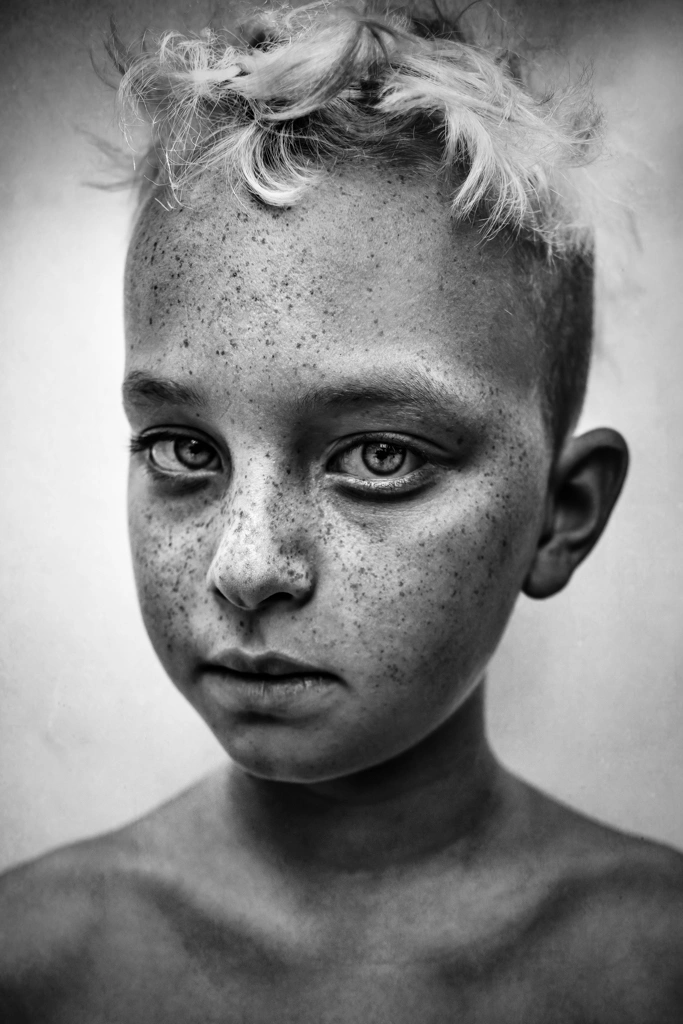
While best known for his homeless portraiture, Jeffries has also demonstrated remarkable range. His portrait "Zephyr" won first place in the Portrait Category at the B&W CHILD competition, proving his technique translates powerfully across subjects.
Strengths and Criticisms of Photographing Vulnerability
Jeffries' work occupies a contested space in the art world. Supporters argue that his portraits restore individuality to people society has rendered invisible. Critics raise legitimate questions about power dynamics, consent, and whether street photography of vulnerable populations can ever be fully ethical.
Arguments in favor of Jeffries' approach:
- He builds relationships with subjects before photographing them
- Many subjects have expressed gratitude for being seen and heard
- The work raises public awareness of homelessness as a humanitarian crisis
- Proceeds from print sales have been directed toward homeless charities
Common criticisms:
- The dramatic post-processing can be seen as aestheticizing suffering
- Subjects rarely profit financially from images that sell as fine art
- The photographer–subject power imbalance remains inherent regardless of intent
- Some academics argue the work reinforces "poverty porn" tropes
The Ongoing Ethical Debate
The tension between artistic merit and ethical responsibility is not unique to Jeffries. Photographers like Nobuyoshi Araki have faced similar scrutiny over their treatment of vulnerable or marginalized subjects. What distinguishes Jeffries is his transparency about the process — he consistently publishes accounts of his interactions and has never attempted to hide behind artistic detachment.
Key insight: The ethical legitimacy of documentary portraiture often hinges not on the final image but on the relationship between photographer and subject that preceded it.
Technical Challenges in Extreme Close-Up Portraiture
Recreating the Jeffries aesthetic is far more difficult than it appears. The technical demands of his style push both camera equipment and post-processing skills to their limits.

- Lens choice matters enormously — Jeffries typically works with an 85mm or 135mm prime lens to achieve compression and shallow depth of field without distorting facial features
- Shooting in natural light on the street means constantly adapting to unpredictable conditions
- The extreme close range requires precise manual focus, as even minor shifts can throw the eyes out of sharpness
- Handheld shooting at these focal lengths demands fast shutter speeds, which can conflict with low-light conditions common in urban alleys
Post-Processing and the Chiaroscuro Effect
Jeffries' post-processing is where raw captures become the dramatic, almost painterly images the world recognizes. He employs heavy dodge-and-burn techniques reminiscent of Rembrandt's chiaroscuro lighting, amplifying the contrast between light and shadow across facial planes. Skin texture is selectively sharpened, eye highlights are enhanced, and backgrounds are darkened to near-black. The result is an image that feels more like a Renaissance oil painting than a street photograph.

Jeffries' Lasting Impact on Documentary Photography
Lee Jeffries homeless portraits have measurably shifted the landscape of social documentary photography. His success demonstrated that deeply personal, emotionally charged street portraiture could find a mainstream audience — and a viable fine art market — without the institutional backing of galleries or agencies.
His influence is visible across several domains:
- A generation of photographers now cite Jeffries as the reason they pursue close-up street portraiture
- Charity organizations have adopted his images for awareness campaigns
- Photography competitions have seen a marked increase in dramatic black-and-white portrait submissions
- The "conversation first, camera second" philosophy has become a widely discussed ethical framework
Exhibitions and Publications
Jeffries' work has appeared in solo exhibitions across Europe and North America. Major photography publications — including Digital Photographer, LensCulture, and 500px ISO — have featured his portraits. His presence on social media platforms helped democratize the visibility of fine art photography, proving that gallery representation is not the only path to recognition. Among leading contemporary photographers, Jeffries stands out for having built his entire career outside the traditional gallery system.

Lee Jeffries Homeless Portraits vs. Other Documentary Photographers
Placing Jeffries alongside other photographers who have documented homelessness and marginalized communities provides useful context for understanding what makes his approach distinct.
| Photographer | Subject Focus | Approach | Processing Style | Primary Medium |
|---|---|---|---|---|
| Lee Jeffries | Homeless individuals | Extended personal engagement | Heavy B&W, chiaroscuro | Digital + prints |
| Mary Ellen Mark | Marginalized communities | Long-term immersive projects | B&W documentary | Film |
| Diane Arbus | Outsiders and eccentrics | Direct, confrontational | Square format B&W | Film |
| Sebastião Salgado | Global labor and migration | Large-scale expeditions | Epic B&W landscapes | Film + digital |
| Dorothea Lange | Depression-era poverty | Government-commissioned | Documentary realism | Film |
The comparison reveals that while Jeffries shares thematic concerns with these legendary figures, his self-taught background, digital-native workflow, and emphasis on one-on-one connection set him apart. Where Salgado documents sweeping human conditions across continents, Jeffries focuses on the singular human face as a complete narrative.

Appreciating Portrait Photography: Casual Viewer to Serious Collector
Engaging with Lee Jeffries homeless portraits — and documentary portraiture in general — requires different skills depending on the depth of involvement.
For general audiences:
- Start by sitting with the emotional response the image provokes — discomfort, empathy, curiosity
- Research the photographer's stated intent and process before forming judgments about ethics
- Compare different photographers' approaches to similar subjects to develop critical perspective
For collectors and serious enthusiasts:
- Understand edition sizes and printing methods — Jeffries releases limited-edition archival prints
- Provenance and exhibition history significantly affect valuation
- Consider the trajectory of documentary photography's market position, which has strengthened over the past decade
- Original signed prints from early series carry the strongest long-term investment potential
What to Look for in a Jeffries Print
When examining a Jeffries print in person, pay attention to the tonal range in the shadow areas. Inferior reproductions collapse these tones into flat black, but a quality archival print retains subtle detail in even the darkest regions. The eyes in his portraits are always the brightest point in the composition — a deliberate technique that anchors the viewer's gaze and creates an almost confrontational sense of eye contact.
Frequently Asked Questions
Is Lee Jeffries a professionally trained photographer?
No. Lee Jeffries is entirely self-taught. He had no formal photography education and was running a cycling business in Manchester before a chance encounter with a homeless woman in London inspired him to start photographing people on the streets.
Does Jeffries get consent from his homeless subjects?
Jeffries has stated repeatedly that he always engages his subjects in conversation — often for extended periods — before photographing them. He considers this relationship-building process essential to his work and has spoken publicly against covert street photography of vulnerable individuals.
What camera equipment does Lee Jeffries use?
Jeffries primarily shoots with Canon DSLR bodies paired with fast prime lenses, particularly in the 85mm to 135mm range. He relies almost exclusively on natural light and shoots handheld rather than using a tripod, which allows him to remain mobile and responsive during street sessions.
Where can collectors purchase Lee Jeffries prints?
Limited-edition prints are periodically available through Jeffries' official website and select online photography platforms. Pricing varies based on edition size, print dimensions, and whether the work has been exhibited. Secondary market pieces occasionally appear at photography-focused auction houses.
Has Jeffries' work directly helped homeless communities?
Jeffries has donated portions of print sale proceeds to homeless charities and has used his platform to advocate for homeless support services. While the direct financial impact on individual subjects is difficult to quantify, his images have been credited with raising significant public awareness about homelessness in the UK and the United States.
Final Thoughts
Lee Jeffries' homeless portraits remain a vital reference point for anyone interested in the power of photography to bridge social divides. Whether approached as fine art, social commentary, or technical study, his body of work rewards sustained attention and critical engagement. Explore his full portfolio, seek out a print exhibition if one is available locally, and consider how the principles behind his work — empathy, patience, and authentic human connection — might inform a deeper appreciation of all documentary photography.


About David Fox
David Fox is an artist and writer whose work spans painting, photography, and art criticism. He created davidcharlesfox.com as a platform for exploring the history, theory, and practice of visual art — covering everything from Renaissance masters and modernist movements to contemporary works and the cultural context that shapes how art is made and received. At the site, he covers art history, architecture, anime art and culture, collecting guidance, and profiles of influential artists across centuries and movements.
Now get FREE Gifts. Or latest Free phones here.
Disable Ad block to reveal all the secrets. Once done, hit a button below