What is a Flashmob? History and Meaning Behind the Movement
by David Fox
Have you ever been walking through a public space when suddenly dozens of strangers break into a perfectly choreographed dance routine? That surreal moment — equal parts confusion and delight — is the essence of a flashmob. Understanding flashmob history and meaning reveals far more than a quirky internet trend. It uncovers a genuinely fascinating intersection of performance art, social media culture, and human connection that has reshaped how we think about public space. Whether you consider yourself an art commentary enthusiast or simply enjoy the unexpected, flashmobs deserve a closer look.
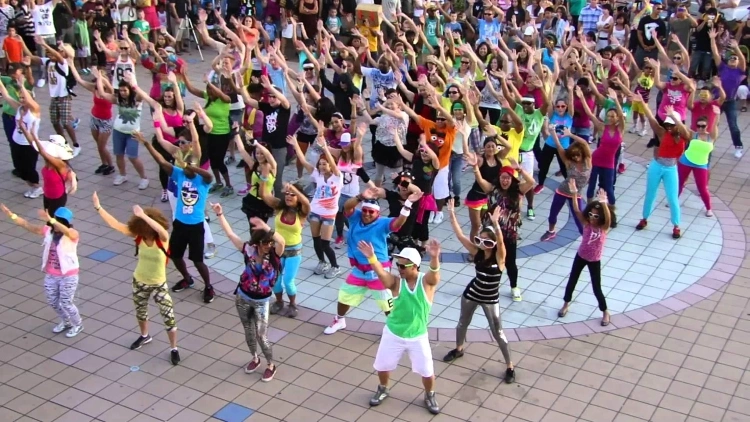
Flashmobs sit at a curious crossroads between organized performance and spontaneous spectacle. They borrow from the traditions of street theater, happenings, and guerrilla art — yet they belong to a category entirely their own. Their rapid rise tells us something meaningful about how communities form, how art reaches people outside gallery walls, and why surprise remains one of the most powerful tools in any creator's kit.
In this guide, you will explore the roots of the flashmob phenomenon, separate fact from myth, examine real-world examples that made headlines, and discover what it actually takes to pull one off. Let's get into it.
Contents
The Origins of the Flashmob
The flashmob as we know it traces back to a specific moment and a specific person. But the ideas behind it had been fermenting in art and counterculture circles for decades before anyone used the term.
Bill Wasik and the First Experiment
In the summer of 2003, Bill Wasik, a senior editor at Harper's Magazine, organized what most historians consider the first true flashmob in Manhattan. His first attempt — at a Macy's department store — fizzled when word leaked to the store's security. But his second attempt succeeded. Over one hundred people converged on the rug department of the same store, told sales associates they were shopping for a "love rug" for their commune, then dispersed within minutes.
Wasik later admitted the whole thing was a social experiment. He wanted to test how quickly conformist behavior could spread through digital communication. The irony? His experiment in manufactured hipness became one of the most genuinely creative cultural phenomena of the early internet age.
Early Influences from Performance Art
Flashmobs didn't emerge from thin air. You can trace a clear lineage back to the Situationist International movement of the 1960s, which staged disruptive public interventions to challenge everyday routines. The Fluxus art movement similarly embraced spontaneity, audience participation, and the blurring of art and life. Allan Kaprow's "happenings" in the late 1950s are another obvious ancestor — unscripted, participatory events designed to dissolve the barrier between performer and viewer.
What made flashmobs different was the technology. Email chains, early social media, and later platforms like Facebook and YouTube gave organizers the ability to coordinate hundreds of strangers with minimal lead time. The art world's influence was there, but the delivery mechanism was entirely new.
Flashmob History and Meaning Explained
So what does a flashmob actually mean in a broader cultural sense? The answer depends on who you ask — and that flexibility is part of what makes the form so resilient.
What Actually Defines a Flashmob
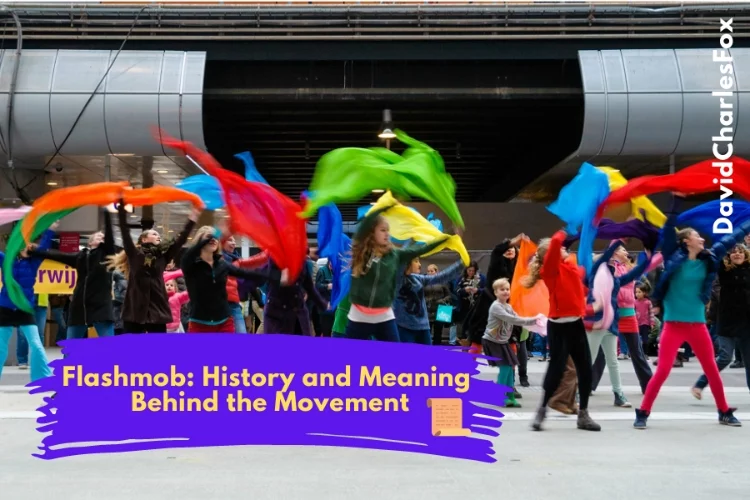
At its core, a flashmob is a group of people who assemble suddenly in a public place, perform an unusual action for a brief period, and then quickly disperse. The key ingredients are surprise, brevity, and public space. Without surprise, you have a performance. Without brevity, you have a protest. Without public space, you have a rehearsal.
The term itself combines "flash" (sudden, brief) with "mob" (a large, disorganized crowd). The tension between those two words captures the experience perfectly — organized chaos that appears from nowhere and vanishes just as fast.
Cultural Significance
Flashmobs represent a democratization of performance. You don't need a stage, a ticket booth, or an arts council grant. You need a shared idea, willing participants, and a public space. This accessibility connects flashmobs to broader movements in guerrilla art forms like yarn bombing, where creators reclaim public environments through unauthorized but largely harmless creative acts.
For many cultural commentators, flashmobs also reflect our complicated relationship with social media. They are simultaneously authentic (real people in real spaces) and performative (designed to be filmed and shared). That duality makes them a fascinating subject for anyone interested in how art and technology intersect.
Famous Flashmobs That Shaped the Movement
Landmark Moments Around the World
Some flashmobs transcended novelty and became genuine cultural events. The following examples give you a sense of the range and ambition the form has achieved.
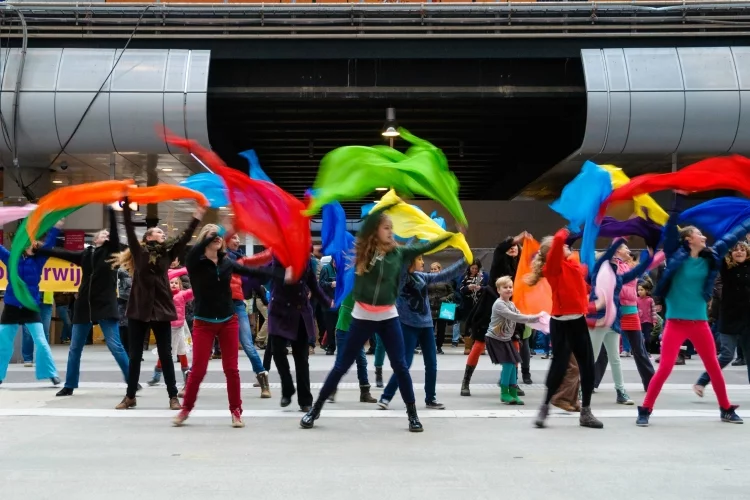
The T-Mobile dance at Liverpool Street Station in London remains one of the most-watched flashmob videos of all time. What began with a single dancer gradually pulled in hundreds of participants as commuters stood bewildered, then delighted, then joined in. The Sound of Music flashmob in Antwerp's Central Station followed a similar blueprint — a lone performer singing "Do Re Mi" was gradually joined by over two hundred dancers, transforming a train station into a full-scale musical number.
Improv Everywhere, a New York-based collective, has staged dozens of memorable flashmobs. Their "Frozen Grand Central" event, where over two hundred participants simultaneously froze in place for five minutes inside Grand Central Terminal, remains a masterclass in simplicity. No choreography needed — just stillness.
On the activist side, pillow fight flashmobs have erupted in cities from San Francisco to Budapest, turning public squares into playful warzones. These events serve no commercial purpose — they exist purely to interrupt the ordinary with joy.
How Flashmobs Are Used Beyond Entertainment
While flashmobs began as artistic experiments, they have been adopted by a surprisingly wide range of groups for very different purposes.
Marketing and Brand Campaigns
Brands discovered early on that a well-executed flashmob generates enormous organic reach. The T-Mobile campaign mentioned above was corporate-funded but felt authentic enough to earn millions of voluntary shares. Companies from Coca-Cola to Samsung have since used flashmobs to launch products, build brand affinity, and generate media coverage that traditional advertising simply cannot buy.
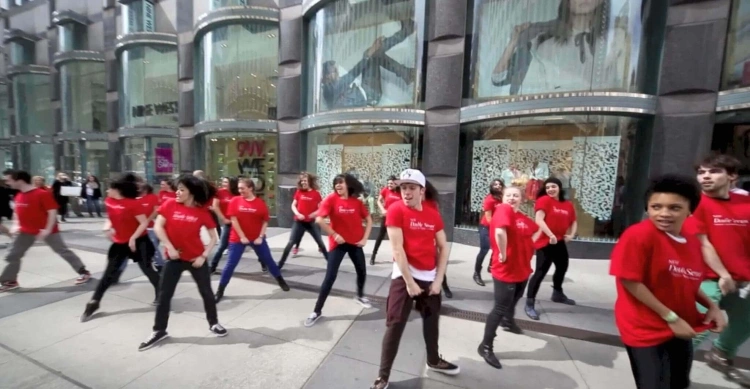
The risk for brands is inauthenticity. Audiences can tell when a flashmob is a genuine creative effort versus a cynical marketing stunt. The most successful branded flashmobs are those where the experience genuinely delights bystanders — the brand connection is secondary to the moment itself.
Social Activism and Awareness
Flashmobs have also been deployed as tools for social and political change. Groups like One Billion Rising have used coordinated public dances to raise awareness about violence against women. In authoritarian countries, flashmobs have served as a form of protest that is difficult to suppress because participants appear and vanish before authorities can respond effectively.
Wedding proposals, charity events, and community celebrations round out the non-commercial uses. The form is flexible enough to serve almost any goal that benefits from surprise and spectacle.
Common Myths About Flashmobs
As flashmobs have entered mainstream culture, a number of misconceptions have taken hold. Here are some of the most persistent ones — and the reality behind them.
Myth: Flashmobs are completely spontaneous. In reality, most flashmobs involve weeks of planning, rehearsal, and coordination. The spontaneity is in the experience for bystanders, not in the preparation. Organizers typically scout locations, arrange music, rehearse participants in secret, and plan camera positions in advance.
Myth: Flashmobs are illegal. In most jurisdictions, flashmobs are perfectly legal as long as they don't block traffic, damage property, or violate noise ordinances. Some cities require permits for large public gatherings, but the brief and dispersive nature of flashmobs often falls below the threshold for permit requirements.
Myth: Flashmobs are dead. While the peak media frenzy has passed, flashmobs continue to happen regularly around the world. They have simply become a normal part of the cultural landscape rather than a novelty. Community dance groups, choirs, and theater troupes stage them routinely.
Myth: Anyone can organize one easily. Successful flashmobs require strong organizational skills, clear communication, and contingency planning. The simplest-looking events often involve the most careful preparation behind the scenes.
What It Takes to Organize a Flashmob
If you are considering organizing a flashmob yourself — whether for artistic expression, community building, or a marketing campaign — you should understand the resources involved. The costs vary dramatically depending on scale and ambition.
Budget and Resource Breakdown
| Component | Small Flashmob (10–30 people) | Medium (50–100 people) | Large (200+ people) |
|---|---|---|---|
| Choreographer / Director | $0 (volunteer) | $500–$1,500 | $2,000–$5,000 |
| Rehearsal Space | $0 (public park) | $200–$600 | $500–$2,000 |
| Sound Equipment | $50–$100 (portable speaker) | $200–$500 | $1,000–$3,000 |
| Videography | $0 (smartphone) | $300–$1,000 | $2,000–$8,000 |
| Permits | Usually not required | $0–$300 | $100–$1,000 |
| Costumes / Props | $0–$50 | $100–$500 | $500–$3,000 |
| Estimated Total | $50–$150 | $1,300–$4,400 | $6,100–$22,000 |
The most important resource, though, is not money — it is people. You need participants who are reliable, willing to rehearse, and capable of keeping a secret. Many successful flashmobs rely entirely on volunteer performers, which keeps costs near zero but raises the organizational challenge considerably.
Planning timelines typically run from two weeks for a simple freeze mob to several months for a choreographed dance involving hundreds of participants. You should also budget time for contingency planning. Weather, security interventions, and participant no-shows are all real risks.
The Lasting Cultural Impact of Flashmobs
Flashmobs in the Digital Age
Flashmobs arrived at exactly the right moment in technological history. They emerged alongside YouTube, Facebook, and the smartphone camera — tools that allowed a five-minute event in one city to be experienced by millions worldwide. This symbiotic relationship between physical performance and digital distribution fundamentally changed how we think about public art and collective action.
The influence of flashmobs extends well beyond the events themselves. Flash-style coordination has informed protest movements, viral marketing strategies, and even emergency response drills. The basic concept — use digital tools to coordinate a sudden physical gathering — has proven adaptable to contexts Wasik never imagined.
For the art world specifically, flashmobs reinforced something that movements from Dada to Fluxus had long argued: art does not need institutional permission. It does not need a gallery, a curator, or a critical framework. Sometimes it just needs a public space and a willingness to surprise people. That idea continues to resonate in contemporary practices from installation art to immersive theater.
Whether flashmobs endure as a distinct art form or evolve into something we do not yet have a name for, their contribution to participatory culture is already cemented. They proved that strangers could come together, create something beautiful, and disappear — leaving behind nothing but a shared memory and a video that might just go viral.
Frequently Asked Questions
What is the difference between a flashmob and a protest?
A flashmob is typically brief, pre-planned, and designed to surprise or entertain bystanders before participants quickly disperse. A protest aims to sustain public attention around a specific cause and usually involves signage, chanting, or sustained occupation of a space. Some flashmobs carry activist messages, but the format — sudden appearance and quick dispersal — distinguishes them from traditional protests.
Who organized the first flashmob?
Bill Wasik, a senior editor at Harper's Magazine, organized the first widely recognized flashmob in Manhattan in 2003. His initial attempt at Macy's was foiled by leaked information, but his second attempt succeeded and sparked a global phenomenon.
Are flashmobs still popular?
Yes, though they receive less media novelty coverage than they did in the late 2000s. Community groups, dance troupes, choirs, and brands continue to organize flashmobs regularly around the world. They have transitioned from a trend to an established form of public performance.
Do you need a permit to organize a flashmob?
It depends on your local jurisdiction and the scale of the event. Small, brief gatherings in public spaces often fall below permit thresholds. Larger events that involve amplified sound, block pedestrian traffic, or take place on private property may require permits. Always check local regulations before organizing.
How long does a typical flashmob last?
Most flashmobs last between three and ten minutes. The brevity is intentional — it maximizes surprise, minimizes the chance of interference, and creates a concentrated burst of energy that feels more memorable than a longer performance.
Can flashmobs be considered a form of art?
Many art historians and cultural critics consider flashmobs a legitimate form of participatory performance art. They share DNA with happenings, Fluxus events, and Situationist interventions. The key artistic elements — choreography, surprise, audience engagement, and ephemerality — are well-established criteria in contemporary art practice.
How much does it cost to organize a flashmob?
Costs range from nearly nothing for a small volunteer-driven event to over $20,000 for a large-scale branded production with professional choreography and multi-camera videography. Most community flashmobs operate on minimal budgets by relying on volunteer participants and free public spaces.
Final Thoughts
Flashmobs remind us that art does not need walls, tickets, or institutional approval — just a shared idea and the courage to surprise strangers. If this exploration of flashmob history and meaning sparked your curiosity, consider attending a local flashmob event, joining a community performance group, or even organizing a small one of your own. Start simple, gather a few willing friends, pick a public space, and create a moment that nobody expected but everyone remembers.


About David Fox
David Fox is an artist and writer whose work spans painting, photography, and art criticism. He created davidcharlesfox.com as a platform for exploring the history, theory, and practice of visual art — covering everything from Renaissance masters and modernist movements to contemporary works and the cultural context that shapes how art is made and received. At the site, he covers art history, architecture, anime art and culture, collecting guidance, and profiles of influential artists across centuries and movements.
Now get FREE Gifts. Or latest Free phones here.
Disable Ad block to reveal all the secrets. Once done, hit a button below