The Life & Art of Judy Chicago
by David Fox
Over the course of six decades, Judy Chicago has produced more than 1,500 individual works spanning ceramics, pyrotechnics, textiles, painting, and installation art — making her one of the most prolific and boundary-breaking figures in contemporary art. Understanding Judy Chicago life and art requires tracing a path from her early days in Chicago's politically charged intellectual circles to her emergence as the founder of the feminist art movement. Her influence extends far beyond any single medium or gallery wall, reshaping how institutions approach gender, collaboration, and craft. For those exploring the broader trajectory of groundbreaking artists, the art history archives offer essential context for understanding Chicago's place in the canon.
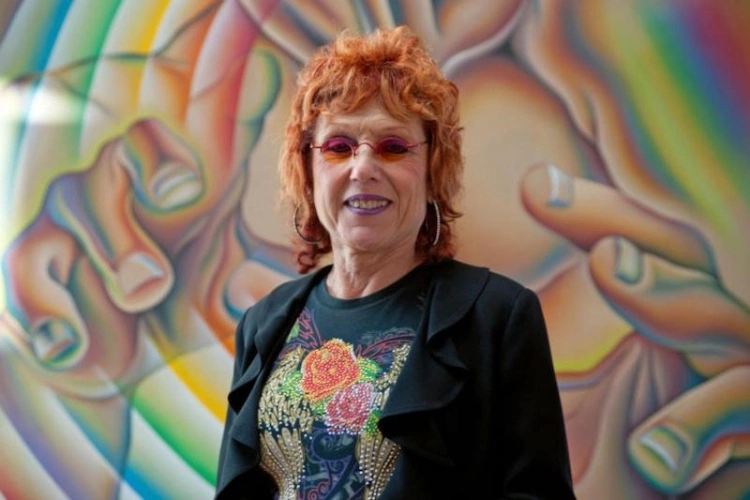
Born Judith Sylvia Cohen in 1939, Chicago grew up surrounded by progressive politics and artistic ambition. Her father, a labor organizer and Marxist, and her mother, a medical secretary who painted in her spare time, cultivated an environment where creative expression and social justice were inseparable. That upbringing would prove foundational — not just to her art, but to her lifelong insistence that art must serve a purpose larger than aesthetics.
What sets Chicago apart from many contemporaries is the sheer scale of her collaborative projects. The Dinner Party alone involved over 400 volunteers working across multiple years. Her commitment to collective creation anticipated the participatory art models that dominate the field today, and her willingness to confront institutional resistance head-on remains a blueprint for activist-artists worldwide.
Contents
- From Chicago's South Side to the Art World
- Misconceptions About Judy Chicago's Work
- Landmark Works That Changed Art History
- Building a Feminist Art Education Model
- Materials, Techniques, and Artistic Range
- Navigating Institutional Resistance
- Practical Lessons from Chicago's Career
- Collecting and Studying Judy Chicago
- Frequently Asked Questions
From Chicago's South Side to the Art World
Family Roots and Political Awakening
Judith Cohen's father, Arthur, died when she was thirteen — a loss that profoundly shaped her emotional and artistic trajectory. His commitment to workers' rights and racial equality had already imprinted on her consciousness. Her mother, May, supported Judith's early artistic inclinations, enrolling her at the Art Institute of Chicago's junior school at age five.
- 1939 — Born in Chicago, Illinois
- 1945–1953 — Attended classes at the Art Institute of Chicago
- 1957–1962 — Studied at UCLA, earning both a BA and MFA
- 1970 — Legally changed her name to Judy Chicago, severing ties with patrilineal naming conventions
The name change was not merely symbolic. It was a public declaration — a refusal to be identified through either father or husband. That act of self-naming became one of the earliest and most visible gestures of feminist art practice in the United States.
Formal Training and Early Struggles
At UCLA, Chicago studied under artists including Oliver Andrews and worked alongside a predominantly male cohort. The experience exposed her to minimalism and geometric abstraction, but also to the systemic exclusion of women from serious critical consideration. Her early sculptures and paintings reflected the dominant aesthetic of the period — hard-edged, impersonal, large-scale.
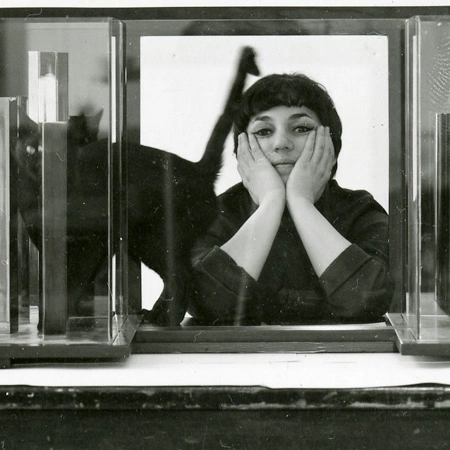
Yet even within that framework, Chicago began embedding coded references to female anatomy — what she later called "central core imagery." This quiet subversion went largely unnoticed by male critics at the time, a fact that underscored the very invisibility she sought to challenge.
Key insight: Chicago's early minimalist work proves that feminist content does not require overt imagery — it can exist within the most austere formal vocabularies, hidden in plain sight from those unwilling to see it.
Misconceptions About Judy Chicago's Work
The "Craft vs. Fine Art" Debate
One of the most persistent myths about Judy Chicago life and art is that her use of ceramics, needlework, and china painting somehow diminishes the intellectual rigor of her projects. This criticism rests on a gendered hierarchy that ranks oil painting and bronze sculpture above textile and decorative arts — a hierarchy Chicago explicitly set out to dismantle.
- China painting requires mastery of overglaze enamels, firing temperatures, and color chemistry
- Needlework techniques used in The Dinner Party include 15 distinct historical styles spanning centuries
- The technical demands of pyrotechnic art involve chemistry, engineering, and precise timing
Dismissing these media as "craft" reveals more about institutional bias than about the work itself. Similar battles over medium hierarchies have played out across modern art movements, as explored in The Rise of Modern Art: How It Lost Its Audience.
The Myth of the Solo Genius
Another misconception frames Chicago as a controlling auteur who merely directed others' labor. In reality, her collaborative model was deliberately structured to credit and empower participants. Volunteers on The Dinner Party were trained in specific techniques, and many went on to establish independent art careers. The project functioned as both artwork and art school simultaneously.
Landmark Works That Changed Art History
The Dinner Party
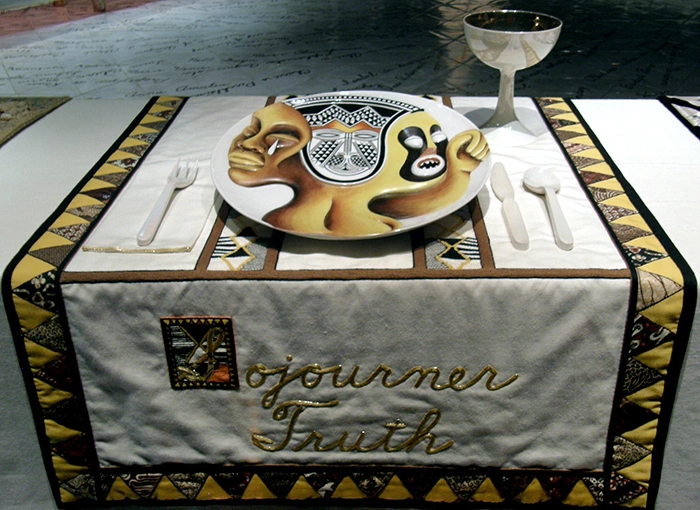
The Dinner Party remains Chicago's most recognized work — a monumental installation comprising 39 place settings arranged on a triangular banquet table, each honoring a significant woman from history. An additional 999 names are inscribed on the porcelain floor tiles beneath.
| Wing | Time Period | Notable Settings | Primary Media |
|---|---|---|---|
| Wing One | Prehistory to Roman Empire | Primordial Goddess, Sappho, Boadicea | Ceramics, embroidery |
| Wing Two | Early Christianity to Reformation | Hildegard of Bingen, Eleanor of Aquitaine, Christine de Pizan | Needlework, painted porcelain |
| Wing Three | American Revolution to present | Mary Wollstonecraft, Sojourner Truth, Georgia O'Keeffe | Ceramics, mixed textile |
Completed between 1974 and 1979, the piece toured six venues in three countries before finding a permanent home at the Brooklyn Museum's Elizabeth A. Sackler Center for Feminist Art. Over one million visitors viewed it during its initial tour — a figure that rivaled attendance at major museum retrospectives of the era.
The Birth Project and Beyond
Following The Dinner Party, Chicago launched The Birth Project (1980–1985), addressing the near-total absence of birth imagery in Western art. Working with over 150 needleworkers across the United States, she created 85 textile panels depicting birth and creation in styles ranging from quilting to macramé.
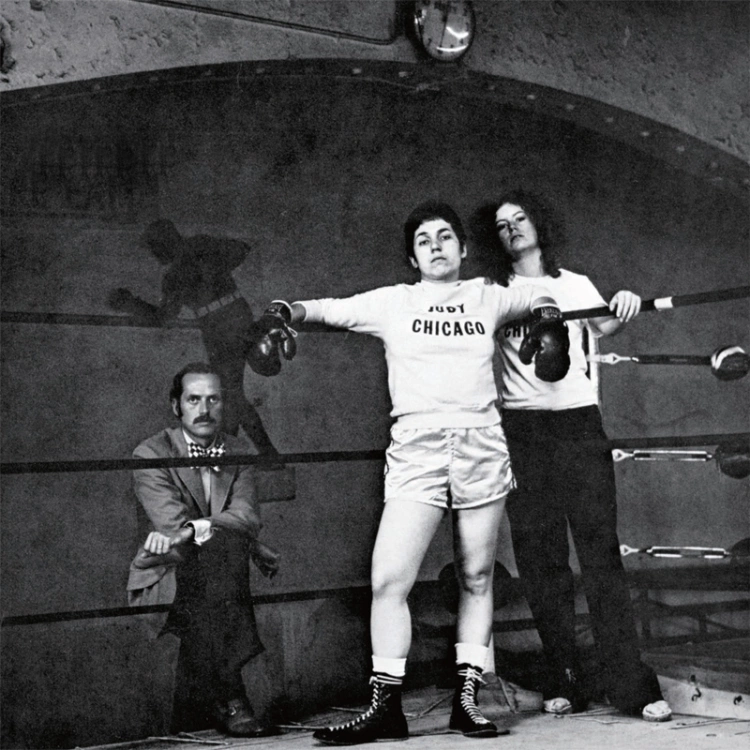
Later projects continued to expand her scope:
- The Holocaust Project (1985–1993) — A collaboration with photographer Donald Woodman examining the intersection of Jewish identity, victimization, and human cruelty
- Resolutions: A Stitch in Time (1994–2000) — Proverbs and aphorisms rendered in needlework, exploring how folk wisdom shapes gender expectations
- The End: A Meditation on Death and Extinction (2015–present) — Painted porcelain and glass exploring mortality and environmental collapse
Building a Feminist Art Education Model
The Fresno Experiment
In 1970, Chicago established the first feminist art program in the United States at Fresno State College (now California State University, Fresno). The program operated on principles radically different from traditional art education:
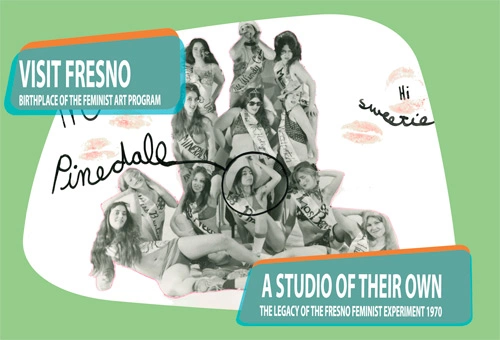
- Consciousness-raising sessions replaced traditional critiques
- Students worked off-campus in a rented studio, free from departmental oversight
- Personal experience was treated as valid artistic source material
- Hierarchies between instructor and student were deliberately flattened
Fifteen students participated in the inaugural cohort. Several — including Suzanne Lacy, Faith Wilding, and Nancy Youdelman — became prominent artists in their own right. The pedagogical model Chicago developed at Fresno influenced art education programs across the globe for decades.
Womanhouse and Its Legacy
After moving to CalArts in 1971, Chicago co-founded the Feminist Art Program with Miriam Schapiro. Their most visible collaboration was Womanhouse (1972) — a condemned Hollywood mansion transformed into an immersive installation addressing domesticity, beauty standards, and female rage.
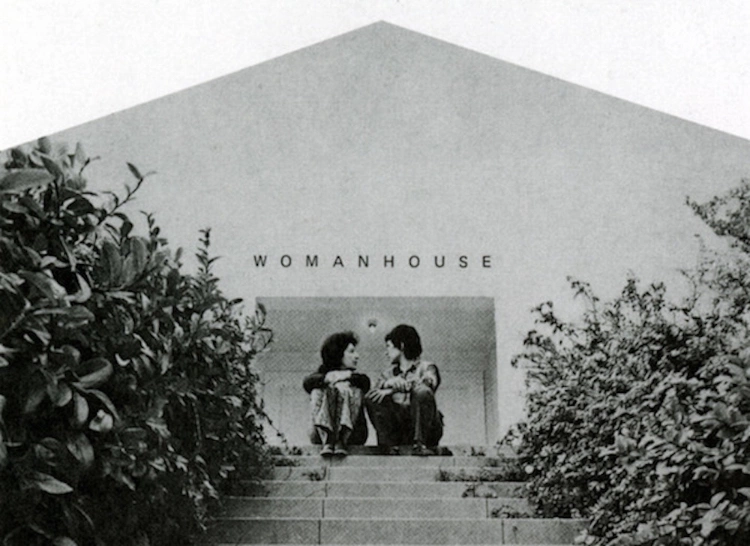
Over 10,000 visitors attended during its one-month run — an extraordinary number for an installation with no institutional backing. Rooms included a kitchen with breast-shaped eggs frying on the walls, a bathroom saturated in menstrual red, and a linen closet where a mannequin appeared trapped among sheets. The project established installation art as a viable feminist strategy and influenced artists like Niki de Saint Phalle, whose own confrontational installations shared Chicago's refusal to soften female experience for audience comfort.
Materials, Techniques, and Artistic Range
China Painting and Needlework
Chicago's deliberate adoption of historically "feminine" crafts was strategic, not sentimental. She spent years studying china painting under traditional practitioners, mastering techniques that required:
- Multiple firings at precise temperatures (typically 1,200°F–1,400°F for overglaze enamels)
- Layered color application — each layer fired separately to build depth
- Brush control for rendering translucent petals and anatomical forms on curved surfaces
The needlework in The Dinner Party spans 15 historical styles, from Bayeux Tapestry couching to 19th-century Berlin work. Each runner was designed to reflect the period and culture of its honoree. This level of technical specificity distinguishes Chicago's textile work from decorative applications — every stitch carries historical and symbolic meaning.
Pyrotechnics and Smoke Sculpture
Less widely known is Chicago's extensive work with fireworks and colored smoke. Beginning in the late 1960s, she created Atmospheres — site-specific performances using commercial-grade smoke flares in open landscapes. These ephemeral pieces explored how color occupies and transforms space without a permanent object. The series challenged the art market's dependence on saleable objects and anticipated land art and performance practices that would gain critical legitimacy only years later. Artists working at the intersection of spectacle and social commentary, much like Petr Pavlensky in his provocative performance work, owe a conceptual debt to Chicago's early experiments.
Worth noting: Chicago's Atmospheres series was one of the first sustained bodies of work by an American artist to treat impermanence itself as the medium — predating many canonical land art and performance pieces by male contemporaries.
Navigating Institutional Resistance
Critical Backlash and Recovery
Despite public enthusiasm, Judy Chicago life and art encountered sustained hostility from the mainstream art establishment. The Dinner Party was rejected for permanent display by multiple institutions. The piece spent over two decades without a permanent home, stored in shipping containers while Chicago campaigned for its preservation.
Critics attacked the work on aesthetic, political, and methodological grounds:
- Hilton Kramer called it "kitsch" and dismissed its feminist agenda
- Some feminist scholars criticized its essentialist equation of women with biological imagery
- Museum curators questioned whether collaborative, craft-based work belonged in fine art galleries
It was not until 2007 that The Dinner Party found its permanent home at the Brooklyn Museum, according to the museum's documented history. The decades-long struggle underscored how deeply entrenched gender bias remained in art world institutions even into the 21st century.
Market Challenges for Feminist Art
Chicago's market trajectory illustrates broader patterns in how feminist art is valued — or undervalued. For years, her works sold at a fraction of prices commanded by male contemporaries of comparable influence. The art market's preference for individual genius over collaborative production, and for painting over textile and ceramic media, worked systematically against her. Only in recent decades have auction results and institutional acquisitions begun to reflect her actual significance. The gap between critical influence and market recognition mirrors similar dynamics explored in conversations about how modern art movements grappled with audience and market alignment.
Practical Lessons from Chicago's Career
Structuring Collaborative Art Projects
Chicago's collaborative model offers concrete guidance for artists, curators, and educators planning large-scale participatory projects:
- Define roles clearly — Each volunteer on The Dinner Party had a specific task matched to their skill level
- Provide training infrastructure — Chicago taught needlework and china painting techniques before production began
- Document everything — Extensive photographic and written records preserved the process as part of the work's meaning
- Credit participants — Names of all contributors are permanently displayed alongside the installation
- Anticipate institutional skepticism — Build public support networks before seeking museum partners
These principles remain directly applicable to contemporary community art initiatives, public art commissions, and socially engaged practice.
Documenting and Archiving Large-Scale Work
Chicago's meticulous archival practices offer a model for preserving complex, multi-component artworks. Her archives — housed at the Schlesinger Library at Harvard's Radcliffe Institute — include over 200 linear feet of papers, photographs, correspondence, and preparatory drawings.
Key archiving practices from Chicago's approach:
- Photograph each stage of production, not just finished pieces
- Maintain correspondence with collaborators as part of the artwork's record
- Write detailed process descriptions while work is underway — memory fades, and future scholars depend on primary sources
- Separate personal papers from project documentation to facilitate research access
Collecting and Studying Judy Chicago
Where to See the Work
For those seeking direct encounters with Judy Chicago life and art, several institutions maintain significant holdings:
- Brooklyn Museum (New York) — Permanent home of The Dinner Party
- National Museum of Women in the Arts (Washington, D.C.) — Rotating selections from multiple series
- Jordan Schnitzer Museum of Art (Eugene, Oregon) — Major holdings of prints and preparatory works
- Salon 94 (New York) — Gallery representation for recent and new work
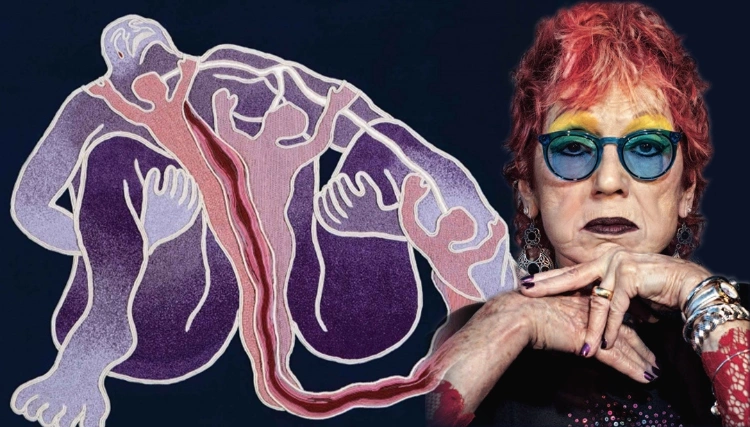
The retrospective Judy Chicago: A Retrospective at the de Young Museum in San Francisco marked a watershed — the first comprehensive survey of her career at a major U.S. museum. Attendance figures confirmed what Chicago had argued for decades: the public appetite for her work far exceeded what gatekeepers had acknowledged.
Key Publications and Resources
A working knowledge of Chicago's career benefits from engagement with primary texts. The most essential include:
- Through the Flower: My Struggle as a Woman Artist (1975) — Chicago's first autobiography, covering her formation through the founding of the feminist art programs
- The Dinner Party: A Symbol of Our Heritage (1979) — Documentation and analysis of the installation
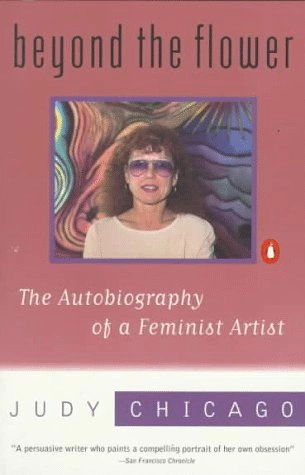
- Beyond the Flower: The Autobiography of a Feminist Artist (1996) — Continuation covering The Birth Project, The Holocaust Project, and later work
- Institutional Time: A Critique of Studio Art Education (2014) — Chicago's analysis of how art schools fail female students
These texts function not merely as memoirs but as primary documents in the history of feminist art practice. Scholars and collectors alike find them indispensable for contextualizing individual works within Chicago's larger project. The intersection of personal narrative and institutional critique in Chicago's writing resonates with the approach taken by artists like Suzanne Valadon, who similarly challenged convention in a male-dominated art world.
Frequently Asked Questions
What is Judy Chicago best known for?
Judy Chicago is best known for The Dinner Party (1974–1979), a monumental installation featuring 39 place settings honoring significant women throughout history. The work is permanently housed at the Brooklyn Museum's Elizabeth A. Sackler Center for Feminist Art and has been viewed by millions of visitors worldwide.
Did Judy Chicago create The Dinner Party alone?
No. Over 400 volunteers contributed to The Dinner Party across its five-year production. Chicago designed and directed the project, but collaborators executed needlework, ceramic painting, and research. All contributors are credited in the permanent installation.
Why did Judy Chicago change her name?
Chicago changed her name legally in 1970 to reject the patrilineal naming system. She chose "Chicago" as an homage to her hometown. The act was both personal declaration and public feminist statement, widely covered in the press at the time.
Where can visitors see Judy Chicago's art in person?
The primary venue is the Brooklyn Museum in New York, which houses The Dinner Party permanently. Additional works appear at the National Museum of Women in the Arts in Washington, D.C., the Jordan Schnitzer Museum of Art in Oregon, and through her gallery representation at Salon 94 in New York.
What was Womanhouse?
Womanhouse was a 1972 installation created by students in the Feminist Art Program at CalArts, co-directed by Judy Chicago and Miriam Schapiro. Students transformed a condemned Hollywood mansion into immersive rooms addressing domesticity and female identity. Over 10,000 people visited during its one-month run.
How did the art establishment initially respond to Judy Chicago's work?
The response was deeply divided. Public audiences embraced her large-scale installations, but major critics and many curators dismissed the work as kitsch or overly didactic. The Dinner Party spent over two decades without a permanent institutional home despite drawing massive crowds at touring venues.
What materials and techniques does Judy Chicago use?
Chicago works across an unusually broad range of media including china painting, needlework, ceramics, pyrotechnics, glass, bronze, painting, and printmaking. Her deliberate use of traditionally "feminine" crafts alongside fine art media is central to her project of dismantling gendered hierarchies in art.
Judy Chicago proved that art's power lies not in its medium or market value, but in its capacity to make the invisible visible — and to insist, relentlessly, that the invisible matters.


About David Fox
David Fox is an artist and writer whose work spans painting, photography, and art criticism. He created davidcharlesfox.com as a platform for exploring the history, theory, and practice of visual art — covering everything from Renaissance masters and modernist movements to contemporary works and the cultural context that shapes how art is made and received. At the site, he covers art history, architecture, anime art and culture, collecting guidance, and profiles of influential artists across centuries and movements.
Now get FREE Gifts. Or latest Free phones here.
Disable Ad block to reveal all the secrets. Once done, hit a button below