Comparing Abstract Expressionism And Pop Art
by David Fox
Standing in front of a Jackson Pollock drip painting and then turning to face an Andy Warhol silkscreen in the same gallery creates a kind of aesthetic whiplash that few other art pairings can match. The contrast is so stark it almost feels like two different centuries produced them — yet only about a decade separates their peaks. Understanding abstract expressionism vs pop art is essential for anyone navigating art history, because these two movements defined the creative fault line of mid-twentieth-century America and continue to shape how contemporary artists think about meaning, emotion, and commerce.
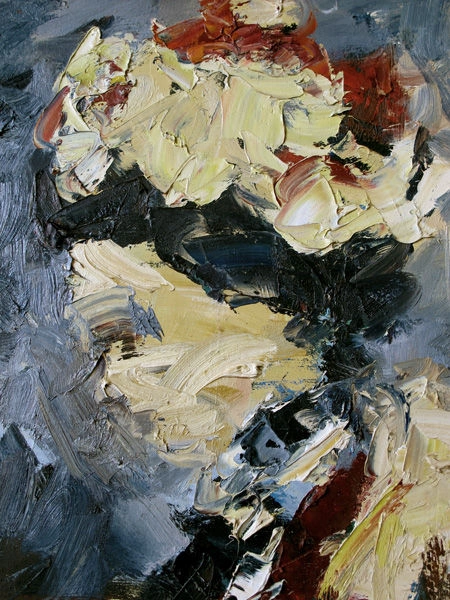
Abstract Expressionism emerged in the late 1940s from a post-war hunger for raw, unfiltered emotional expression. Pop Art arrived roughly a decade later as a deliberate counter-punch — cool where AbEx was hot, commercial where AbEx was spiritual. Neither movement exists in isolation; each one clarifies the other through opposition. Artists like Clyfford Still pushed paint toward existential extremes, while figures like Warhol and Lichtenstein pulled imagery straight from supermarket shelves and comic strips.
This guide breaks down the key differences, strengths, and practical knowledge collectors and enthusiasts need when engaging with either tradition.
Contents
Strengths and Limitations of Each Movement
Every art movement carries built-in trade-offs. Recognizing them prevents the common trap of treating one style as inherently superior to the other.
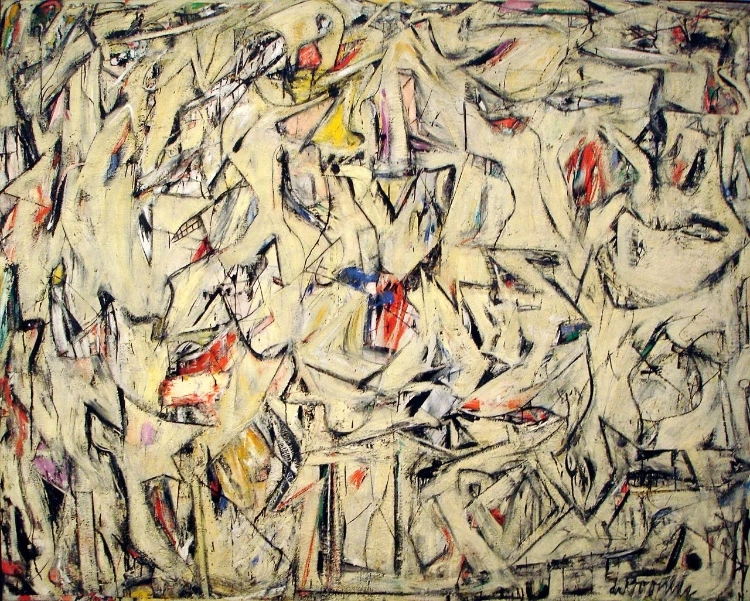
Where Abstract Expressionism Excels
- Emotional depth — large-scale canvases by Rothko and de Kooning create immersive, almost meditative experiences that photographs rarely capture
- Unique mark-making ensures virtually no two works look alike, even from the same artist
- Strong institutional prestige; most major museums dedicate entire wings to the movement
- Historically credited with shifting the art world's center from Paris to New York
Limitations include a steep learning curve for new viewers, frequent accusations of elitism, and a market dominated by a handful of blue-chip names that leaves lesser-known AbEx painters undervalued.
Where Pop Art Excels
- Immediate accessibility — familiar imagery from advertising and mass media lowers the barrier to entry
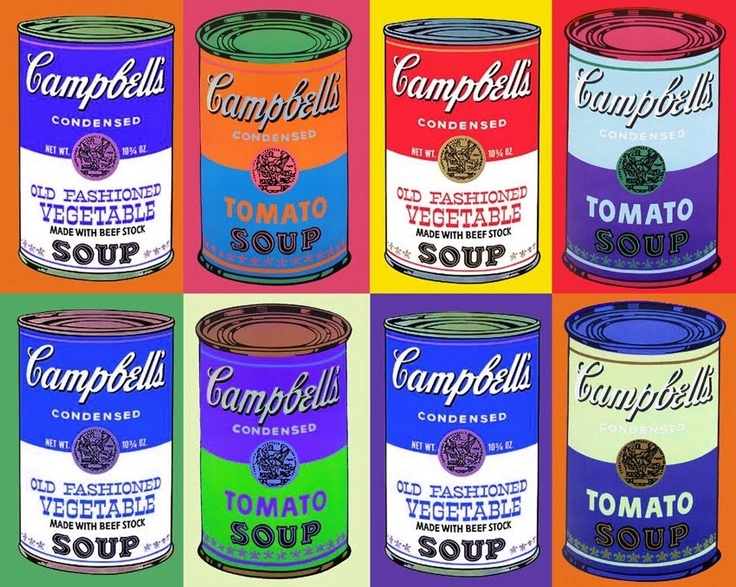
- Reproducibility through silkscreen and print techniques democratized art ownership
- Commentary on consumer culture remains relevant decades later
- Strong crossover appeal with fashion, design, and graphic arts
On the downside, Pop Art's reliance on commercial imagery can feel shallow under extended scrutiny. Critics from the AbEx camp argued it sacrificed depth for surface appeal — a debate that echoes the broader tension between Bauhaus-era modernism and postmodern sensibilities.
The most productive way to view these movements is not as rivals but as two halves of a conversation about what art owes its audience — emotion or reflection.
How to Identify Abstract Expressionism vs Pop Art
Gallery visitors and beginning collectors often struggle to place unlabeled works. A systematic approach removes the guesswork.
Visual Cues to Look For
- Check the palette. AbEx works tend toward moody, unplanned color relationships — think Rothko's floating rectangles or Franz Kline's stark black-and-white. Pop Art favors bold, flat, commercial-grade colors: primary reds, yellows, and blues printed with hard edges.
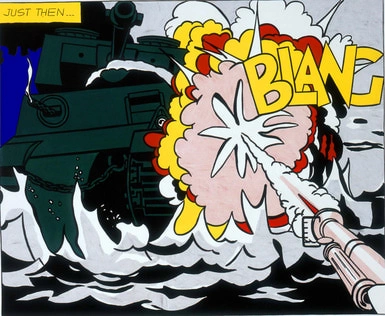
- Examine the brushwork. Gestural strokes, drips, and visible physical energy signal AbEx. Clean outlines, Ben-Day dots, and mechanical reproduction suggest Pop.
- Look for recognizable imagery. If the subject is identifiable — a soup can, a celebrity face, a comic panel — it almost certainly falls under Pop Art. AbEx deliberately avoids representational content.
- Assess scale and surface. AbEx canvases are often monumental and textured. Pop works can be any size but typically feature smooth, impersonal surfaces.
Contextual Markers
- Date of creation: pre-1960 leans AbEx; post-1960 leans Pop
- Artist biography — Cedar Bar regulars (Pollock, de Kooning, Kline) vs. Factory regulars (Warhol, Rosenquist)
- Exhibition history — shows at Sidney Janis Gallery in the early 1950s vs. Leo Castelli Gallery in the 1960s
- Medium — oil and enamel on raw canvas (AbEx) vs. silkscreen, acrylic, and mixed media (Pop)
When in doubt, ask one question: does the work invite viewers inward toward emotion, or outward toward the culture that surrounds them? That single axis separates most AbEx from most Pop.
Side-by-Side Movement Comparison
The table below distills the core differences in abstract expressionism vs pop art across the dimensions that matter most for study and collecting.
| Dimension | Abstract Expressionism | Pop Art |
|---|---|---|
| Active Period | Mid-1940s – early 1960s | Late 1950s – early 1970s |
| Primary Medium | Oil, enamel, charcoal on canvas | Silkscreen, acrylic, collage, print |
| Subject Matter | Non-representational; emotion and gesture | Mass media imagery; consumer products |
| Key Figures | Pollock, de Kooning, Rothko, Still, Kline | Warhol, Lichtenstein, Oldenburg, Rosenquist |
| Philosophical Stance | Art as existential act; inner truth | Art as cultural mirror; ironic detachment |
| Technique | Gestural, spontaneous, physical | Mechanical reproduction, flat color |
| Audience Expectation | Contemplation and emotional engagement | Recognition and critical commentary |
| Market Trend | Steady institutional demand | Strong crossover with design and fashion |
The Philosophical Divide
Abstract Expressionists treated the canvas as an arena for personal struggle — Harold Rosenberg's famous "action painting" label captured the idea that the act of painting mattered as much as the finished work. Pop Artists flipped this entirely. Warhol's declaration that he wanted to be a machine was a deliberate rejection of AbEx's tortured-genius mythology.
This philosophical split mirrors broader cultural shifts. Post-war America craved authenticity; consumer-era America embraced surfaces. Neither impulse disappeared — they coexist in contemporary art, from Cindy Sherman's staged photography to Arte Povera's material experiments. The tension between inner expression and outward commentary remains one of art's most productive engines.
Approaches to Collecting and Appreciating Both Styles
Whether building a serious collection or simply deepening gallery-going habits, a few practical principles help enthusiasts engage more meaningfully with both movements.
Market Considerations
- Blue-chip AbEx names (Pollock, Rothko, de Kooning) command eight- and nine-figure prices at auction, but second-tier AbEx painters — Norman Bluhm, Michael Goldberg, Grace Hartigan — remain comparatively affordable
- Pop Art prints and multiples offer an accessible entry point; Warhol Sunday B. Morning editions circulate widely
- Authentication matters more in AbEx due to the absence of mechanical reproduction; provenance documentation is critical
- Pop Art editions carry their own verification challenges — catalogue raisonné references are essential for Lichtenstein and Warhol prints
Display and Care
- AbEx paintings with impasto or mixed media require climate-controlled environments; heavy texture is vulnerable to cracking
- Pop prints on paper need UV-filtering glass and acid-free matting
- Large-scale AbEx works demand significant wall space — measure before purchasing
- Silkscreen inks can fade; keep Pop works away from direct sunlight
For those looking to photograph their collection, proper lighting makes an enormous difference — a concern shared by photographers like Annie Leibovitz, who understood how light transforms a subject's presence.
Collectors who appreciate both movements often find that hanging them in proximity creates a dynamic dialogue — the raw energy of an AbEx canvas amplifies the cool precision of a Pop print, and vice versa.
Lesser-Known Insights for Art Enthusiasts
Most surveys of abstract expressionism vs pop art stick to the canonical narratives. A few deeper details reward further investigation.
Crossover Artists
- Robert Rauschenberg bridged both worlds — his Combines incorporated AbEx painterly gesture alongside found commercial objects, making him a transitional figure neither camp can fully claim
- Jasper Johns painted flags and targets with an AbEx painter's surface texture, blurring the line between symbol and gesture
- Larry Rivers applied figurative imagery with AbEx-style brushwork, anticipating Pop's representational turn
- Jim Dine moved freely between expressive mark-making and Pop iconography (hearts, tools, robes)
Global Echoes
Both movements had international counterparts that are frequently overlooked in American-centric art histories:
- Gutai group (Japan, 1954) — parallel AbEx experiments with destruction and physical performance, as documented by the Museum of Modern Art's Gutai archive
- Nouveau Réalisme (France, 1960) — European Pop equivalent led by Yves Klein and Arman
- British Pop Art — Richard Hamilton and Eduardo Paolozzi actually predate American Pop by several years
- The influence of Japanese print traditions on both movements is often underappreciated, much like the broader impact of ukiyo-e prints on Western art
Frequently Asked Questions
What is the main difference between abstract expressionism and pop art?
Abstract Expressionism prioritizes inner emotional experience through non-representational imagery and gestural technique, while Pop Art draws directly from mass media and consumer culture, using recognizable imagery with cool, often ironic detachment. The core split is subjective emotion versus cultural commentary.
Did Pop Art develop as a reaction against Abstract Expressionism?
Largely, yes. Pop Artists deliberately rejected what they saw as AbEx's self-seriousness and elitism. Warhol, Lichtenstein, and others embraced commercial imagery and mechanical techniques as a direct counterpoint to the gestural, emotionally charged canvases of the previous generation.
Can abstract expressionism and pop art coexist in the same collection?
Absolutely. Many collectors and curators pair works from both movements to create visual and intellectual contrast. The expressive texture of an AbEx painting can heighten awareness of a Pop print's flat precision, making each piece more impactful in proximity.
Which movement is more valuable on the art market?
Top-tier works from both movements command record prices. Pollock, Rothko, and de Kooning paintings have sold for over $100 million, while Warhol consistently ranks among the highest-grossing artists at auction. At the mid-market level, Pop prints tend to be more accessible due to editioning.
Who are the transitional artists between abstract expressionism and pop art?
Robert Rauschenberg and Jasper Johns are the most cited bridge figures. Rauschenberg's Combines mixed AbEx painterliness with found objects, while Johns used familiar symbols (flags, targets) rendered with expressive surfaces, anticipating Pop's turn toward recognizable imagery.
Is abstract expressionism harder to understand than pop art?
Many viewers find AbEx more challenging initially because it lacks recognizable subject matter. However, extended looking reveals emotional and compositional depth. Pop Art's accessibility can be deceptive — its commentary on consumerism and media often requires contextual knowledge to fully appreciate.
How did abstract expressionism vs pop art influence contemporary art?
Contemporary art inherited both traditions. Neo-Expressionism (Basquiat, Schnabel) revived AbEx's gestural intensity, while artists like Jeff Koons and Takashi Murakami extended Pop's engagement with commerce and mass culture. Most contemporary practices blend elements of both lineages.
Abstract Expressionism and Pop Art are not opposites to be ranked — they are complementary lenses, and the richest understanding of modern art comes from looking through both.


About David Fox
David Fox is an artist and writer whose work spans painting, photography, and art criticism. He created davidcharlesfox.com as a platform for exploring the history, theory, and practice of visual art — covering everything from Renaissance masters and modernist movements to contemporary works and the cultural context that shapes how art is made and received. At the site, he covers art history, architecture, anime art and culture, collecting guidance, and profiles of influential artists across centuries and movements.
Now get FREE Gifts. Or latest Free phones here.
Disable Ad block to reveal all the secrets. Once done, hit a button below