Three Contemporary Surrealist Artists Worth Knowing
by David Fox
Over 60 percent of lots sold in Sotheby's contemporary art auctions now feature some form of surrealist influence — a number that would have been unthinkable two decades ago. If you've been sleeping on contemporary surrealist artists worth knowing, you're missing one of the most vital currents in today's art world. Surrealism didn't die with Salvador Dalí. It evolved, splintered, and found new life in the hands of artists who blend classical technique with deeply personal vision. Whether you're a collector scouting your next acquisition or someone who simply wants to understand what makes modern art commentary tick, these artists deserve your full attention.
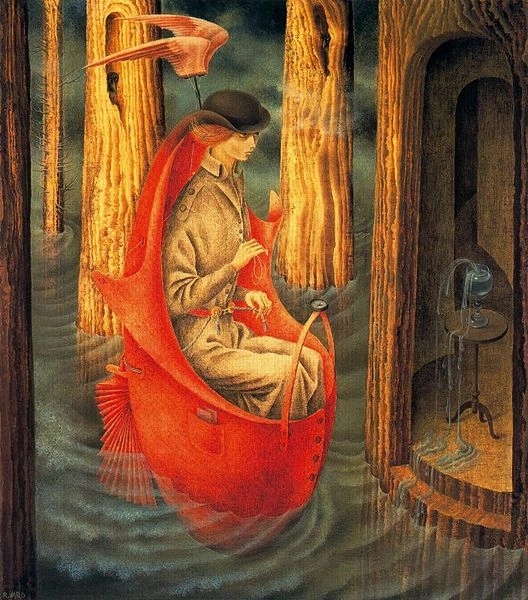
The three artists featured here — Rob Gonsalves, Eugenia Loli, and Laurie Lipton — each take wildly different paths through the surrealist tradition. Gonsalves paints seamless optical illusions rooted in architectural precision. Loli splices vintage imagery into unsettling digital collages. Lipton renders nightmarish graphite worlds with a technical skill that borders on obsessive. Together, they represent the breadth of what surrealism has become.
What connects them isn't medium or style. It's the refusal to depict reality as it appears. That's the thread running from Dalí's provocations through to the work hanging in galleries right now. And understanding these artists gives you a sharper lens for everything else happening in contemporary art.
Contents
- Where Contemporary Surrealist Artists Worth Knowing Appear Today
- Techniques and Media Driving Modern Surrealism
- How to Train Your Eye for Surrealist Art
- When Surrealism Resonates — And When It Falls Flat
- Common Mistakes People Make with Surrealist Art
- Casual Fan vs. Dedicated Collector
- Surrealism Myths That Need to Go
- Frequently Asked Questions
- Key Takeaways
Where Contemporary Surrealist Artists Worth Knowing Appear Today
Galleries and Art Fairs
Rob Gonsalves built his reputation through traditional gallery exhibitions, and his work still commands serious attention at international art fairs. His paintings — enormous canvases where buildings dissolve into forests and bridges become sailboats — reward in-person viewing in ways that reproductions simply cannot capture. You'll find his pieces at dedicated surrealist galleries in Toronto, New York, and across Europe.

Laurie Lipton, meanwhile, has exhibited at institutions from the LA Art Show to London's Bankside Gallery. Her large-format graphite drawings attract crowds who can't believe the level of detail achieved without paint. If you ever get the chance to stand in front of one, take it.
Digital Platforms and Social Media
Eugenia Loli represents the internet-native wing of surrealism. Her collage work thrives on platforms like Instagram and Tumblr, where a single arresting image can reach millions overnight. This isn't lesser art — it's art meeting its audience where they live. If you're interested in how digital tools are reshaping artistic practice, Loli is the case study you need.
Pro tip: Follow surrealist artists on social media before buying. You'll develop a feel for their evolving style and spot pieces that genuinely speak to you rather than impulse-purchasing based on a single image.
Techniques and Media Driving Modern Surrealism
Traditional Craft
Gonsalves worked in acrylics with the patience of a Renaissance master. Each painting required months of planning — architectural blueprints, perspective grids, color studies — before brush ever touched canvas. His technique owed as much to M.C. Escher's mathematical precision as to Magritte's philosophical wit.
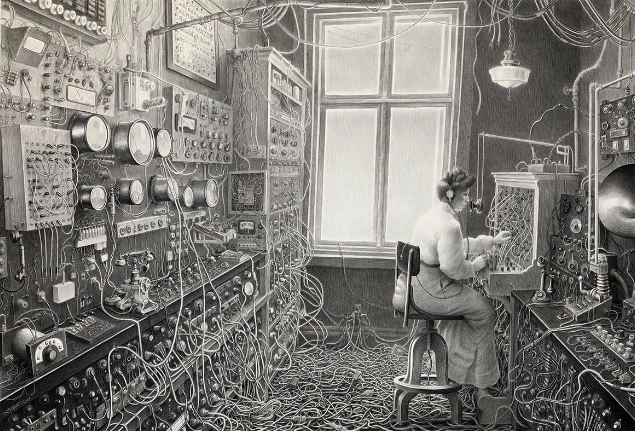
Laurie Lipton works exclusively in graphite and charcoal. She builds her images through thousands of tiny marks, layering tone the way a sculptor carves marble — by slow removal of what doesn't belong. The result is photographic in clarity but unmistakably hand-drawn. Her process for a single large work can stretch beyond six months.
Digital Collage and Mixed Media
Eugenia Loli sources vintage photographs, scientific illustrations, and mid-century advertisements, then recombines them digitally into scenes that feel like half-remembered dreams. The analog source material gives her work a warmth that purely digital art often lacks. Her approach connects directly to the original Dadaist collage tradition — cutting and reassembling reality to reveal something hidden underneath.

| Artist | Primary Medium | Signature Technique | Typical Scale | Price Range (Prints/Originals) |
|---|---|---|---|---|
| Rob Gonsalves | Acrylic on canvas | Seamless optical transitions | Large (3–5 ft) | $200–$80,000+ |
| Eugenia Loli | Digital collage | Vintage photo splicing | Variable (digital) | $25–$2,000 |
| Laurie Lipton | Graphite/charcoal | Hyper-detailed mark-making | Large (4–6 ft) | $500–$50,000+ |
How to Train Your Eye for Surrealist Art
Reading Symbolism
Surrealism rewards the prepared viewer. Start by learning the movement's core vocabulary: the juxtaposition of unrelated objects, the distortion of scale, the dissolution of boundaries between interior and exterior worlds. When you look at a Gonsalves painting where children's building blocks become a city skyline, you're not just seeing a clever trick — you're watching the boundary between imagination and reality collapse in real time.
Lipton's symbolism runs darker. Skeletons in business suits, grinning death masks at dinner parties — her work channels the dark surrealist tradition that uses horror to critique consumer culture. Don't look away. The discomfort is the point.
Context Matters
Know where an artist sits in the broader timeline. Gonsalves emerged from Canadian magic realism. Loli draws from the original Surrealist movement's collage experiments. Lipton trained in classical drawing at the Slade School in London before spending decades in continental Europe. Each artist's biography unlocks layers in their work that pure formal analysis misses.
Worth noting: You don't need an art history degree to appreciate surrealism. You need curiosity, patience, and a willingness to sit with images that refuse easy interpretation.
When Surrealism Resonates — And When It Falls Flat
Surrealist art hits hardest when it creates a genuine cognitive tension — when your brain tries to resolve two incompatible realities and can't. Gonsalves mastered this. Every painting presents a scene that's perfectly logical from two different perspectives simultaneously. Your eye flickers between readings, never settling. That's the magic.
It falls flat when the weirdness becomes decoration. Plenty of artists slap melting clocks on a canvas and call it surrealism. That's costume, not content. The artists worth knowing use surrealist technique to say something about the human condition — about dreams, anxieties, desires, and the absurdity of everyday life.
Eugenia Loli's work succeeds because every juxtaposition carries emotional weight. A woman diving into a soup bowl isn't random — it's a comment on domesticity, escape, and the surreal texture of routine. When the symbolism is intentional, the work stays with you. When it's arbitrary, you forget it by the time you leave the gallery.
Common Mistakes People Make with Surrealist Art
Trying to "solve" the image. Surrealist art isn't a puzzle with one correct answer. If you're hunting for a single hidden meaning, you're approaching it wrong. Let the ambiguity do its work. Multiple valid readings coexist — that's by design.
Dismissing digital work as less legitimate. Eugenia Loli's collages require the same artistic judgment as Lipton's graphite drawings — different tools, equal creative intelligence. The medium doesn't determine the art's value. What matters is whether the final image rewires your perception.
Confusing surrealism with fantasy art. Fantasy creates coherent alternate worlds. Surrealism disrupts the world you already know. Gonsalves doesn't paint imaginary places — he paints ordinary places behaving impossibly. That distinction matters when you're evaluating work or building a collection, especially if you're also exploring movements like abstract expressionism and pop art that each have their own relationship to reality.
Collector warning: Never buy surrealist art purely as investment. Buy what genuinely unsettles or moves you. The market for contemporary surrealism is growing, but emotional connection should always come first.
Casual Fan vs. Dedicated Collector
If you're a casual fan, your job is straightforward: look at as much surrealist art as possible. Follow artists online. Visit exhibitions. Read about the movement's history. You're building visual literacy, and there's no shortcut for time spent looking.

If you're a serious collector, your approach needs more structure. Research provenance. Understand edition sizes for prints. Know the difference between a giclée reproduction and a signed limited-edition print. For artists like Gonsalves, whose originals rarely come to market, limited editions represent the primary collecting opportunity. For Loli, whose work is digital-native, the conversation around editions and authenticity takes on a different shape entirely.
Both paths are valid. The casual fan and the serious collector are both doing real work — they're just operating at different levels of commitment and financial exposure.
Surrealism Myths That Need to Go
"Surrealism is just weird for the sake of being weird." This is the most persistent myth and the most wrong. André Breton founded the movement on psychoanalytic theory and automatic writing. Every contemporary surrealist artist worth knowing works with intention, not randomness. Gonsalves spent weeks planning each optical transition. Lipton's nightmares are meticulously composed. Even Loli's collages follow an internal logic of emotional association.
"You need drugs to understand it." Surrealism draws on dream logic, not substance-induced hallucination. The movement was always about accessing the unconscious mind through disciplined creative practice. Dalí famously used sleep deprivation, not substances, to access hypnagogic imagery.
"The movement ended in the 1960s." The artists in this post — and dozens of others working right now — prove that surrealism is a living tradition. It adapted to digital tools, absorbed new cultural anxieties, and found audiences larger than Breton could have imagined.
Frequently Asked Questions
What defines a contemporary surrealist artist?
A contemporary surrealist artist creates work that deliberately distorts, juxtaposes, or reimagines reality using techniques rooted in the original Surrealist movement founded by André Breton in the 1920s. The key difference from historical surrealists is the incorporation of modern media, digital tools, and current cultural references into the surrealist framework.
Is Rob Gonsalves considered a surrealist or a magic realist?
Both labels apply. Gonsalves described his own work as "magic realism," but his seamless optical illusions — where one scene transforms into another within a single canvas — draw heavily on surrealist principles of perceptual disruption. Most critics and collectors place him firmly within the contemporary surrealist tradition.
How do you start collecting contemporary surrealist art on a budget?
Begin with signed limited-edition prints, which typically range from $100 to $500 for emerging and mid-career artists. Digital artists like Eugenia Loli offer affordable prints that hold their value as the artist's profile grows. Always verify edition numbers and authenticity before purchasing.
Why does Laurie Lipton only work in graphite?
Lipton has stated that graphite gives her the control and tonal range she needs to achieve photographic detail while maintaining a handmade quality. The monochromatic palette also reinforces the dreamlike, otherworldly atmosphere of her subjects, making the dark imagery feel timeless rather than sensational.
Can digital collage be considered fine art?
Absolutely. Digital collage requires the same compositional judgment, symbolic thinking, and artistic vision as traditional media. Major museums and galleries now exhibit and collect digital works. The tool doesn't determine artistic merit — the creative intelligence behind the work does.
What's the difference between surrealism and psychedelic art?
Surrealism aims to reveal unconscious truths through dreamlike imagery and unexpected juxtapositions. Psychedelic art focuses on replicating or evoking altered states of perception through vivid colors and fractal patterns. While they overlap visually, their intentions and intellectual frameworks differ significantly.
Are contemporary surrealist artworks a good investment?
The market for contemporary surrealism has grown steadily, particularly for established names like Gonsalves and Lipton. However, art should never be purchased solely as a financial instrument. Buy what moves you, research the artist's exhibition history and market trajectory, and treat any appreciation in value as a bonus rather than the primary motivation.
Key Takeaways
- Contemporary surrealist artists worth knowing — Rob Gonsalves, Eugenia Loli, and Laurie Lipton — each prove the movement is thriving through radically different media and approaches.
- Surrealism works when the strange imagery carries genuine emotional or intellectual weight; dismiss any work that's merely weird without purpose.
- Whether you're a casual viewer or serious collector, building visual literacy through sustained looking and historical context is the single most valuable investment you can make.
- The myths around surrealism — that it's random, drug-fueled, or dead — are flatly contradicted by the disciplined, intentional work these artists produce today.


About David Fox
David Fox is an artist and writer whose work spans painting, photography, and art criticism. He created davidcharlesfox.com as a platform for exploring the history, theory, and practice of visual art — covering everything from Renaissance masters and modernist movements to contemporary works and the cultural context that shapes how art is made and received. At the site, he covers art history, architecture, anime art and culture, collecting guidance, and profiles of influential artists across centuries and movements.
Now get FREE Gifts. Or latest Free phones here.
Disable Ad block to reveal all the secrets. Once done, hit a button below